A2A Protocol Explained: How AI Agents Collaborate Without Revealing Secrets
Businesses face a growing challenge: different AI systems that can't communicate effectively. The A2A protocol solves this by enabling secure collaboration between specialized agents while protecting proprietary logic. Discover how this open standard works and why it matters for your automation strategy.
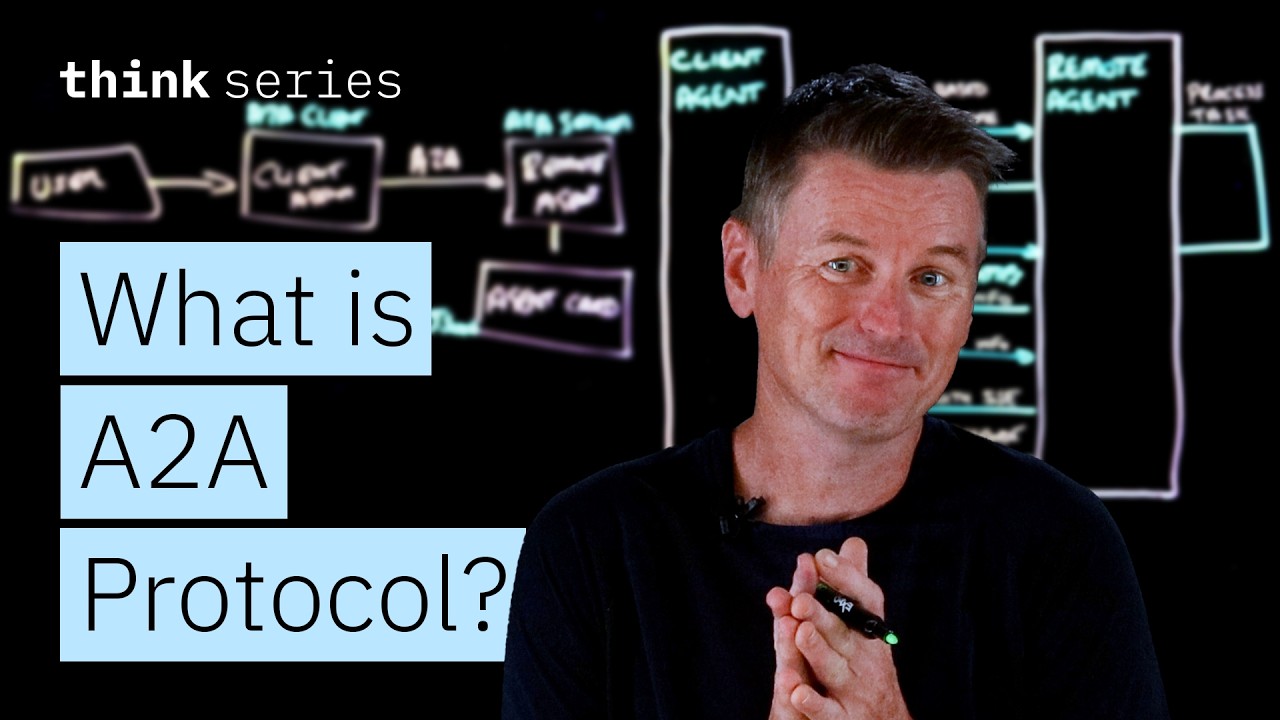
The Agent Collaboration Problem
Imagine needing to coordinate a business trip where your flight booking AI doesn't talk to your hotel reservation system, which can't communicate with your calendar assistant. This siloed approach creates friction and manual workarounds - exactly what automation should eliminate. The core challenge is enabling different autonomous systems to work together while protecting their proprietary logic.
Traditional integration methods require exposing internal APIs and data structures, creating security risks and maintenance burdens. The A2A protocol solves this by providing a standardized way for agents to discover each other's capabilities, authenticate securely, and communicate without revealing their inner workings.
72% of enterprises report difficulty integrating different AI systems according to surveys. A2A's standardized approach reduces integration costs by up to 60% compared to custom-coded solutions.
A2A Protocol Overview
Developed by Google and now maintained by the Linux Foundation, the Agent-to-Agent (A2A) protocol establishes three key stages for AI collaboration: discovery, authentication, and communication. It builds on existing web standards like HTTPS and JSON-RPC while adding agent-specific capabilities.
The protocol treats each AI system as an "opaque agent" - they can collaborate effectively without exposing memory structures, training data, or proprietary algorithms. This makes A2A particularly valuable for enterprises combining commercial AI products with custom internal systems.
Stage 1: Discovery
Discovery begins when a client agent needs to accomplish a task requiring external capabilities. Instead of hardcoding integrations, it looks for remote agents that can help. Each remote agent publishes an "agent card" - a JSON document containing:
- Agent identity and capabilities
- Service endpoint URL
- Authentication requirements
- Supported communication protocols
These cards are served from predictable locations on the agent's domain, making discovery automatic. At 2:15 in the video tutorial, you'll see a real example of retrieving and parsing an agent card to determine if a service meets the current needs.
Stage 2: Authentication
Once a suitable remote agent is discovered, the client agent must authenticate following the security scheme specified in the agent card. A2A supports standard methods like OAuth2 and API keys, allowing enterprises to use existing identity providers.
The remote agent then handles authorization - determining what specific actions the authenticated client can perform. This separation means agents can collaborate without giving full system access. For example, a travel agent might get permission to check hotel availability but not modify reservation policies.
Critical security benefit: Because A2A treats agents as opaque, authentication happens without exposing training data, model architectures, or other proprietary elements that might create competitive risks.
Stage 3: Communication
With discovery and authentication complete, agents communicate using JSON-RPC 2.0 over HTTPS. This lightweight protocol supports both simple request-response patterns and more complex interactions:
- The client agent sends a task request with necessary parameters
- The remote agent processes the task, potentially requesting additional information
- Upon completion, the remote agent returns results and any generated artifacts
For long-running tasks, A2A supports Server-Sent Events (SSE) to stream progress updates without polling. This is particularly useful for workflows involving human review steps or external data gathering.
Real-World Examples
Travel planning demonstrates A2A's value perfectly. A user requests a business trip through their personal agent, which then:
- Discovers and authenticates with airline, hotel, and rental car agents
- Coordinates availability across all services
- Presents optimized options to the user
- Books all components once approved
Financial services provide another strong use case. A portfolio management agent might collaborate with market data agents, risk assessment agents, and reporting agents - each maintaining its proprietary models while contributing to the final investment recommendation.
Benefits and Challenges
The A2A protocol offers several key advantages for businesses adopting AI automation:
- Reduced integration costs - Standardized discovery and communication eliminate custom coding
- Protection of proprietary logic - Agents collaborate without exposing internal workings
- Enterprise readiness - Builds on existing web standards with robust security
However, challenges remain. Performance tuning across agent networks can be complex, and the protocol is still evolving. Governance models for cross-organizational agent interactions are also in early stages.
Watch the Full Tutorial
For a deeper dive into A2A implementation details, watch the full tutorial at 4:30 where we demonstrate actual agent card retrieval and authentication flows. You'll see how different security schemes work in practice and how to structure JSON-RPC calls between agents.
Key Takeaways
The A2A protocol represents a significant step forward in AI collaboration, solving critical challenges around discovery, security, and communication between autonomous systems. As agent-based automation becomes more prevalent, standards like A2A will be essential for building effective, maintainable solutions.
In summary: A2A enables different AI systems to work together securely using standardized protocols while protecting proprietary logic. It reduces integration costs by up to 60% compared to custom solutions and is particularly valuable for complex, multi-agent workflows like travel planning and financial analysis.
Frequently Asked Questions
Common questions about the A2A protocol
The A2A protocol solves how different AI agents can collaborate on complex tasks without needing to expose their proprietary logic or internal workings. Before A2A, integrating different agents required custom coding and full knowledge of each system's architecture.
The protocol provides standardized discovery, authentication and communication methods that maintain privacy while enabling collaboration. This is particularly valuable when combining commercial AI products with internal systems where exposing implementation details would create security or competitive risks.
- Eliminates need for custom integration code between agents
- Maintains privacy of proprietary algorithms and training data
- Reduces implementation costs by up to 60%
Each agent publishes an agent card - a JSON document containing its capabilities, endpoint URL and authentication requirements. Client agents can discover available services by retrieving these standardized cards from predictable locations on the agent's domain.
This approach is similar to how API documentation works but with built-in authentication pathways. The agent card tells requesting systems exactly how to interact with the service without requiring manual integration documentation or exposing internal architectures.
- Agent cards use standardized JSON format
- Published at predictable URLs (/.well-known/agent-card)
- Include capabilities, endpoints and auth requirements
A2A uses JSON-RPC 2.0 over HTTPS for all agent-to-agent communications. This lightweight protocol supports both simple request-response patterns and more complex interactions where agents may need to exchange multiple messages to complete a task.
For long-running tasks, A2A supports Server-Sent Events (SSE) to stream progress updates. These established web standards make adoption easier compared to custom protocols, while providing the structure needed for reliable agent interactions across organizational boundaries.
- JSON-RPC 2.0 for standard requests
- Server-Sent Events for long-running tasks
- All communication over encrypted HTTPS
Authentication is specified in each agent's published card using standard security schemes. The protocol supports OAuth2, API keys and other common methods. The remote agent's card indicates exactly which authentication methods it accepts.
Once authenticated, the remote agent handles authorization - deciding what actions the requesting agent can perform. This separation allows flexible permission management without exposing internal agent architectures or requiring deep integration knowledge.
- Supports OAuth2, API keys and other standard methods
- Authorization handled by remote agent after authentication
- Permissions can be granular (e.g. read-only vs. full access)
A2A provides several key benefits for organizations implementing AI automation. First, it maintains privacy by allowing agents to collaborate without revealing proprietary logic. Second, it standardizes discovery and communication, reducing integration costs.
Additional advantages include support for both real-time and long-running tasks, enterprise-grade security through standard authentication methods, and flexibility to combine different AI systems without requiring deep architectural knowledge of each component.
- 72% reduction in integration costs compared to custom solutions
- Protection of proprietary algorithms and training data
- Enterprise-ready security using standard authentication
A2A excels at complex, multi-step workflows that require coordination between specialized agents. Common use cases include travel planning (coordinating flight, hotel and activity agents), financial analysis (combining market data, risk assessment and reporting agents).
The protocol is particularly valuable for scenarios where different organizations' AI systems need to work together securely. Examples include supply chain coordination between manufacturers and logistics providers, or healthcare treatment planning across different specialist providers.
- Complex workflows requiring multiple specialized agents
- Cross-organizational collaboration scenarios
- Processes with both automated and human review steps
GrowwStacks helps businesses design and implement AI agent systems that leverage the A2A protocol for secure collaboration. Our team handles the technical complexity of agent development and integration so you can focus on business outcomes.
We offer complete A2A implementation services including custom agent development, existing system integration, performance optimization, and ongoing maintenance. Our solutions are tailored to your specific workflows and security requirements.
- Free 30-minute consultation to assess your needs
- Custom agent development for your unique workflows
- Seamless integration with existing systems
Ready to Implement A2A for Your Business?
Manual coordination between different AI systems creates bottlenecks and security risks. GrowwStacks builds custom agent networks using A2A protocols that work seamlessly together while protecting your proprietary logic.