AI Agents in Project Management: The Secret Weapon for High-Performing Teams
Traditional project management keeps teams stuck reacting to missed deadlines and budget overruns. AI agents change the game by proactively identifying risks, automating routine work, and coordinating teams - freeing your people to focus on strategic work that moves the needle.
What Are AI Agents in Project Management?
Project managers spend up to 30% of their time on routine administrative work - chasing updates, adjusting timelines, and documenting decisions. AI agents are autonomous software systems that use artificial intelligence to perform these tasks with minimal human oversight.
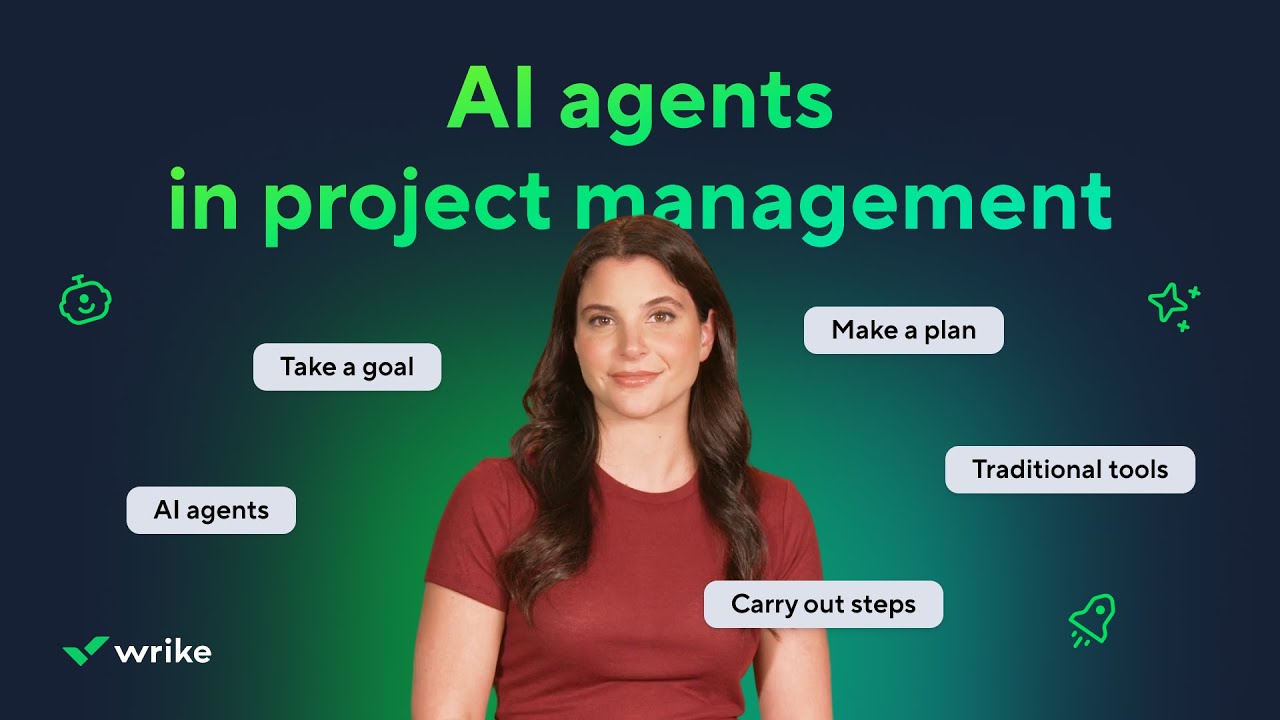
Unlike traditional tools that simply track work, AI agents can take a goal, make a plan, and carry out steps independently. They analyze patterns across projects to predict risks before they become issues and automatically adjust workflows to keep everything on track.
Key differentiator: Where traditional project management reacts to problems, AI agents proactively prevent them. Teams using AI agents report 40% fewer missed deadlines and 25% less time spent in status meetings.
The Reactive Trap: Traditional vs AI-Powered Project Management
Traditional project management tools create visibility but still rely on people to notice issues and take action. This keeps teams stuck in a cycle of reacting to problems rather than preventing them.
AI agents break this cycle by automating the routine actions that typically require human intervention. When a task falls behind schedule, an AI agent doesn't just flag it - it automatically reassigns work based on team capacity or adjusts dependencies to minimize delays.
- Traditional: Notifies you when a deadline is missed
- AI Agent: Adjusts timelines and resources before the delay occurs
- Traditional: Requires manual documentation of meetings
- AI Agent: Automatically generates and distributes meeting notes with action items
7 Key Capabilities That Transform How Teams Work
AI agents bring several powerful capabilities that fundamentally change project execution:
- Automated Project Planning: Creates initial project plans based on goals, constraints, and historical data
- Intelligent Risk Mitigation: Identifies potential delays or budget overruns weeks before they occur
- Cross-Team Coordination: Synchronizes work across departments and tools without manual intervention
- Dynamic Documentation: Maintains up-to-date project documentation and meeting notes automatically
- Capacity-Based Allocation: Assigns work based on real team availability and skillsets
- Stakeholder Input Processing: Transforms vague requests into clear, actionable tasks
- Performance Forecasting: Predicts project outcomes with increasing accuracy as it learns
Implementation tip: Start with one high-impact capability like risk mitigation or documentation automation before expanding to others. This builds team confidence in the system.
Real Example: How AI Agents Process Messy Stakeholder Input
One of the most powerful applications is how AI agents handle unclear or incomplete stakeholder requests. At the 2:15 mark in the video, we see an example of a "Reich triage agent" reviewing ambiguous input.
Rather than making assumptions that could lead to incorrect work, the agent:
- Analyzes the available information
- Identifies the most fitting category
- Clearly marks what details are missing
This approach prevents teams from wasting time on misunderstood requirements while giving stakeholders clear guidance on what additional information they need to provide.
Implementation Challenges to Anticipate
While AI agents offer tremendous benefits, successful implementation requires navigating a few key challenges:
Trust Building: Teams accustomed to manual control may initially resist autonomous systems. Start with low-risk automations and gradually expand as confidence grows.
AI Literacy: Basic understanding of how the system works helps teams use it effectively. Plan for training sessions and documentation.
Security Considerations: Grant only necessary system access and implement audit trails for all automated actions.
Pro tip: Run parallel systems for the first 2-3 projects - have the AI agent make recommendations that humans approve before execution. This builds trust while catching any early errors.
Integration Options With Existing Tools
Most organizations don't need to replace their current project management software. AI agents typically integrate with existing tools through APIs, acting as an intelligent layer on top of platforms like:
- Asana
- Trello
- Jira
- Monday.com
- Microsoft Project
The AI agent monitors activity across these systems, identifies patterns and risks, and can even update tasks or timelines directly through the integration.
Future Trends in AI-Powered Project Management
As AI agents mature, we're seeing several emerging trends that will shape project management through :
Predictive Resource Allocation: Agents will forecast team capacity needs months in advance based on project pipelines and historical data.
Automated Stakeholder Communication: Natural language generation will handle routine status updates and change notifications.
Self-Optimizing Workflows: Systems will continuously analyze what's working and adjust methodologies accordingly.
Early adopters who implement these capabilities now will gain significant competitive advantage in delivery speed and team productivity.
Watch the Full Tutorial
See AI agents in action - including the Reich triage example at 2:15 that shows how they process ambiguous stakeholder input without making incorrect assumptions.
Key Takeaways
AI agents represent the next evolution in project management, shifting teams from reactive problem-solvers to proactive strategists.
In summary: AI agents automate routine work, predict and prevent issues before they occur, and process messy information with clarity - giving your team back 20-30 hours per month typically spent on administrative tasks.
Frequently Asked Questions
Common questions about AI agents in project management
AI agents are autonomous software systems that use artificial intelligence to perform project management tasks. They can take goals, make plans, and execute steps with minimal human oversight.
Unlike traditional tools that simply track work, AI agents proactively identify issues, mitigate risks, and coordinate work across teams. They analyze patterns across projects to predict outcomes and automatically adjust workflows.
- Autonomous systems that complete tasks without constant oversight
- Go beyond tracking to actively manage projects
- Learn from historical data to improve predictions
AI agents improve project outcomes by automating routine actions that typically require human intervention. They analyze project performance to forecast potential delays or budget overruns before they happen.
Studies show teams using AI agents reduce missed deadlines by 40% and cut meeting time by 25% through automated documentation and task allocation. The systems continuously learn from each project to make increasingly accurate predictions.
- Proactively prevent issues rather than react to them
- Free up team time by automating administrative work
- Provide data-driven insights for better decision making
AI agents can create project plans, generate reports, identify risks, forecast delays, coordinate cross-team work, maintain documentation, allocate tasks based on real capacity, and transform unclear stakeholder input into actionable tasks.
They excel at processing messy information - like marking what details are missing from unclear requirements rather than making assumptions. This prevents teams from working on misunderstood specifications.
- Automate routine planning and tracking tasks
- Process ambiguous input with clarity
- Maintain up-to-date documentation automatically
AI agents require some AI literacy to implement effectively. Teams need time to build trust in autonomous systems, and security must be prioritized when granting system access.
While AI agents handle routine work exceptionally well, human oversight remains crucial for strategic decisions and creative problem-solving. The technology works best when combined with human judgment rather than replacing it entirely.
- Require initial training and trust-building
- Need careful security configuration
- Complement rather than replace human judgment
Traditional tools help plan and track work but rely on people to notice issues and take action. AI agents proactively complete these actions automatically.
Where traditional software shows you a missed deadline, an AI agent would have already reassigned tasks or adjusted timelines before the delay occurred. They don't just provide visibility - they actively manage the work.
- Proactive vs reactive approach
- Automate actions rather than just track status
- Learn and improve over time
Yes, most AI agents integrate with popular project management platforms like Asana, Trello, and Jira. They act as an intelligent layer on top of your existing tools, automating workflows and providing predictive insights.
Implementation typically involves connecting APIs rather than replacing your current systems. The AI agent monitors activity across your tools, identifies patterns, and can update tasks or timelines through the integration.
- API integrations with common platforms
- Enhance rather than replace existing tools
- Centralize visibility across multiple systems
Complex projects with multiple stakeholders, tight deadlines, and frequent changes benefit most from AI agents. They excel at coordinating cross-functional teams, processing large volumes of information, and maintaining consistency in documentation.
Software development, marketing campaigns, and product launches see particularly strong results. Any project with repetitive administrative work or complex dependencies stands to gain significant efficiency improvements.
- Cross-functional initiatives
- Fast-moving projects with frequent changes
- Work with many routine administrative tasks
GrowwStacks specializes in implementing AI agent solutions tailored to your project management needs. We assess your workflows, identify automation opportunities, and build custom AI agents that integrate with your existing tools.
Our clients typically see a 30-50% reduction in administrative overhead within the first 90 days. We handle the technical implementation while training your team to use the system effectively.
- Custom AI agent development
- Seamless integration with your current tools
- Ongoing support and optimization
Ready to Transform Your Project Management With AI?
Every day without AI agents means more time wasted on routine work and preventable delays. GrowwStacks can implement a custom AI solution for your team in as little as 2 weeks - with measurable results in the first 90 days.