How Autonomous AI Agents Fixed a Critical Bug in 47 Minutes Without Human Intervention
Most engineering teams waste days bouncing bug reports between support and developers. Findable's AI agents now resolve 70% of customer-reported issues before humans even see them - with one critical fix deployed to production in just 47 minutes. Here's their Docker-based framework for running 12 autonomous agents safely in production.
Production Case Study: 47-Minute Bug Fix
Every engineering team knows the frustration: a customer reports "it doesn't work" with no reproduction steps, triggering a days-long ping-pong between support and developers. At Findable, this process often consumed 2-3 days per bug before any code was written.
Their breakthrough came when engineering bot "Anna" autonomously handled a critical production bug. The customer reported a drawing page failure at 9:14 AM - by 10:01 AM, the fix was deployed without any human writing code.
The autonomous workflow: 1) HubSpot ticket auto-classified as bug 2) Engineering bot investigates codebase and Sentry logs 3) Creates PR with fix 4) Review bot evaluates code quality 5) Human only notified for approval after bots agree the solution works.
This wasn't a one-off - Findable now runs 12 specialized agents handling engineering, marketing, and customer support tasks. Their Docker-based architecture keeps each agent securely isolated while sharing hardware resources efficiently.
OpenClaw Architecture: From Chatbot to Digital Coworker
Unlike ChatGPT which answers questions statelessly, OpenClaw operates as a persistent digital employee with memory and system access. Three key differences define its architecture:
1. Always-On Operation
While chatbots wait for prompts, OpenClaw agents proactively monitor systems, check email, and prepare briefings. The engineering bot watches GitHub/Sentry 24/7 - catching critical bugs at 2AM without waking engineers.
2. Local Execution
All processing happens on your hardware (causing a Mac Mini shortage). Data never leaves your control, with configurable access to specific systems like GitHub or Slack.
3. Action-Oriented Skills
6000+ community plugins enable direct actions: merging PRs, updating ads, or even ordering office supplies. Marketing bot "Don Draper" optimizes LinkedIn campaigns by analyzing website conversions.
220,000 GitHub stars in two weeks show the demand for actionable AI. OpenClaw's rapid growth comes from solving real business problems - not just answering questions.
4 Real Use Cases Running Daily at Findable
These aren't theoretical prototypes - Findable's team depends on these autonomous workflows every day:
1. Autonomous Bug Resolution
Customer reports → HubSpot classification → Engineering investigation → PR creation → AI code review → Human approval. 70% fewer tickets reach engineers.
2. AI Code Review
Every PR gets RCI pipeline review before human eyes see it. Catches syntax errors, security issues, and style violations instantly.
3. CS Self-Service
Non-technical support staff describe bugs to agents that investigate and fix common issues without engineering involvement.
4. Micromanagement as a Service
Office bots handle grocery orders, deadline reminders, and contextual nudges. "JBot" manages the CTO's calendar and even built an iPad pilot training app.
Pro Tip: Start with one high-value workflow like bug triage rather than trying to automate everything at once.
Addressing the Security Headlines
Recent reports highlight real risks: 15% of community skills contained harmful instructions, 18,000 exposed instances, and prompt injection vulnerabilities. Findable's framework addresses these through deployment tiers:
Tier 1: Playground (High Risk)
Default install on personal laptops. Easy for experimentation but dangerous with production credentials.
Tier 2: Dedicated Hardware (Medium Risk)
Clean Mac Mini installs with restricted configs. Isolated from main systems but scales poorly.
Tier 3: Docker Fleet (Production Grade)
Centralized management with strict resource limits (2 CPU/2GB RAM per agent). Hard isolation prevents cross-contamination if one agent is compromised.
Key Insight: The tool isn't the problem - deployment method is. Docker changes everything by providing containerized sandboxes with controlled access.
Docker Fleet Management: Scaling to 12 Agents
Findable's production architecture runs on a $1,200 Mac Mini (24GB RAM, 10 CPU cores allocated to Docker). Each agent lives in its own container with:
- 2 CPU cores / 2GB RAM hard limits
- Isolated storage (no cross-agent visibility)
- Unique API keys per container
- Single gateway entry point (no direct network access)
This allows 6+ agents to share hardware safely. When issues occur, containers auto-restart in 30 seconds without affecting others. The team manages the fleet via SSH into the Mac Mini, using OpenClaw itself to run health checks and updates.
Current Agents: Engineering (Anna), CTO Assistant (Kruten), Design (Pixel), Marketing (Don Draper), 2 employee personal bots, and specialized agents for sales/data science.
The 5-Level Trust Ladder for Safe Deployment
Findable's framework gradually increases agent autonomy while maintaining control:
Level 1: Observation
Read-only access to Slack/email. No actions taken.
Level 2: Summarization
Processes data into reports/briefings. Still no actions.
Level 3: Action Proposals
Suggests PRs/campaigns but requires manual execution.
Level 4: Approval-Based Actions
Executes approved workflows (like bug fixes) autonomously.
Level 5: Full Autonomy
Operates within predefined boundaries without oversight.
Most production deployments operate at Level 3-4. The key is starting small - even read-only monitoring delivers value while building trust in the system.
Measured Business Impact
Quantitative results from Findable's 12-agent deployment:
- 70% reduction in CS-to-engineering escalations
- 47-minute average bug resolution (previously 2-3 days)
- 100% code review coverage via AI first-pass
- 24/7 operations without on-call rotations
- $1,200 hardware running 6+ agents vs. $6,000+ for individual Macs
Perhaps most importantly, engineers now focus on high-value work rather than routine debugging. The marketing team reports 3X more campaign iterations with Don Draper optimizing ads autonomously.
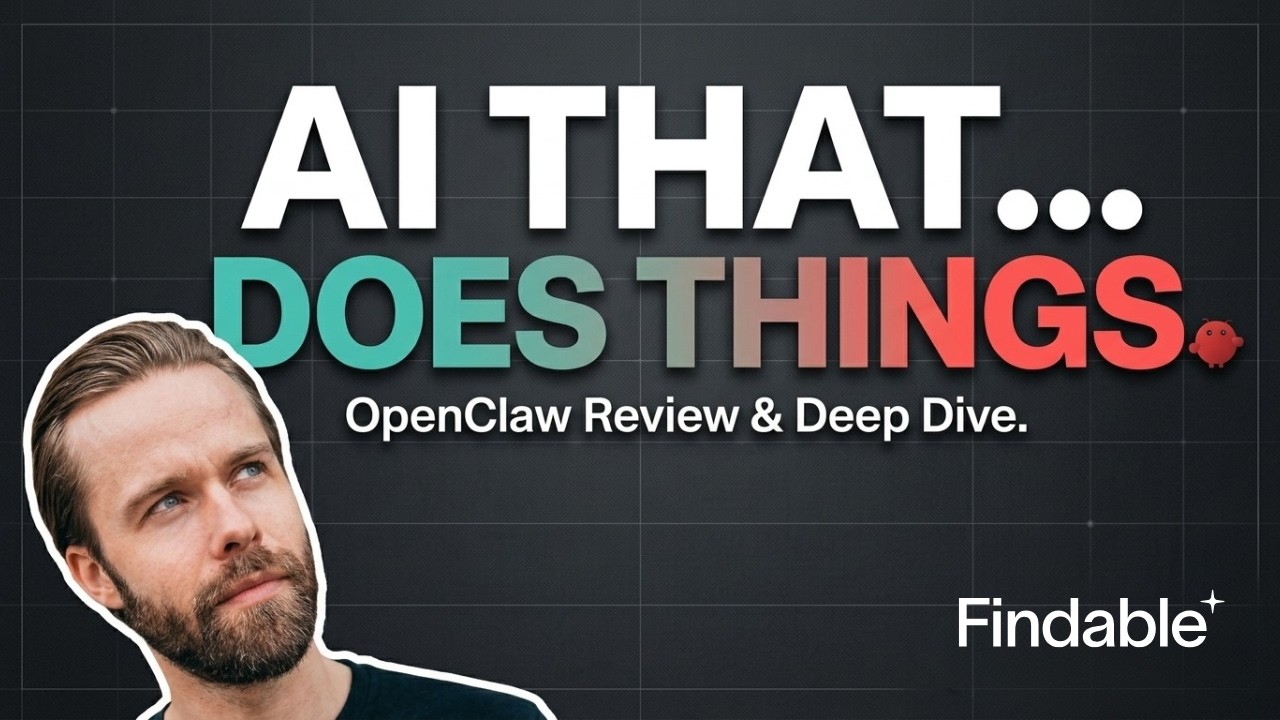
Watch the Full Tutorial
See the Docker fleet management in action at 22:15 in the video, where Johannes demonstrates health checks across 12 agents from a single command line interface.
Key Takeaways
The era of AI that merely answers questions is ending - production-grade agents now execute complex workflows autonomously. Findable's experience proves these systems deliver real business value when deployed safely.
In summary: 1) Start with Docker containers for security 2) Use the trust ladder to gradually increase autonomy 3) Focus on one high-value workflow first 4) Measure time savings and quality improvements 5) Expand carefully based on results.
Frequently Asked Questions
Common questions about production AI agents
The engineering bot investigates the codebase by checking Sentry for matching errors, analyzes the problematic code sections, and creates a pull request with the proposed fix.
A separate review bot then evaluates the code quality before deployment. This autonomous workflow reduced Findable's bug resolution time from days to under an hour in most cases.
- Agents access error tracking tools like Sentry automatically
- Code changes go through AI review before human eyes see them
- Critical bugs reported overnight get immediate attention
Key risks include prompt injection attacks (15% of community skills contained harmful instructions), overprivileged access, and exposed instances.
Findable mitigated these by running agents in Docker containers with strict resource limits (2 CPU cores, 2GB RAM per instance) and isolated storage to prevent cross-agent data access.
- Never run agents on personal laptops with production credentials
- Docker provides hardware-level isolation between agents
- Regularly audit community skills before installation
Findable runs 6+ agents simultaneously on a $1,200 Mac Mini with 24GB RAM allocated to Docker.
Each container has strict resource limits (2 CPU cores, 2GB RAM) with headroom remaining for the host system. This scales better than their initial approach of one Mac per agent.
- Agents are lightweight when properly containerized
- Docker automatically kills misbehaving instances
- New agents can be provisioned in under 30 seconds
OpenClaw operates as an always-on digital coworker with persistent memory and system access (GitHub, Slack, AWS etc.), while ChatGPT is a stateless chatbot.
OpenClaw's 220,000 GitHub stars make it the fastest growing open-source repo, with 6000+ community plugins for direct system integration.
- Local execution keeps sensitive data on your hardware
- Proactive monitoring vs. reactive question answering
- Actual system actions vs. theoretical suggestions
Findable uses a 5-level trust ladder: 1) Read-only monitoring 2) Data summarization 3) Action proposals 4) Execution with approval 5) Full autonomy.
Most production deployments operate at level 3-4. All code changes require human approval unless explicitly whitelisted.
- Start with observation-only mode for new agents
- Gradually increase privileges based on performance
- Maintain approval gates for critical systems
Engineering ticket volume dropped 70% as agents handled routine bugs. Critical issues reported at 2AM get investigated immediately rather than waiting for morning.
Code review coverage reached 100% as every PR gets AI-reviewed before human engineers see it. Marketing campaign iterations increased 3X with autonomous optimization.
- Measured time savings across support and engineering
- Higher quality from 24/7 automated oversight
- Hardware cost savings from containerized deployment
Yes - Findable's customer support team describes bugs to agents in plain English, bypassing engineering for common issues.
Marketing uses 'Don Draper' bot to optimize LinkedIn ads while operations agents handle grocery orders and deadline monitoring as 'micromanagement as a service'.
- Natural language interfaces require no coding
- Pre-configured skills handle common department workflows
- Gradual trust building via the ladder framework
GrowwStacks builds custom AI agent systems using Docker containers for security isolation. We implement the trust ladder framework to gradually increase autonomy while maintaining control.
Whether you need bug resolution automation, customer support augmentation, or operational efficiency bots, we design solutions tailored to your workflows and risk tolerance.
- Docker-based deployment for production safety
- Custom skills development for your specific tools
- Free consultation to identify high-impact use cases
Deploy Your First Production AI Agent in 2 Weeks
Manual bug triage and routine operations are draining your team's productivity. GrowwStacks implements Docker-secured AI agents that handle these workflows autonomously - with measurable results within 14 days.