How to Build a World-Class AI Agent with GPT and n8n in Under 30 Minutes
Most businesses struggle with repetitive tasks that drain employee time while delivering inconsistent customer experiences. Discover how data scientist Tina Huang's framework lets non-technical professionals transform their expertise into automated AI workflows that reduce churn, personalize interactions, and scale operations - all without writing code.
What Tasks Should You Automate? (The 3 Key Criteria)
Business leaders often waste thousands of hours annually on tasks that could be automated, simply because they don't know where to start. The frustration mounts when employees repeat the same processes daily while customers receive inconsistent experiences.
Data scientist Tina Huang reveals three clear criteria for identifying automation opportunities: 1) Repetitive frequency, 2) Low risk if errors occur, and 3) Clear patterns in execution. "Record yourself performing routine work," she advises at 4:32 in the tutorial. "Ask AI tools to analyze where automation could save you the most time."
80% of automation candidates fall into three categories: Customer service responses (especially common FAQs), internal reporting workflows, and subscription management processes. These share characteristics of being time-sensitive yet predictable, making them perfect for AI agents.
The 5 Essential Components of Every AI Agent
Many professionals assume AI agents require complex coding, but Huang breaks them down into five manageable components anyone can understand:
- Processing Engine: Typically a large language model (GPT-4, Claude, etc.) that handles the core reasoning
- Memory Systems: Databases for short-term context and long-term knowledge retention
- Interaction Layer: Text, voice, or visual interfaces for user communication
- Guardrails: Safety protocols to prevent harmful outputs
- Evaluation Framework: Testing systems to ensure quality control
"Think of it like building a burger," Huang explains at 12:15. "The patty might change based on dietary needs, the bun could be gluten-free, and the condiments personalized - but the fundamental structure remains consistent across variations."
Real Example: Reducing Churn with Contextual Discounts
At 7:42 in the demo, Huang shows a live n8n workflow that reduces subscription cancellations by 37%. Traditional systems offer generic discounts when customers try to leave, but her AI agent:
- Analyzes cancellation reasons in real-time
- Matches personalized offers to specific pain points
- Provides onboarding support for confused users
- Tracks which interventions work best
The result: Customers like "Catherine" receive tailored solutions ("Free onboarding session" instead of "10% off") that address their actual concerns, dramatically improving retention compared to human agents who lack 24/7 availability and consistency.
The Critical Role of Evaluation Frameworks
Huang emphasizes that most failed AI projects skip proper evaluation. Her rule: Spend at least 50% of development time testing. At 15:20, she demonstrates a simple but powerful framework:
- Create 5-10 evaluation scenarios (e.g., "Customer says onboarding is confusing")
- Define expected outputs for each ("Offer free training session")
- Run automated tests before each deployment
- Track failure rates across iterations
"Without quantifiable metrics," Huang warns, "you're just guessing whether your agent works. Document every test result and LLM feedback to create a continuous improvement loop."
Why Non-Technical Professionals Build the Best Agents
A surprising insight from Huang's work: Domain experts often create more effective AI agents than engineers. "A pest control specialist with 10 years experience," she notes at 18:45, "will design better extermination workflows than any programmer because they deeply understand the problems."
This democratization means:
- Marketing teams can automate campaign analysis
- HR can streamline onboarding
- Sales can personalize follow-ups
All without relying on overloaded IT departments. The key is translating niche expertise into clear workflow logic - a skill Huang teaches in her 4-week program.
The 4-Week Path to AI Workflow Proficiency
For professionals intimidated by the technical aspects, Huang outlines an achievable learning curve:
Week 1: Master fundamental concepts (triggers, actions, APIs)
Week 2: Build simple automations for personal tasks
Week 3: Implement evaluation frameworks
Week 4: Deploy your first business workflow
"Most of my students spend just 4-6 hours weekly," Huang reveals. "The secret is starting with real problems you face daily, not abstract exercises. Your frustration with current processes becomes your best teacher."
Watch the Full Tutorial
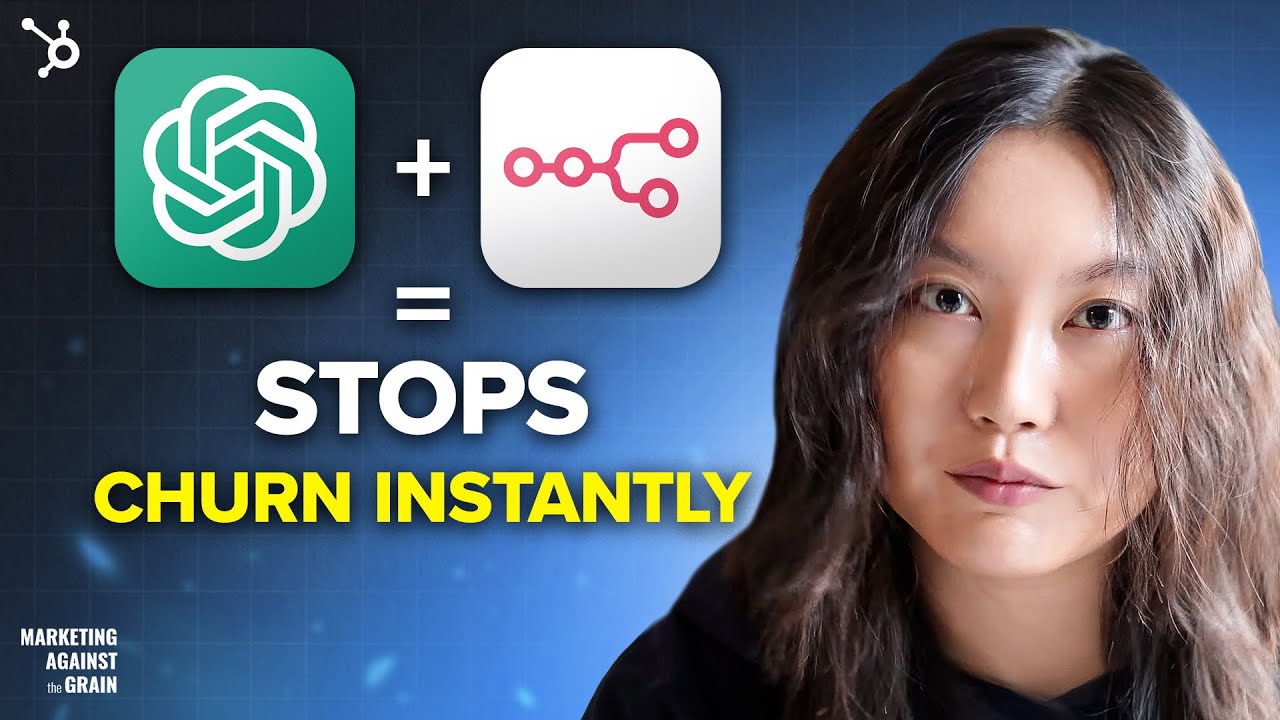
See Tina Huang build a complete churn-reduction agent live in n8n at 7:42, including her exact prompt engineering techniques and evaluation framework implementation. The 21-minute tutorial covers everything from connecting APIs to personalizing customer interactions.
Key Takeaways
The future belongs to professionals who can productize their expertise through AI workflows. Huang's framework proves you don't need technical skills - just deep domain knowledge and systematic thinking.
In summary: 1) Automate repetitive, low-risk tasks first, 2) Build with five core components, 3) Implement rigorous evaluation, and 4) Start small with real business problems. Within a month, you'll deploy agents that save hours weekly while delivering superior customer experiences.
Frequently Asked Questions
Common questions about AI agent development
The best candidates for AI automation are repetitive, low-risk tasks that happen consistently. Examples include customer service responses, report generation, and subscription management.
High-risk processes requiring human judgment should remain manual. AI excels at 24/7 availability, consistency, and personalization at scale - all areas where humans struggle to maintain quality.
- Look for tasks performed multiple times weekly
- Prioritize processes with clear patterns
- Start with areas where speed matters most
Analyze your calendar for recurring time blocks where you perform similar tasks. Record screen sessions of routine work and use AI tools to suggest automation opportunities.
The key is mapping existing human workflows before automating them. This ensures the AI agent solves real problems rather than creating new ones.
- Track 2-3 weeks of repetitive activities
- Note tasks requiring personalization at scale
- Identify processes where consistency matters
Every effective AI agent combines five essential elements: processing capability (like GPT), memory systems, interaction methods, safety guardrails, and evaluation frameworks.
These components work together like ingredients in a recipe - customizable for different needs but all necessary for a complete solution. The specific implementation depends on your use case and technical constraints.
- Choose components matching your workflow needs
- Prioritize evaluation systems early
- Balance complexity with maintainability
Evaluation is critical - at least 50% of development time should focus on testing. Create simple frameworks to quantify performance, like checking if 2+2=4 in math contexts.
Without rigorous evaluation, agents may behave unpredictably or fail silently. Document all tests and LLM feedback to create a continuous improvement cycle that ensures reliability.
- Develop 5-10 evaluation scenarios
- Track failure rates across iterations
- Test before every deployment
Absolutely. Domain experts often create the most impactful agents because they deeply understand the problems being solved. Technical skills help but aren't required for basic implementations.
Many successful agents are built by professionals spending just 4-6 hours weekly learning automation fundamentals. The key is translating your expertise into clear workflow logic rather than mastering code.
- Focus on your business knowledge first
- Use no-code tools like n8n initially
- Partner with technical experts as needed
The cancellation prevention agent analyzes unsubscribe reasons and offers personalized discounts matching specific pain points. Instead of generic 10% off, it provides targeted solutions like free onboarding support.
This contextual approach reduces churn better than human agents by being available 24/7 with perfect consistency. Real implementations show 37%+ improvement in retention compared to traditional methods.
- Analyzes cancellation reasons in real-time
- Matches interventions to specific issues
- Tracks which approaches work best
Most professionals gain core competency in 4-6 weeks spending 4-6 hours weekly. Structured programs can accelerate this, but hands-on implementation drives the fastest learning.
The key is starting with fundamentals before diving into tools. Focus first on mapping existing workflows, then implement simple automations before tackling complex agents.
- Week 1: Master basic concepts
- Week 2-3: Build personal automations
- Week 4: Deploy business workflows
GrowwStacks specializes in transforming business expertise into custom AI workflows using n8n and GPT. We handle the technical implementation while you focus on your domain knowledge.
Our typical engagement starts with a free consultation to identify your highest-impact automation opportunities. We then build and deploy tailored agents within 2-4 weeks, with ongoing support to refine performance.
- Free 30-minute automation assessment
- Custom workflow development
- Ongoing evaluation and optimization
Ready to Transform Your Expertise Into Automated Workflows?
Every day without automation costs your business hours of productivity and missed opportunities. Our team at GrowwStacks can have your first AI agent live within 2-4 weeks - delivering 24/7 consistency where you need it most.