How to Build Autonomous AI Agents That Complete Real Business Tasks
Most businesses struggle with repetitive workflows that consume valuable time - from appointment scheduling to data processing. Agentic AI systems can automate these complex tasks by combining planning, memory and tool integration. This guide shows you how these systems work with a practical n8n email automation example you can implement today.
The Agentic AI Revolution
Artificial intelligence has evolved from simple rule-based systems to today's agentic AI that can plan, decide, and act autonomously. While traditional AI followed a request-response model, agentic systems introduce goal-driven behavior, decision-making capabilities, and the ability to use external tools. This represents a fundamental shift from passive intelligence to actionable intelligence.
The evolution happened in three phases: Traditional AI (rule-based systems), Large Language Models (improved reasoning), and now Agentic AI (combining LLMs with planning, memory and tools). This progression has transformed AI from narrow task-specific tools to systems that can complete complex workflows with minimal human intervention.
Business impact: Agentic AI is considered the next major productivity leap after cloud computing and mobile technology, with potential to automate reasoning, tool usage, and complete tasks across industries.
Core Components of AI Agents
Effective AI agent systems combine several key components that work together to enable autonomous operation. These components mirror how humans solve problems in real life, making the systems more intuitive and capable.
The five essential components are: Goal definition (understanding objectives), Planning (breaking goals into steps), Execution (performing actions using tools), Memory (storing information from previous steps), and Feedback loops (evaluating results and improving). This architecture allows agents to operate continuously toward defined objectives.
- Autonomy: Shifts from prompt-based to goal-oriented systems
- Planning: Enables multi-step problem solving and workflow execution
- Memory: Provides context awareness and learning over time
- Tools: Allows interaction with external systems and APIs
- Feedback: Enables continuous improvement through evaluation
Frameworks and Tools for Building Agents
Developers don't build agentic AI systems from scratch - they use specialized frameworks that provide pre-built components for orchestration, tool integration, memory, and execution. These frameworks dramatically reduce development time while ensuring reliable operation.
Popular options include LangChain (general agent development), AutoGen (multi-agent collaboration), CrewAI (role-based agents), and AutoGPT (autonomous experimentation). Each framework has strengths for different use cases, from learning and experimentation to business workflow automation.
Tool integration: Modern AI agents connect to vector databases (Chroma, Pinecone), planning systems, and execution tools (APIs, Python functions) to transform from conversational interfaces into operational automation layers.
Memory and Long-Term Context
Memory is what truly separates simple AI assistants from genuinely intelligent agents. Without memory, AI systems behave like stateless chatbots - every interaction starts from zero. With memory, agents can maintain continuity, avoid repeating mistakes, and improve decisions over time.
There are three primary memory types: Buffer memory (short-term context), Summary memory (compressed past interactions), and Vector database memory (long-term knowledge using embeddings). Vector databases like Chroma and Pinecone enable semantic search based on meaning rather than exact keywords.
- Enables personalization and context awareness
- Improves efficiency by avoiding redundant processing
- Supports long-running autonomous operations
- Implemented through embedding models and vector databases
Planning and Decision Making
Planning is what transforms AI from simple responders into strategic problem solvers. Instead of solving problems in a single response, agents operate through iterative execution loops: define objectives, analyze requirements, create task lists, execute, evaluate, and adjust.
Two key reasoning strategies are Chain of Thought (linear step-by-step) and Tree of Thought (exploring multiple paths). Modern agents often use graph-based workflows where tasks are nodes connected by decision paths, enabling conditional execution, iterative loops, and parallel processing.
Real-world example: A market research agent might automatically search for industry data, analyze competitors, generate insights, and create a formatted report - all as a single autonomous workflow.
Real-World Applications
Agentic AI is already transforming business operations through practical applications that combine planning, memory, and tool integration. These systems demonstrate the real-world value of autonomous AI beyond theoretical concepts.
Key applications include autonomous research assistants that validate multiple sources, multi-agent collaboration systems (like human teams), and end-to-end automation pipelines for tasks like email processing. Integration with platforms like Zapier, Notion, and Google Sheets turns agents into operational automation layers.
- Reduces manual workload in knowledge-based tasks
- Enables 24/7 operation of complex workflows
- Improves consistency and reduces human error
- Scales operations without proportional staffing increases
Practical n8n Implementation
The tutorial demonstrates building an automated email responder using n8n, Google Forms, Sheets, and Gmail. This practical example shows how agentic principles can be implemented with existing automation tools.
The workflow triggers when form submissions arrive, processes the data, checks conditions (like future appointment dates), and sends automated confirmation emails. This demonstrates core agent capabilities: triggering on events, processing information, making decisions, and executing actions through tool integration.
Key steps: 1) Create Google Form for appointments 2) Set up n8n trigger on new submissions 3) Configure Google Cloud OAuth 4) Add conditional logic for date validation 5) Build automated email response template 6) Connect to Gmail for sending.
Watch the Full Tutorial
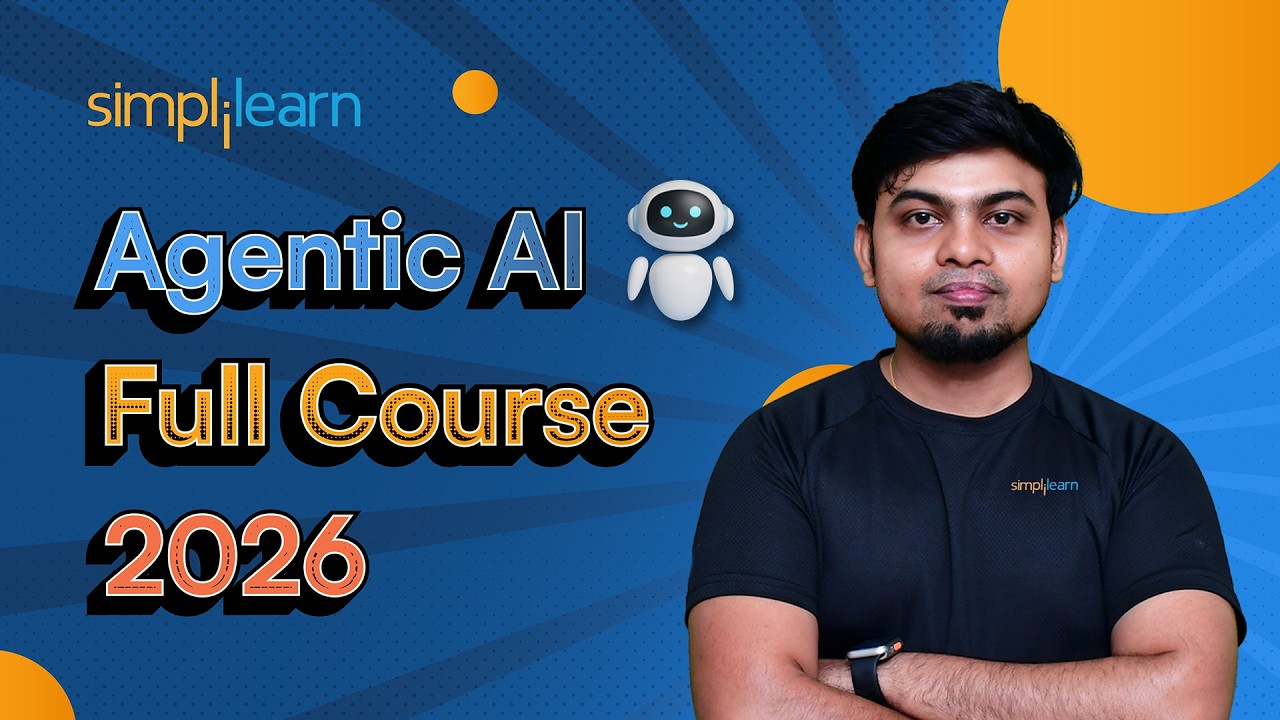
The video tutorial (starting at 4:12) walks through each step of building the n8n automation, including Google Cloud setup, OAuth configuration, and workflow testing. Seeing the actual implementation helps clarify how these agentic principles translate to real systems.
Frequently Asked Questions
Common questions about agentic AI and automation
Agentic AI refers to AI systems that can act autonomously to achieve goals rather than just responding to individual prompts. Unlike traditional AI that follows a simple request-response model, agentic AI introduces goal-driven behavior, decision-making, tool usage, and iterative reasoning.
While traditional AI generates content, agentic AI performs complete tasks by combining language models with planning, memory and external tool integration. This represents a fundamental shift from passive intelligence to systems that can independently execute complex workflows.
- Traditional AI: Narrow, task-specific, requires predefined logic
- Large Language Models: Improved reasoning but still reactive
- Agentic AI: Goal-oriented, autonomous, tool-using systems
Agentic AI systems typically include five key components that work together to enable autonomous operation. These components mirror how humans solve problems in real life, making the systems more intuitive and capable.
The components are: Goal definition (understanding objectives), Planning (breaking goals into steps), Execution (performing actions using tools), Memory (storing information from previous steps), and Feedback loops (evaluating results and improving). This architecture allows agents to operate continuously toward defined objectives.
- Goal orientation replaces simple prompt-response
- Planning enables multi-step problem solving
- Tool integration transforms AI into operational systems
Agentic AI is transforming business operations through several practical applications that combine planning, memory, and tool integration. These systems demonstrate the real-world value of autonomous AI beyond theoretical concepts.
Key applications include autonomous research assistants that analyze multiple sources, multi-agent collaboration systems where specialized agents work like teams, and end-to-end automation pipelines for tasks like email processing. Other applications include AI coding tools that debug and deploy applications, personal productivity assistants, and workflow orchestration systems.
- Reduces manual workload in knowledge-based tasks
- Enables 24/7 operation of complex workflows
- Integrates with platforms like Google Sheets and Notion
Memory in AI agents comes in several forms, each serving different purposes in enabling autonomous operation. Without memory, AI agents would behave like stateless chatbots starting from zero in each interaction.
The primary memory types are: Buffer memory for short-term context during active sessions, Summary memory that compresses past interactions into key points, and Vector database memory that stores long-term knowledge using semantic embeddings. Vector databases like Chroma and Pinecone enable similarity-based retrieval of relevant information.
- Enables personalization and context awareness
- Improves efficiency by avoiding redundant processing
- Implemented through embedding models and vector databases
Several specialized frameworks exist for building AI agents, each with unique strengths for different use cases. These frameworks provide pre-built components that dramatically reduce development time while ensuring reliable operation.
Popular options include LangChain for general agent development, AutoGen (Microsoft) for multi-agent collaboration, CrewAI for role-based agent teams, and AutoGPT for autonomous experimentation. BabyAGI and similar projects demonstrate experimental autonomous capabilities that influence commercial frameworks.
- LangChain: Best for learning and general development
- AutoGen: Specialized for multi-agent scenarios
- CrewAI: Optimized for business workflow automation
A basic AI agent workflow can be built using automation platforms like n8n to connect common business tools. The tutorial demonstrates building an automated appointment confirmation system using Google Forms, Sheets and Gmail.
The workflow triggers when form submissions arrive, processes the data, checks conditions (like future appointment dates), and sends automated confirmation emails. This demonstrates core agent capabilities: triggering on events, processing information, making decisions, and executing actions through tool integration.
- Uses n8n for workflow orchestration
- Connects Google Forms, Sheets and Gmail
- Includes conditional logic for validation
While agentic AI offers significant benefits, it also introduces new challenges and risks that must be carefully managed. These include both technical limitations and broader ethical considerations.
Key challenges include alignment (ensuring agents match human intentions), hallucination (generating incorrect but confident outputs), and maintaining control over autonomous systems. Other risks include incorrect decisions from incomplete information, security vulnerabilities from tool interactions, and over-dependence on automation.
- Requires careful monitoring and validation
- Needs human oversight for critical decisions
- Must balance autonomy with control
GrowwStacks specializes in implementing custom automation solutions that combine AI agents with business workflows. Our team designs systems tailored to your specific operational needs and existing tool stack.
We offer complete agentic AI implementations including: Custom workflow design, Integration with your CRM/ERP systems, Multi-agent collaboration setups, and Ongoing optimization. Our solutions are designed to work seamlessly with your current operations while delivering measurable efficiency gains.
- Free consultation to assess automation opportunities
- Implementation in as little as 2-4 weeks
- Ongoing support and optimization
Ready to Automate Your Business with AI Agents?
Manual workflows are costing you time and creating bottlenecks in your operations. Our AI automation specialists can design and implement custom agentic systems that handle your repetitive tasks within 30 days.