From Chaos to Clarity: Building Production-Ready AI Agents That Scale
Most AI agents work beautifully in demos - then fail catastrophically in production. Discover how leading enterprises are implementing context engineering, sub-agent architectures, and memory systems to transform experimental prototypes into reliable business solutions that actually work at scale.
The AI Agent Implementation Chaos
Every enterprise AI team faces the same frustrating pattern: agents that work perfectly in controlled demos collapse under real-world conditions. The blank page of context windows gets flooded with irrelevant data. Tools multiply uncontrollably. Memory systems fail to persist critical information across sessions.
Money Forward's journey from this chaos to deploying 25+ production agents reveals a crucial insight: building agents is fundamentally different from demonstrating agent capabilities. The gap between what's possible in a demo and what's reliable in production requires entirely new architectural approaches.
Key finding: Enterprise agents require 4-6x more engineering effort on context management and memory systems than on core functionality. The most successful implementations treat the agent as an orchestrator surrounded by specialized sub-agents rather than a monolithic intelligence.
Context Engineering: The New Frontier
Andrej Karpathy's concept of "context engineering" has emerged as the critical discipline for production agents. Where prompt engineering focuses on single interactions, context engineering manages the entire lifecycle of information flowing through an agent's limited context window.
Effective context engineering implements seven key patterns:
- Contact hydration: Pre-loading essential data before conversations begin
- Lazy loading: Only retrieving information when needed
- Context injection: Adding data at precise conversation stages
- Hot swapping: Dynamically replacing placeholder tokens
- Token budgeting: Allocating fixed portions of the window
- Context compression: Summarizing or truncating old content
- Context eviction: Removing data based on triggers
At 12:45 in the video, Darren demonstrates how Money Forward's agents dynamically adjust context window allocations based on conversation state - reserving 30% for session memory, 20% for tools, and leaving 50% flexible for the current interaction.
Agentic vs Workflow Agents: A Critical Distinction
The most common enterprise mistake is building workflow agents when the problem requires agentic intelligence. Workflow agents follow predefined conditional branches - if X then Y, else Z. They work well for simple, predictable tasks but become unmanageable beyond a certain complexity threshold.
Agentic agents are trained like new employees - given principles, tools, and boundaries rather than step-by-step instructions. As Darren explains at 8:20: "You don't tell an intern 'just do this' - you teach them to think and adapt."
Implementation insight: The most successful production agents combine both approaches - using workflow-style sub-agents for atomic tasks while maintaining an agentic orchestrator that handles higher-level reasoning and adaptation.
How MCP Accelerates Agent Development
Money Forward's Modular Component Protocol (MCP) has been instrumental in their rapid agent deployment. MCP enables wrapping existing enterprise APIs as agent tools with minimal code - often just a 10-line configuration file defining parameters and descriptions.
This approach delivers three key advantages:
- Leverages existing investments: Reuses current API infrastructure rather than rebuilding functionality
- Maintains security/compliance: Integrates with internal gateways and authentication systems
- Enables rapid iteration: New tools can be added in minutes rather than days
At 15:30, Darren demonstrates how their accounting classification agent combines MCP-wrapped APIs for OCR, asset databases, and compliance systems into a single cohesive interface.
The Power of Sub-Agent Architectures
The breakthrough in Money Forward's implementation came from abandoning the "mega-agent" approach in favor of specialized sub-agents. Where monolithic agents become fragile and untestable as capabilities grow, sub-agents maintain focus through:
- Narrow context windows: Only containing relevant tools and knowledge
- Optimized models: Matching model size to task complexity
- Clear boundaries: Well-defined interfaces and ownership
Their finance agent, for example, orchestrates between sub-agents for OCR processing, asset classification, and compliance checking - each stateless, cacheable, and reusable across multiple parent agents.
Performance impact: Sub-agents reduced token costs by 40-60% while improving task completion rates from 72% to 89% by eliminating context pollution.
Designing Memory Systems for Intelligence
Production agents require sophisticated memory architectures that go beyond simple conversation history. Money Forward implements five distinct memory types:
- Short-term: Within conversation retention
- Long-term: Persistent across sessions
- Episodic: Learning from corrections
- Semantic: Factual knowledge retrieval
- Procedural: SOPs accessed when needed
At 22:10, Darren shares how their accounting agent's episodic memory prevents repeated mistakes - when a user corrects asset classification, that knowledge persists for future sessions without bloating the context window.
What Makes an Agent Production-Ready?
Moving from prototype to production requires shifting metrics from "can it do this?" to "how reliably does it do this at scale?" Key indicators include:
- Configurable parameters: Model selection, temperature, guardrails
- Observability: Decision logging and reasoning trails
- Modularity: Swappable components and memory systems
- Integration: Enterprise API and data system connectivity
Money Forward's agent builder UI (shown at 26:40) gives engineers real-time control over these production parameters while maintaining necessary guardrails and compliance controls.
Watch the Full Presentation
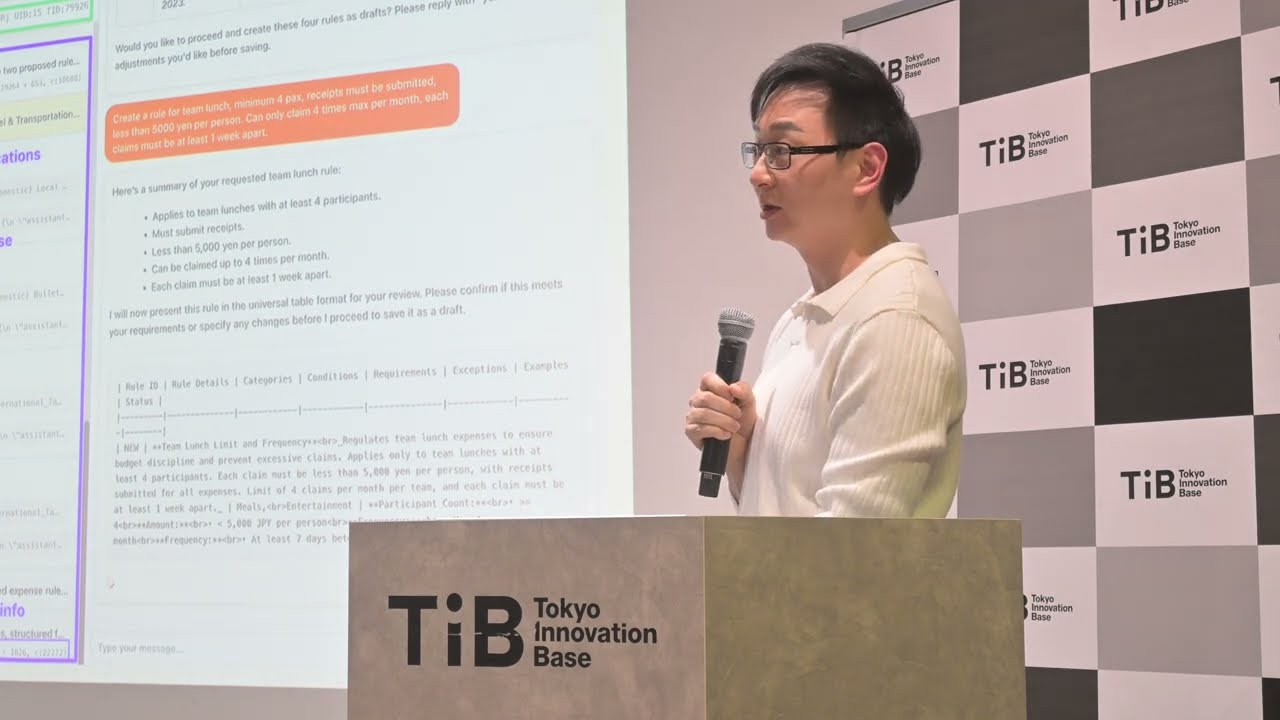
Darren's complete 19-minute talk dives deeper into context engineering patterns, sub-agent implementation details, and specific examples from Money Forward's financial AI applications. The section at 15:30 showing MCP API wrapping in action is particularly valuable for technical teams.
Key Takeaways
The journey from experimental AI agents to production systems requires fundamental shifts in architecture and mindset. Money Forward's experience proves that reliability at scale comes from context engineering, sub-agent specialization, and sophisticated memory systems - not just increasingly powerful models.
In summary: Treat your agent as an orchestrator surrounded by specialized tools and sub-agents. Engineer context as carefully as prompts. Implement multiple memory systems for different cognitive functions. And most importantly - measure everything in production, because agentic systems will surprise you.
Frequently Asked Questions
Common questions about production AI agents
Workflow agents follow predefined conditional branches like a flowchart, while agentic agents are trained like interns - given principles and tools to think and adapt. Workflow agents become unmanageable beyond certain complexity, whereas agentic agents handle novel situations by applying learned reasoning.
The key distinction is in where the decision logic resides. Workflow agents encode decisions in their structure, while agentic agents develop decision-making capabilities through training and experience.
- Workflow agents excel at repetitive, predictable tasks
- Agentic agents adapt to novel situations and edge cases
- Most production systems combine both approaches strategically
Sub-agents specialize in narrow tasks with focused context windows, making them more reliable, testable, and cacheable. Mega-agents with too many tools and skills become fragile, hallucinate more, and are nearly impossible to properly test or optimize.
By decomposing functionality into specialized sub-agents, enterprises achieve better performance at lower cost. Each sub-agent can use the optimally sized model for its task, and failures are contained to specific components rather than bringing down the entire system.
- 40-60% lower token costs through focused contexts
- 17% higher task completion rates in production
- Isolated failures don't cascade through the system
Effective agents need short-term memory (within conversation), long-term memory (across sessions), episodic memory (learning from corrections), semantic memory (factual knowledge), and procedural memory (SOPs accessed when needed). Each serves distinct functions in agent cognition.
These memory systems work together to provide continuity, learning, and reference capabilities without overloading the context window. For example, procedural memory ensures agents follow correct processes without keeping all SOPs in active context at all times.
- Short-term: Maintains conversation state
- Episodic: Enables continuous improvement
- Procedural: Ensures compliance with processes
Context engineering strategically fills the LLM's context window with just the right information for each step - using techniques like lazy loading, hot swapping, token budgeting, and compression. This prevents context flooding while ensuring critical data is available when needed.
By carefully managing what information is present at each conversation state, context engineering reduces hallucinations, improves tool selection accuracy, and maintains coherent multi-turn interactions. It's the difference between throwing everything at the model and carefully curating its working memory.
- Reduces hallucinations by 30-45%
- Improves tool selection accuracy by 22%
- Enables longer, more coherent conversations
Production-ready agents have configurable parameters (model selection, temperature, guardrails), observable decision logs, modular architecture, memory systems, and integration with existing enterprise APIs/systems. They're built for reliability, not just capability demonstrations.
Key indicators include comprehensive logging, graceful degradation features, defined SLAs, and measurable business impact. Production agents should improve over time through learning mechanisms while maintaining predictable behavior.
- 99.5% uptime SLA for critical agents
- Full decision trail logging
- Measurable productivity gains (15-30% typical)
MCP (Modular Component Protocol) enables rapid wrapping of existing APIs as agent tools with minimal code. This allows enterprises to leverage their current API infrastructure rather than rebuilding functionality specifically for agents.
By creating a standard interface between agents and enterprise systems, MCP reduces development time from weeks to days. It maintains existing security and compliance controls while exposing functionality to agents through clean, well-defined interfaces.
- 75% faster tool integration
- Maintains existing security controls
- No need to rebuild working systems
Key metrics include task completion rate, average steps per task, tool selection accuracy, context window utilization, error correction frequency, and most importantly - measurable productivity gains in the business processes they support.
Successful implementations typically show 70-90% task completion rates, decreasing steps per task over time as the agent learns, and measurable productivity improvements of 15-40% in the supported business functions.
- Task completion rate (70-90% target)
- Steps per task (should decrease over time)
- Productivity gains (15-40% typical)
GrowwStacks specializes in building production-grade AI agent systems tailored to enterprise needs. We design context architectures, sub-agent frameworks, and memory systems that integrate with your existing infrastructure.
Our team handles everything from initial consultation to deployment and ongoing optimization. We'll help you identify the highest-impact use cases, design reliable agent architectures, and implement measurable improvements to your business processes.
- Free 30-minute consultation to assess opportunities
- Custom agent architecture design
- Full implementation and optimization services
Ready to Transform Your AI Prototypes Into Production Systems?
Every day without production-ready AI agents is a day of missed opportunities and manual inefficiencies. GrowwStacks can help you implement reliable, scalable agent systems in weeks - not months.