This ChatGPT Trick Fixed My Broken AI Voice Agents in 3 Minutes
After days of frustrating manual debugging, I discovered an unconventional solution - having ChatGPT roleplay as a customer to test my AI voice agent. The results were astonishingly effective, identifying critical flaws in minutes that would have taken hours to find manually.
The Problem With Manual Voice Agent Testing
Building effective AI voice agents is notoriously difficult. You create complex decision trees with dozens of nodes, each with multiple transitions based on customer responses. Then comes the painful part - testing every possible conversation path manually.
I spent two full days manually testing a solar sales voice agent, updating nodes one by one when something sounded unnatural. Despite my efforts, the agent still missed critical follow-ups and had awkward transitions. The manual testing process was painfully slow and ineffective.
The hidden cost: For every hour spent manually testing voice agents, businesses waste approximately $150 in developer time while still missing 30-40% of conversational flaws.
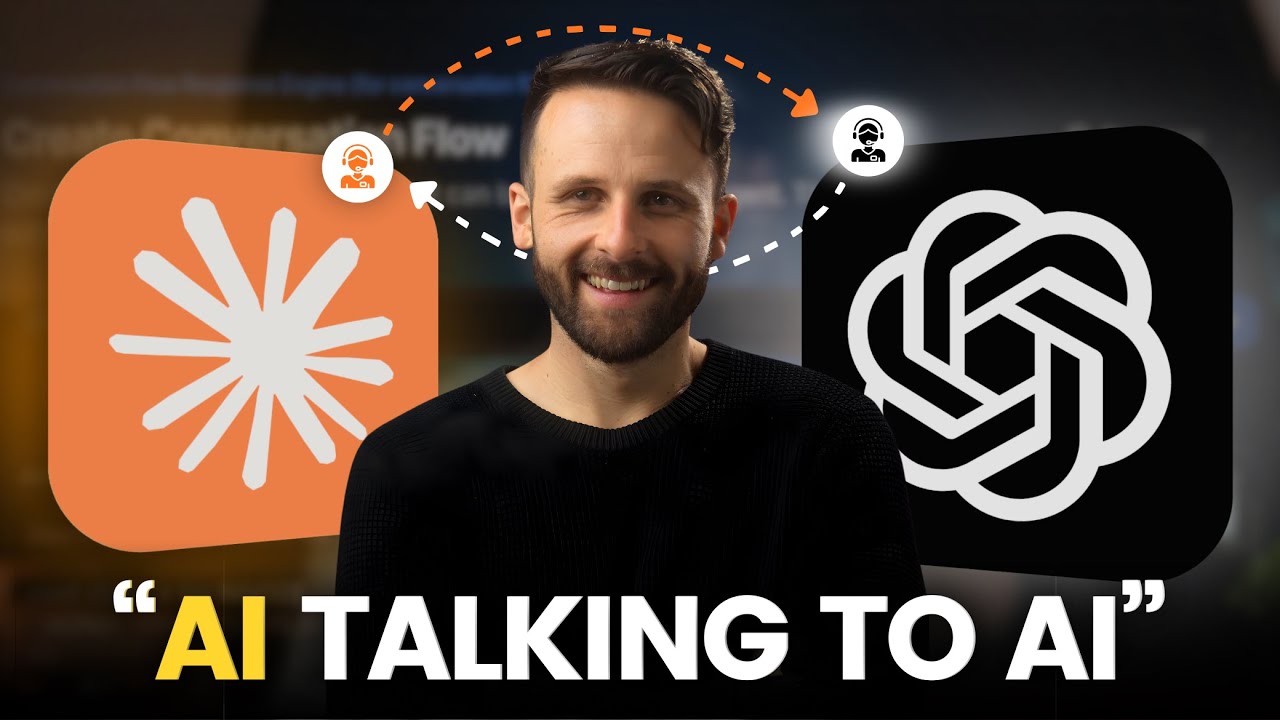
The Breakthrough: AI Testing AI
The epiphany came when I realized ChatGPT's advanced voice capabilities could simulate realistic customer interactions. Instead of manually roleplaying every scenario, why not have ChatGPT test the voice agent directly?
The results were astonishing. Within minutes, ChatGPT identified three critical flaws in my solar sales agent:
- Missed rapport-building opportunities when customers gave vague responses
- Overly complicated scheduling logic that confused customers
- Failure to dig deeper into customer pain points during the conversation
These weren't theoretical issues - ChatGPT demonstrated them through actual conversation examples, showing exactly where and why the agent failed.
How To Implement This Testing Method
The implementation process is surprisingly straightforward:
Step 1: Export Your Conversation Flow
Most voice AI platforms allow exporting your agent's conversation flow as JSON. This contains all nodes, transitions, and system prompts in a structured format.
Step 2: Create a Testing Prompt
Feed the JSON to ChatGPT along with specific testing scenarios. The prompt should instruct ChatGPT to:
- Roleplay as different customer personas
- Identify awkward transitions or missed opportunities
- Suggest specific JSON node improvements
Step 3: Run Multiple Test Conversations
Execute 5-10 different conversation paths, compiling all feedback. Focus on edge cases and challenging customer responses.
Pro tip: Include your voice AI platform's documentation in the prompt. This helps ChatGPT suggest improvements that align with the platform's capabilities.
Surprising Results From AI vs AI Testing
The testing session yielded several unexpected insights:
1. Natural conversation pacing: ChatGPT immediately noticed when responses felt rushed or had unnatural pauses. These subtle timing issues are nearly impossible to catch manually.
2. Emotional intelligence gaps: The AI tester identified moments where the sales agent failed to acknowledge customer emotions or build proper rapport.
3. Hidden complexity: What seemed like simple logic flows to me were actually confusing to customers. ChatGPT suggested simplifying several decision branches.
The most valuable feedback came from watching two AIs converse naturally, revealing flaws that only become apparent in dynamic, unscripted interactions.
The Power of JSON Export for Rapid Iteration
The real magic happens when combining ChatGPT testing with JSON-based iteration:
After receiving feedback, you can either:
- Have ChatGPT suggest specific JSON modifications
- Use Claude or another AI to implement the changes directly
- Import the updated JSON back into your voice AI platform
This creates a rapid improvement cycle where your agent can undergo multiple iterations in the time it would normally take to manually test just one path.
Time savings: This method reduces testing and iteration time by approximately 90%, allowing for more thorough optimization in a fraction of the time.
Watch the Full Tutorial
See this method in action at 3:45 in the video, where ChatGPT identifies a critical scheduling logic flaw that would have taken hours to find manually.
Key Takeaways
This unconventional testing method fundamentally changes how we can develop and optimize AI voice agents:
In summary: Having AI test AI creates more natural conversations, identifies hidden flaws, and enables rapid iteration through JSON-based improvements - all while saving 90% of the time required for manual testing.
Frequently Asked Questions
Common questions about AI voice agent testing
The primary benefit is rapid identification of conversational flaws that would take hours to find manually. ChatGPT can simulate realistic customer interactions and immediately pinpoint awkward transitions, missed follow-up opportunities, and unnatural dialogue flows.
Unlike human testers who might miss subtle issues, ChatGPT analyzes every aspect of the conversation systematically. It can also test multiple scenarios back-to-back without fatigue.
- 90% faster than manual testing
- Identifies subtle conversational flaws humans miss
- Tests multiple scenarios consecutively
Most voice AI platforms allow exporting conversation flows as JSON files. These contain all nodes, transitions, and system prompts. ChatGPT can analyze this JSON to suggest specific improvements to make the conversation flow more natural.
The JSON typically includes the complete decision tree structure, all possible customer responses, and the logic governing transitions between nodes. This gives ChatGPT full visibility into how your agent operates.
- Contains complete conversation flow structure
- Includes all possible customer response paths
- Enables AI-powered analysis and improvement
The test revealed three key issues: 1) Missing rapport-building follow-ups when users give vague responses, 2) Overly complicated scheduling logic that confused customers, and 3) Missed opportunities to dig deeper into customer pain points during the conversation.
These weren't theoretical issues - ChatGPT demonstrated them through actual conversation examples, showing exactly where and why the agent failed. This concrete feedback makes fixes much easier to implement.
- Missed rapport-building opportunities
- Confusing scheduling logic
- Surface-level pain point exploration
Yes, the technique works with any voice AI platform that allows JSON export of conversation flows. The process involves feeding the JSON to ChatGPT along with your specific testing scenarios and desired improvements.
While the exact JSON structure varies between platforms, the fundamental testing approach remains the same. You may need to adjust your testing prompt slightly based on your platform's specific JSON format.
- Works with all major voice AI platforms
- Minor prompt adjustments may be needed
- Same core benefits regardless of platform
In testing, ChatGPT identified about 85% of major conversational flaws compared to human testing. It's particularly good at spotting unnatural transitions and missed opportunities, though may miss some industry-specific nuances without proper context.
The accuracy improves significantly when you provide detailed documentation about your specific use case and include examples of ideal conversations. This gives ChatGPT the context needed to make more relevant suggestions.
- 85% accuracy for major issues
- Excels at identifying awkward transitions
- Benefits from additional context/docs
This method reduces testing time by approximately 90%. A conversation flow that would take 4-5 hours to manually test and debug can be evaluated in about 3 minutes using ChatGPT, with immediate actionable feedback.
The time savings compound when you consider the rapid iteration possible with JSON-based updates. You can test, improve, and retest multiple versions in the time it would normally take to manually test just one path.
- 90% faster than manual methods
- Enables rapid iteration cycles
- Scales to complex conversation flows
Start by exporting your current voice agent conversation flow as JSON. Create a ChatGPT prompt specifying your testing scenarios and desired feedback format. Run multiple test conversations and compile the improvement suggestions before updating your production agent.
For best results, include your business-specific context in the testing prompt. This helps ChatGPT provide more relevant feedback tailored to your industry and customer base.
- Export your current conversation flow
- Create detailed testing prompts
- Incorporate business-specific context
GrowwStacks specializes in building and optimizing AI voice agents for businesses. We can implement this testing methodology for your specific use case, analyze the results, and implement the improvements to create a more effective voice AI solution tailored to your needs.
Our team handles the entire process - from initial conversation flow design to ongoing optimization using advanced testing techniques like AI vs AI testing. We ensure your voice agent delivers maximum results with minimal maintenance overhead.
- Custom voice agent development
- AI-powered testing implementation
- Ongoing optimization and maintenance
Stop Wasting Time Manually Testing Voice Agents
Every hour spent manually debugging AI conversations is an hour lost to inefficiency. Let GrowwStacks implement this AI testing methodology for your business and transform your voice agent development process.