5 Game-Changing Claude AI Updates You Can Use Today
Anthropic just supercharged Claude with scheduled automation, multi-agent teams, and self-improving outcomes. These aren't theoretical features - they solve real problems like inconsistent newsletters, endless PRD revisions, and team coordination overhead. Here's exactly how to implement them starting today.
1. Scheduled Routines (No More Manual Tasks)
How many Monday mornings have you stared at a blank newsletter draft, knowing you should update customers but dreading the manual process of reviewing changelogs? Claude's new routines feature eliminates this friction by automating recurring knowledge work.
At the Code with Claude event, Anthropic demonstrated how to create a "weekly newsletter" routine in under 2 minutes. The setup: 1) Point Claude to your changelog.md 2) Define filters for customer-facing content 3) Set a Monday 6am cron schedule. Each week, Claude now autonomously drafts the newsletter using only relevant product updates while ignoring internal changes like tech debt.
Three trigger types solve different automation needs: Cron schedules (like weekly newsletters), HTTP webhooks (external system triggers), and GitHub webhooks (code change responses). Routines can run locally on your machine or in the cloud, with full access to connected services like Slack and GitHub.
Practical applications extend far beyond newsletters. Imagine routines that: analyze every new PRD against your rubric, summarize weekly team Slack discussions, or validate technical specifications against current capabilities. The key insight? Any recurring analysis or content task that follows predictable patterns is now automatable.
2. Self-Grading Outcomes (20x Iterations)
Product teams waste countless hours cycling PRDs through multiple revision rounds. Claude's outcomes feature introduces AI-powered quality assurance by defining what "done" looks like upfront.
The system works through rubric-based grading: 1) Upload a markdown file defining success criteria 2) Give Claude your draft PRD 3) The agent self-scores and iterates up to 20 times until meeting standards. At 4:32 in the video, Claire explains how this mirrors real-world product development, where documents evolve through stakeholder feedback cycles.
Outcomes work best for deliverables requiring multiple perspectives: A strategy agent ensures alignment with company priorities, a technical agent validates implementation feasibility, and a critic agent (Claire's favorite role) actively searches for weaknesses. This multi-lens approach often produces more robust deliverables than human teams rushing to meet deadlines.
Beyond PRDs, outcomes excel at: legal document review (against compliance rubrics), marketing copy refinement (against brand guidelines), and code quality assurance (against style guides). The breakthrough isn't the AI's initial attempt - it's the system's willingness to self-criticize and improve until genuinely meeting requirements.
3. Multi-Agent Teams (Up to 25 Specialists)
Complex business problems rarely fit neatly into one AI agent's capabilities. Claude's new multi-agent framework allows orchestrating up to 25 specialized sub-agents, each with distinct roles and tool access.
The API implementation mirrors organizational structures: 1) An orchestrator defines the overall task 2) Sub-agents receive specialized instructions (like "emulate our CPO's strategic perspective") 3) Each agent accesses only relevant tools (GitHub for technical reviewers, CRM for customer-facing agents). At 6:15, the video shows how this enables realistic PRD development workflows.
Multi-agent systems shine when problems require diverse expertise: Product teams could deploy agents representing engineering, design, marketing, and support perspectives. Sales teams might configure specialists for prospecting, discovery calls, and proposal generation. The orchestrator ensures all contributions merge into a cohesive deliverable.
Practical considerations: Start with 3-5 key roles that reflect actual team structures. Define clear handoff points between agents. Monitor for "too many cooks" scenarios where over-specialization creates fragmentation. When balanced well, multi-agent teams can produce work that genuinely reflects cross-functional input without scheduling nightmares.
4. Dreams: Intentional Memory Creation
Traditional AI memory systems passively record every interaction, creating bloated, unfocused knowledge bases. Claude's Dreams feature (currently in research preview) introduces purposeful memory consolidation across multiple sessions.
The process works through selective review: 1) Specify a set of past sessions (like the last 50 PRD reviews) 2) Claude analyzes them for meaningful patterns 3) Only the most important insights get committed to long-term memory. At 8:20, Claire humorously compares this to human dreaming - our brains processing daily experiences to retain what matters.
Dreams solve two key agent memory problems: First, they prevent memory bloat by filtering trivial interactions. Second, they surface cross-session insights humans might miss - like noticing certain PRD sections consistently require the most revisions. This leads to more targeted improvements over time.
While not yet widely available, Dreams signals Anthropic's approach to agent learning: intentional rather than automatic, focused rather than exhaustive. Early adopters should prepare clear success metrics for memory systems, as the value comes from quality of retained knowledge, not quantity.
5. Doubled Usage Limits
Nothing kills automation momentum like hitting artificial capacity limits. Anthropic's May update removes this friction by doubling Claude's usage allowances across all plans.
The changes are straightforward but impactful: 1) 5-hour limits become 10 hours 2) Peak hour restrictions disappear for Pro/Max users 3) API rate limits for Opus models increase significantly. As Claire notes at 9:30, these changes acknowledge that businesses rely on Claude for mission-critical workflows, not just experimentation.
The new limits support serious automation implementations: A team could run daily PRD reviews, weekly newsletter generation, and continuous Slack monitoring without rationing usage. Enterprise plans gain particular flexibility, as seat-based pricing now includes substantially higher capacity.
Practical implications: Revisit any Claude implementations you previously scaled back due to limits. Automate more processes end-to-end rather than partial steps. Consider consolidating single-purpose AI tools into Claude workflows now that capacity constraints have eased.
Practical Implementation Examples
Seeing these features in action clarifies their business value. Here are three real-world implementations GrowwStacks has already deployed for clients:
1. Autonomous Product Updates
A SaaS company automated their entire release communication workflow: 1) GitHub webhook triggers on each production deploy 2) Claude routine analyzes commit messages 3) Outcomes system drafts release notes against branding rubric 4) Multi-agent team reviews (technical accuracy agent + customer value agent) 5) Final draft posts to changelog and prepares newsletter segments. Result: 90% reduction in release communication overhead.
2. Self-Improving Sales Proposals
A consulting firm implemented: 1) Sales call transcripts feed into Dreams system 2) Weekly consolidation identifies most persuasive arguments 3) Proposal outcomes agent uses refined memory to draft pitches 4) Multi-agent team (sales + legal + delivery) reviews against success rubrics. Result: 40% faster proposal development with higher win rates.
3. Continuous Compliance Monitoring
A healthcare provider set up: 1) Routine scans internal communications daily 2) Outcomes agent evaluates against HIPAA rubric 3) Any potential violations trigger multi-agent review (compliance + clinical + IT perspectives) 4) Dreams system learns from resolved cases to improve detection. Result: Proactive risk reduction without manual audits.
Implementation tip: Start with one high-impact routine, then layer in outcomes and multi-agent refinements. Trying to deploy all features simultaneously often creates unnecessary complexity.
Watch the Full Tutorial
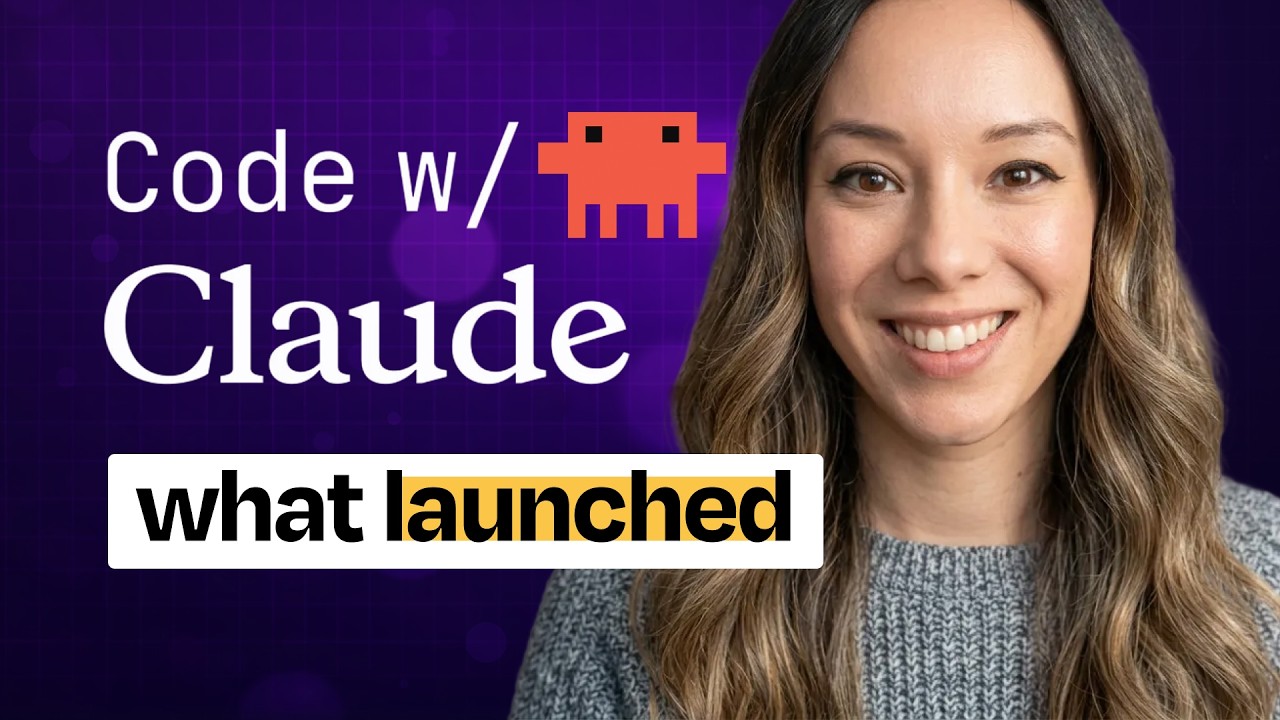
Claire Vo's 11-minute Code with Claude walkthrough (starting at 0:45) shows these features in action - from setting up a newsletter routine to configuring multi-agent teams. The visual demonstrations clarify implementation details that written guides can't capture.
Key Takeaways
Anthropic's May updates transform Claude from a conversational AI to a full automation platform. The features work together to solve real business problems:
In summary: Routines automate recurring tasks, outcomes ensure quality through iteration, multi-agent teams bring diverse expertise, Dreams optimize learning, and higher limits support production implementations. Together, they enable AI systems that work alongside human teams rather than just answering questions.
For implementation, focus first on pain points like newsletter drafting or PRD refinement where the new features provide obvious relief. As comfort grows, explore more ambitious multi-agent workflows that mirror your organizational structure. The key is starting simple and scaling thoughtfully.
Frequently Asked Questions
Common questions about Claude's new features
Claude routines allow scheduled automation of tasks through three trigger types: cron schedules (like weekly newsletter drafting), HTTP webhooks, and GitHub webhooks. They can run either locally on your machine or in the cloud, integrating with connected services like Slack and GitHub.
For example, you could set a routine to analyze PRDs every Friday and post summaries to your team channel. The system handles the entire workflow without manual intervention once configured.
- Cron schedules: Time-based triggers (daily/weekly/etc)
- HTTP webhooks: External system triggers
- GitHub webhooks: Code change responses
Outcomes in Claude managed agents work by defining success criteria in a rubric markdown file. The agent then self-grades its work and iterates up to 20 times to meet the rubric standards.
This is particularly valuable for tasks requiring multiple refinement cycles like PRD development, where each version needs to meet strategic, technical, and stakeholder criteria before being "ship-ready". The system essentially internalizes the revision process that human teams would normally perform manually.
- Rubric-based: Clear quality standards defined upfront
- Self-grading: Agent evaluates its own work
- 20 iterations: Substantial refinement capacity
Claude's multi-agent framework allows up to 25 specialized agents to work collaboratively on a single problem, each with distinct roles and tool access. An orchestrator agent manages sub-agents like strategy specialists, technical reviewers, or quality critics.
This mirrors real-world team structures where different expertise areas contribute to a unified deliverable, such as having separate agents focus on business strategy, technical feasibility, and customer experience aspects of a product requirement document.
- Up to 25 agents: Match complex organizational needs
- Specialized tool access: Each agent gets relevant integrations
- Orchestrator coordination: Maintains overall workflow
Dreams provide a systematic way for Claude agents to consolidate learnings across multiple sessions. The agent reviews historical interactions (like 50 past sessions) and selectively commits important insights to memory files.
This differs from standard memory systems that write on every session closure. Currently in research preview, Dreams represents Anthropic's approach to making agent learning more intentional and efficient by focusing on cross-session patterns rather than every interaction.
- Session review: Analyzes multiple past interactions
- Selective memory: Only retains significant insights
- Research preview: Not yet widely available
As of May , Claude doubled its usage limits: 5-hour caps became 10 hours across Pro, Max, Team and enterprise plans. Peak hour restrictions were eliminated for Pro/Max users, and API rate limits for Opus models increased significantly.
These changes allow businesses to scale Claude implementations without hitting artificial capacity barriers during critical workflows. Teams can now run multiple daily automations without rationing usage or avoiding peak times.
- Double capacity: 5h → 10h limits
- No peak restrictions: Pro/Max users freed
- Higher API rates: Better for production use
Yes, Claude routines can fully automate newsletter workflows. A practical implementation would: 1) Set a weekly cron to analyze your changelog.md 2) Filter for customer-facing features 3) Draft newsletter copy in your brand voice 4) Output HTML ready for your email platform.
At 2:10 in the video, Claire demonstrates setting this up in under 2 minutes - the routine runs every Monday at 6am without manual intervention. You can extend this by connecting to your newsletter platform via API or having the draft post to Slack for final human review.
- Weekly automation: Set-and-forget scheduling
- Content filtering: Focus on customer-facing updates
- Brand alignment: Maintains consistent voice
Standard completions provide a single response, while outcomes involve iterative self-improvement against defined criteria. The agent: 1) Receives a task and rubric 2) Generates an initial attempt 3) Self-scores against the rubric 4) Revises repeatedly (up to 20x) until meeting standards.
This is particularly valuable for complex deliverables like PRDs that require multiple stakeholder-aligned revisions before being production-ready. The outcome isn't just a response - it's a quality-assured deliverable.
- Rubric-driven: Clear success criteria
- Self-grading: Internal quality control
- 20 revisions: Substantial refinement capacity
GrowwStacks specializes in implementing Claude-powered automation for businesses. We can: 1) Design custom routines for your recurring workflows 2) Configure multi-agent teams matching your organizational structure 3) Develop rubric-based outcome systems for critical documents 4) Integrate with your existing tools (Slack, GitHub, etc.).
Our AI automation consultants offer free 30-minute consultations to design Claude solutions that save 10+ hours weekly on repetitive knowledge work. We handle the technical implementation while you focus on higher-value work.
- Custom workflows: Tailored to your processes
- Multi-agent design: Reflects your team structure
- Free consultation: Start with a no-obligation call
Ready to Implement Claude Automation in Your Business?
Every day without automation means more manual work piling up for your team. GrowwStacks can deploy Claude routines, multi-agent teams, and self-improving workflows in under 2 weeks - often saving 10+ hours per employee weekly.