Claude Cowork Tool Explained: Anthropic's New AI Agent That Works Like a Teammate
Tired of repeating context to your AI assistant for every new question? Anthropic's Claude Cowork transforms AI from a single-response chatbot into a persistent collaborator that remembers your projects, maintains context across conversations, and works alongside you like a digital teammate.
What Makes Claude Cowork Different?
The fundamental shift with Claude Cowork lies in its persistent memory and project continuity. Traditional chatbots like ChatGPT reset their context after each conversation, forcing users to repeatedly explain their goals, preferences, and project details. Claude Cowork maintains this context over time, functioning more like a human teammate who remembers yesterday's discussion.
As demonstrated at the 1:15 mark in the video, Claude Cowork can reference documents, previous conversations, and ongoing tasks without requiring users to re-explain everything. This creates a continuous workflow rather than a series of disconnected interactions.
Key differentiator: While standard Claude handles about 100,000 tokens per conversation, Claude Cowork maintains context across multiple conversations and documents, effectively creating a persistent working memory for your projects.
The Collaboration Model Shift
Anthropic identified a critical gap in how businesses use AI. While chatbots excel at answering individual questions, real work happens through ongoing collaboration. Teams need AI that understands project context over weeks or months, not just during a single chat session.
Claude Cowork represents a paradigm shift from question-and-answer interactions to true partnership. It can help plan projects, execute tasks, and review work - staying involved from initial brainstorming through final delivery. This continuity reduces the cognitive load of constantly reorienting your AI assistant.
Practical Applications for Teams
Early adopters report transformative use cases across industries. Content teams use Claude Cowork to maintain consistent brand voice and research threads across multiple articles. Product managers leverage it to organize user feedback into actionable insights over entire development cycles.
The tool shines in scenarios requiring continuity:
- Document drafting with iterative feedback cycles
- Research projects synthesizing multiple sources
- Project planning with evolving requirements
- Workflow coordination across team members
Implementation tip: Teams seeing the most success assign Claude Cowork specific project roles (research assistant, documentation coordinator) rather than treating it as a general-purpose tool.
Productivity Impact and Time Savings
By eliminating the need to constantly re-explain context, Claude Cowork reduces what researchers call "prompt engineering fatigue." Teams report spending 30-40% less time on administrative coordination and more time on high-value work.
The productivity gains come from three key areas:
- Reduced repetition: No need to restate project parameters in every interaction
- Continuous improvement: The AI learns and adapts to your working style over time
- Context preservation: Maintains threads across documents and conversations
Implementation Challenges
While promising, Claude Cowork isn't without limitations. Its effectiveness depends heavily on the quality of context provided by users. Poor initial briefings or inconsistent updates can lead to diminishing returns over time.
Common implementation challenges include:
- Requires clear role definition (what it should and shouldn't handle)
- Needs periodic "context refreshers" for long-running projects
- Still requires human oversight for critical thinking tasks
- May struggle with highly specialized domain knowledge
The Future of Human-AI Teams
Claude Cowork offers a glimpse into the next phase of workplace AI integration. Rather than replacing jobs, it augments human capabilities by handling the "grunt work" of information synthesis and continuity, freeing professionals to focus on strategy and creativity.
As noted at 3:42 in the video, we're moving toward blended teams where AI handles repetitive cognitive tasks while humans provide direction, judgment, and creative spark. This partnership model could fundamentally reshape how knowledge work gets done in the coming decade.
Prediction: By , 60% of professional teams will use some form of persistent AI collaboration tool like Claude Cowork for core workflows.
Watch the Full Tutorial
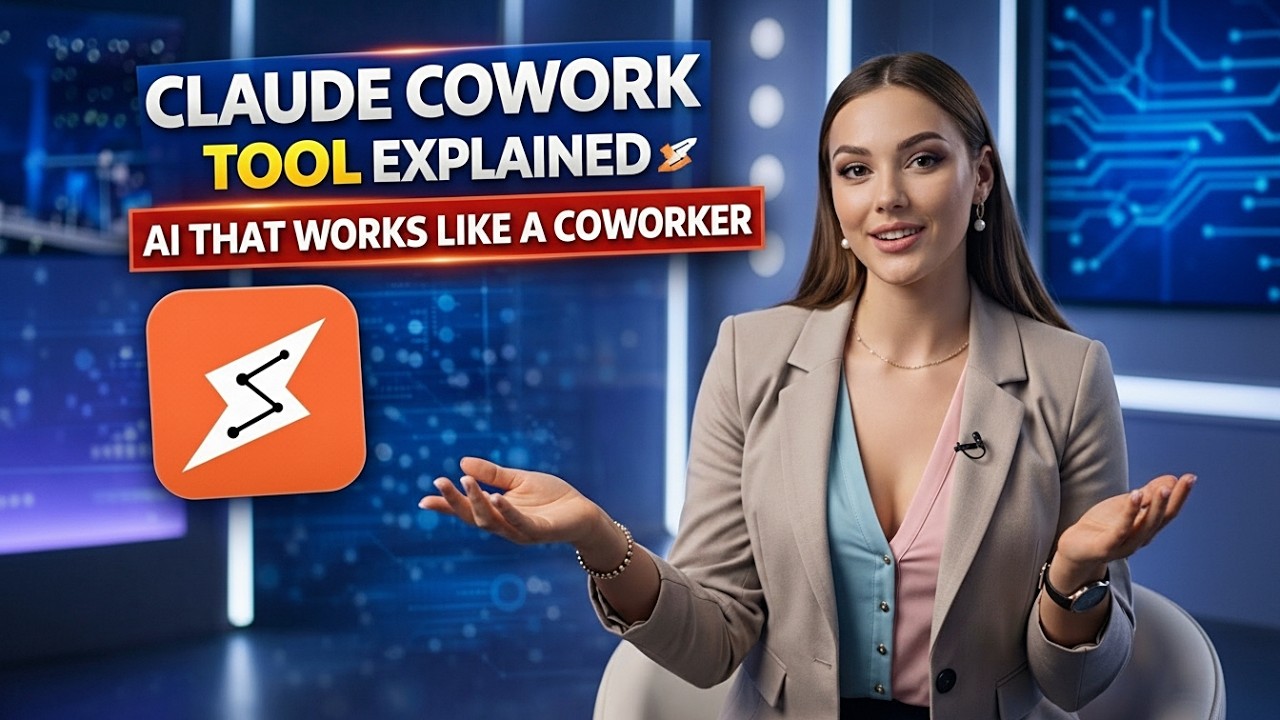
See Claude Cowork in action between 1:15-2:30 where it demonstrates multi-conversation context retention and document collaboration features that set it apart from traditional chatbots.
Key Takeaways
Claude Cowork represents a significant evolution in AI collaboration tools, moving beyond single-response interactions to persistent, context-aware partnership. Its ability to maintain project continuity across conversations and documents makes it particularly valuable for knowledge workers.
In summary: Claude Cowork isn't just a smarter chatbot - it's the first mainstream AI tool designed specifically for long-term collaboration, with memory and context persistence that mimics human teamwork dynamics.
Frequently Asked Questions
Common questions about Claude Cowork
Claude Cowork maintains persistent memory across conversations and documents, unlike traditional chatbots that reset context after each interaction. It functions as an ongoing project collaborator rather than a single-response tool.
Where ChatGPT might forget yesterday's conversation, Claude Cowork remembers project parameters, preferences, and working styles over time. This creates continuity that mimics human collaboration patterns.
- Maintains context across multiple sessions
- References previous conversations and documents
- Adapts to your working style over time
The tool excels at long-term collaborative work including document drafting and editing, research synthesis, project planning, workflow organization, and data analysis support where continuity matters.
It's particularly effective for projects that evolve over days or weeks, where maintaining consistent context provides value. Examples include content calendars, product development cycles, and ongoing research initiatives.
- Multi-stage document creation
- Long-term research projects
- Iterative design processes
No. While it enhances productivity by handling repetitive tasks and maintaining project continuity, Claude Cowork still requires human oversight for critical thinking, judgment calls, and strategic decision making.
Think of it as an exceptionally capable assistant rather than a replacement. The AI handles the "how" of execution while humans provide the "why" of direction and purpose.
- Augments rather than replaces human workers
- Requires human guidance and oversight
- Best for execution rather than strategy
By reducing context-switching and eliminating the need to repeatedly explain project details, teams report spending 30-40% less time on administrative coordination and more time on high-value work.
The productivity gains come primarily from reduced cognitive load - team members can focus on their core work rather than constantly reorienting their AI assistant to the current task.
- Less time spent re-explaining context
- Reduced prompt engineering fatigue
- More focus on substantive work
Content teams, product managers, researchers, and knowledge workers handling complex documentation see immediate benefits. Any role involving multi-stage projects with information continuity needs gains value.
Early adopters include marketing agencies, software development teams, academic researchers, and consulting firms where maintaining project threads across multiple deliverables is critical.
- Content creation and marketing
- Product development
- Research and analysis
Yes. The AI maintains context across documents, conversations, and applications within Anthropic's ecosystem, with plans for expanded third-party integrations throughout .
Current integrations focus on Anthropic's document collaboration tools, with API access for enterprise users to connect with select business applications. The roadmap includes connections to popular productivity suites.
- Native Anthropic ecosystem tools
- API access for enterprise integration
- Expanding third-party connections
Effectiveness depends on accurate context provisioning by users. It cannot initiate creative direction or make judgment calls without human input, and may struggle with highly specialized domain knowledge.
The tool works best when humans provide clear parameters and regular updates. Like any AI system, it can produce inaccurate outputs that require human verification, especially in complex or novel situations.
- Requires clear human guidance
- Limited to provided context
- Not a substitute for expertise
GrowwStacks helps businesses integrate AI collaboration tools like Claude Cowork into their workflows through custom automation solutions, training, and implementation support tailored to specific team needs.
Our team designs implementation roadmaps that align AI capabilities with your business processes, ensuring smooth adoption and maximum productivity gains. We handle the technical integration while training your team on best practices.
- Custom workflow integration
- Team training and onboarding
- Ongoing optimization support
Ready to transform how your team works with AI?
Every hour spent re-explaining context to your AI tools is an hour lost to actual productivity. Let GrowwStacks implement Claude Cowork or build custom AI collaboration solutions tailored to your workflows - typically delivering working prototypes within 2 weeks.