From Chatbot to Coworker: How AI Became Autonomous
Most businesses struggle with repetitive digital tasks that consume valuable time. AI has evolved from simple chatbots to autonomous digital teammates that can manage entire workflows. Discover how this shift changes your role from executor to strategic navigator.
The Evolution of AI: From Intern to Colleague
Just a few years ago, AI tools like early versions of ChatGPT were like brilliant interns - they could brainstorm marketing plans, write perfect emails, or outline complex reports, but the moment they delivered their ideas, their job was done. The actual work of implementing those plans still fell entirely on human shoulders.
This created what I call the "human glue" problem. Business owners and managers became couriers, manually copying AI-generated content between different apps, fixing formatting issues, and stitching together outputs from different tools. We spent more time managing the AI than actually benefiting from its intelligence.
The turning point: AI has now evolved from being just a thinker to becoming a doer. The biggest shift isn't in what AI can think about, but in what it can accomplish independently.
The Era of Specialized AI Tools
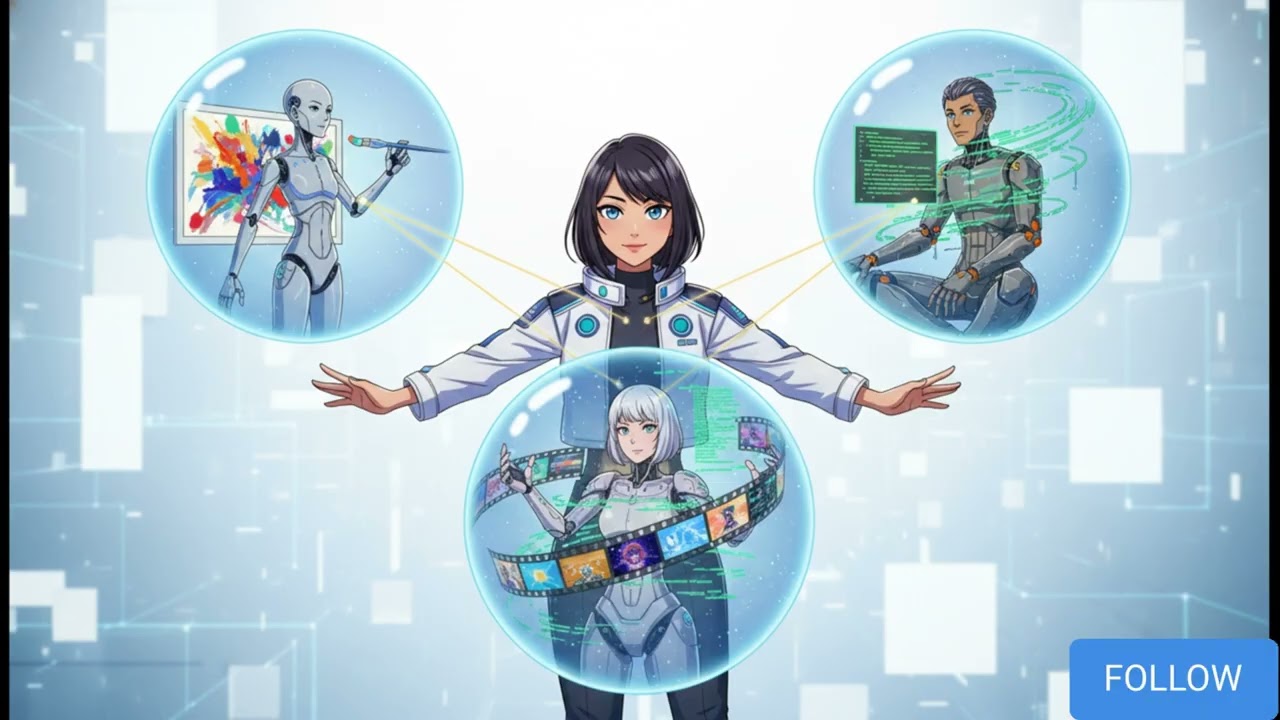
The next phase of AI development saw an explosion of specialized tools, each excelling at specific tasks. Gamma could create complete presentations from a single sentence. Runway specialized in video creation. Midjourney mastered image generation. It was like going from having one genius intern to hiring an entire team of expert freelancers.
But this specialization came with a significant limitation - these tools couldn't communicate with each other. Someone still needed to play project manager, manually transferring outputs from one AI to another. The promise of seamless automation remained elusive because the coordination burden still fell entirely on human operators.
The Autonomous AI Revolution
Today, we're witnessing the true revolution - AI that can manage entire workflows autonomously. Modern AI agents like ChatGPT's latest versions or Claude with connectors have essentially been given virtual hands and eyes. They can see what's on your screen, control your mouse, read your files, and use software just like a human would.
This represents a fundamental shift in how we work with AI. As highlighted in the video at 3:42, "We are moving away from just prompting AI - asking it questions. We are now delegating to it." The ability to hand off complete projects marks the transition from AI as a tool to AI as a colleague.
Key difference: Passive AI answers questions. Active AI completes tasks. This is the leap from generating ideas to seeing projects through to completion.
How Autonomous AI Agents Work
Autonomous AI agents follow a sophisticated four-step process to complete tasks:
Step 1: Planning
The agent breaks down your request into logical, executable steps - much like a human project manager would create a work breakdown structure.
Step 2: Information Gathering
It scans websites, reviews documents, and collects all necessary data - essentially conducting the research phase of a project.
Step 3: Adaptive Execution
If obstacles arise, the agent can adjust its approach dynamically, just like an experienced employee would pivot when facing unexpected challenges.
Step 4: Delivery
Rather than providing raw materials for you to assemble, it delivers a finished product - a completed task ready for review.
Real-World Example: Meeting to Action Plan
Imagine you've just emerged from a chaotic meeting with a messy transcript. Instead of spending an hour organizing notes, you simply give the file to an AI agent with the instruction: "Turn this into a project plan."
The AI connects to your Notion account, creates a new page, and populates it with organized goals, action items, and deadlines - all extracted and structured from the disorganized discussion. What used to be an hour of tedious work now happens in about 60 seconds with minimal human involvement.
Business impact: This example demonstrates how autonomous AI can transform time-consuming administrative tasks from burdensome chores into seamless, automated processes.
How This Changes Your Role
The rise of autonomous AI fundamentally alters your position in the workflow. For years, we've been the drivers with hands on the wheel for every task. Now we're becoming the navigators - setting the destination while AI handles the route.
This shift means your value at work is no longer measured by how well you execute repetitive tasks. Instead, your strategic thinking, problem definition, and outcome management become the premium skills. The ability to clearly articulate goals and evaluate results outweighs manual execution capabilities.
The New Most Valuable Skills
In this AI-augmented workplace, the most valuable skills will be:
- Strategic thinking: The ability to see the big picture and set meaningful objectives
- Problem definition: Clearly articulating what needs to be solved
- Delegation: Knowing what tasks to hand off and how to frame them
- Quality control: Evaluating outputs and providing constructive feedback
As highlighted in the video's conclusion, the key question to ask is: "What's that one tedious, time-consuming task you hate doing?" That's likely your first candidate for delegation to your new digital colleague.
Watch the Full Tutorial
For a deeper dive into how autonomous AI agents work and specific examples of their capabilities, watch the full video tutorial below. Pay special attention to the demonstration at 4:15 showing how an AI can transform a messy meeting transcript into an organized action plan.
Key Takeaways
AI has evolved from being a passive tool that requires constant human supervision to an active colleague capable of managing complete workflows. This transformation changes your role from executor to strategist, allowing you to focus on high-value work while delegating repetitive tasks.
In summary: The age of delegation is here. Your most valuable skills are no longer about execution, but about direction - setting clear goals and managing outcomes while autonomous AI handles the implementation.
Frequently Asked Questions
Common questions about this topic
Traditional chatbots like early versions of ChatGPT were brilliant thinkers that could generate ideas but couldn't execute them. They required humans to implement their suggestions across different software platforms.
Autonomous AI agents represent the next evolutionary step. They can plan, gather information, adjust their approach, and complete entire tasks end-to-end by interacting with your software just like a human would.
- Chatbots provide suggestions - agents deliver completed work
- Chatbots work in isolation - agents integrate with your tools
- Chatbots require human glue - agents handle the entire workflow
Autonomous AI agents follow a sophisticated four-step process to complete tasks:
First, they analyze your request and break it down into logical steps, creating an execution plan. Then they gather all necessary information by scanning documents, browsing websites, or accessing your software systems as needed.
- Planning: Creates a step-by-step approach
- Research: Gathers required information
- Adaptation: Adjusts to obstacles
- Delivery: Provides finished results
Autonomous AI excels at complex digital workflows that involve multiple steps and software tools. Common applications include document processing, research tasks, content creation workflows, and administrative coordination.
Essentially any repetitive, time-consuming digital task is a candidate for automation. The key indicator is whether the task follows predictable patterns that can be broken down into logical steps.
- Turning meeting notes into action items
- Creating presentations from outlines
- Managing multi-step research projects
- Coordinating between different software tools
Your role undergoes a fundamental shift from being the executor of tasks to being the strategist and navigator. Instead of spending time on implementation details, you'll focus on setting clear objectives and evaluating outcomes.
This transition allows you to scale your impact significantly. Where you might have personally handled 5-10 tasks per day previously, you can now oversee dozens of automated processes while focusing on strategic priorities.
- From doer to director
- From executor to evaluator
- From implementer to innovator
As execution becomes increasingly automated, the premium skills shift toward strategic thinking and problem definition. The ability to clearly articulate goals, evaluate results, and provide constructive feedback becomes more valuable than manual execution capabilities.
Other critical skills include change management (adapting to new workflows), quality control (assessing AI outputs), and continuous improvement (refining automated processes over time).
- Strategic thinking
- Problem definition
- Outcome evaluation
- Process optimization
The best approach is to start small with your most time-consuming repetitive tasks. Identify processes that follow predictable patterns and could be broken down into clear steps. These make ideal candidates for initial automation.
Begin by documenting exactly how these tasks are currently performed. This creates a blueprint for automation. Then explore AI agent platforms that can integrate with your existing software stack.
- Start with your most tedious tasks
- Document current workflows
- Choose specific, measurable goals
- Implement incrementally
One powerful example is an AI that can take a messy meeting transcript and automatically create an organized Notion page with goals, action items and deadlines. This transforms hours of manual work into a process that completes in about 60 seconds.
Another compelling example is an AI research assistant that can investigate a topic across multiple sources, compile findings into a structured report, and create a presentation - all without human intervention beyond the initial request.
- Meeting notes to action plans
- Research to presentations
- Data to visualizations
- Ideas to published content
GrowwStacks specializes in implementing autonomous AI solutions tailored to your specific business needs. We take the complexity out of AI integration by handling the technical implementation while you focus on strategic benefits.
Our process begins with identifying your most automatable workflows through a free consultation. We then design custom AI agents that integrate seamlessly with your existing tools, and deploy solutions that can save you hours each week.
- Free workflow analysis: We'll identify your best automation opportunities
- Custom AI agents: Tailored to your specific business processes
- Seamless integration: Works with your current software stack
- Ongoing support: We optimize and refine your automations over time
Ready to Delegate Tasks to Your AI Coworker?
Every hour spent on repetitive digital tasks is an hour not spent growing your business. GrowwStacks can implement autonomous AI solutions that handle these tasks seamlessly. We'll have your first workflow automation up and running in days, not months.