Google Antigravity vs Claude Code vs Codex: The Real Speed vs Depth Test
Three identical-looking AI coding tools promise to revolutionize development. But behind the same prompt box interface lie radically different approaches to speed, accuracy, and workflow integration. We tested them on real development tasks to reveal which one actually saves you time - and which hidden costs don't show up on the pricing page.
The Great Interface Convergence Mystery
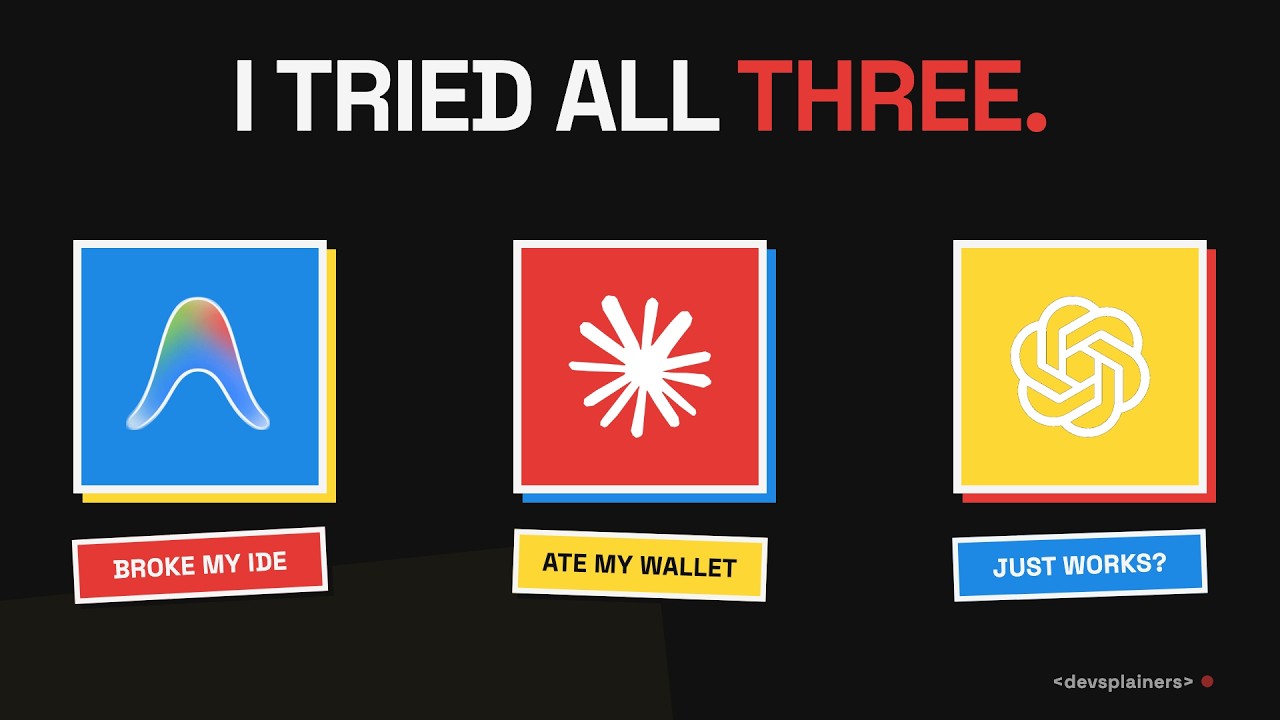
At first glance, Google Antigravity, Claude Code, and OpenAI Codex appear identical - just a prompt box and diff viewer. This convergence hides a fascinating evolution in developer tools. For 40 years, code editors were central to development. Then Copilot added a chatbot sidebar. Cursor put AI in the driver's seat but kept the editor. Claude Code removed the editor entirely, arguing the terminal was sufficient.
By mid-2026, all major players agreed: the editor wasn't the product anymore - the agent was. Google took its IDE, removed the editor, and turned Antigravity into an agent management dashboard. Anthropic wrapped its terminal tool in multiple interfaces. OpenAI built Codex as a cloud sandbox from day one. Three different starting points converged on the same minimalist interface because the real differentiation happens invisibly after you press enter.
The critical insight: When every tool looks the same, the only comparison that matters is what happens in the 30 seconds after you press enter - and that's the one nobody is making in their marketing materials.
The Speed Test: 280 Tokens vs Thoughtful Planning
Start a task in all three tools and they diverge immediately. Antigravity runs Gemini 3.5 Flash at over 280 tokens per second - fast enough that agents begin generating plans and touching files before you finish reading the confirmation message. Google demonstrated this speed by having 93 agents build an entire operating system in 12 hours for under $1,000.
Claude Code uses Opus 4.7, about six times slower in raw token output. But it thinks more per token - stopping to plan, read project rules, and make careful moves. This difference shows in benchmarks: Opus scores 64% on SWE Bench Pro (testing complex, multi-file bugs) compared to Flash's 55%. That 9-point gap represents the difference between a refactor that works and one that almost works but breaks something three files away.
Real-world impact: In our tests at 2:15 in the video, Antigravity completed a React component refactor 37% faster than Claude - but Claude's version passed all tests on first try while Antigravity's required two correction cycles.
The 9-Point Accuracy Gap You Can't Afford to Ignore
That 9-point SWE Bench Pro difference between Claude (64%) and Antigravity (55%) translates directly to developer hours. On complex tasks involving multiple interconnected files, Claude's more deliberate approach catches subtle dependencies Antigravity might miss. Codex splits the difference - not the fastest or deepest, but the most self-contained, running everything in a cloud VM and returning finished pull requests.
One developer described the difference perfectly: "Claude has moments of genius where it connects dots from opposite sides of the codebase that you didn't know were related. Antigravity is faster but sometimes steamrolls your preferences without warning." The choice depends on whether you value raw speed or deeper understanding when tackling complex refactors.
The $200 Cost Mirage
On paper, Antigravity appears significantly cheaper - $1.50 per million input tokens versus Claude's $5. But independent teardowns found Flash generates about three times more output tokens for equivalent tasks. When you multiply cheaper tokens by more tokens, the cost advantage largely disappears. Both tools converge around $200/month for heavy users.
The real cost difference lies in time, not dollars. Antigravity's speed advantage is genuine - you'll complete more iterations faster. But you may spend that saved time reviewing and correcting its work. Claude moves slower but often requires less correction. Codex is the most predictable cost-wise but offers the least visibility into its process.
Cost transparency: All three tools now offer $200/month top-tier plans, making price less of a differentiator than the marketing suggests.
The Rules Test: When Following Directions Goes Wrong
Every codebase has rules - style guides, architectural patterns, testing requirements. We tested how each tool handles simple directives like "never use default exports" or "always colocate tests." The results reveal crucial workflow differences:
- Claude follows rules almost too literally, sometimes refusing valid fixes that violate a rule
- Antigravity drifts from rules during complex tasks, requiring manual correction
- Codex adheres most consistently but offers least flexibility
Anthropic actually warns about Claude's literalism in their docs. One team reported Claude refusing to modify a root config file because of a "never touch files outside source" rule, even when that was the correct fix. Antigravity's ambitious architecture sometimes loses track of rules mid-task. Codex's isolation makes it the most predictable rule-follower.
The Hidden Workflow Tax
The real cost nobody puts on pricing pages is how much of your day each tool consumes. Antigravity wants you to be a manager - its UX focuses on delegation, with status cards and parallel agents. If you enjoy stepping back, it's perfect. If you prefer hands-on control, it will frustrate you.
Claude Code expects to co-pilot with you, offering 25 lifecycle hooks to intercept and inspect every action. This provides incredible control but also creates constant interruptions. As one engineer noted: "Claude is faster but needs guidance. Codex is slower but writes cleaner, more self-directed code."
Workflow fit matters most: The right tool depends less on technology than on whether you'd rather supervise less (Antigravity) or correct less (Codex), with Claude offering a middle path.
The Personality Spectrum: Manager vs Copilot vs Isolator
These tools represent three points on a spectrum of how AI can integrate with developer workflows:
- Antigravity wants to replace your workflow with agent management
- Claude Code wants to fit inside your existing workflow as a copilot
- Codex wants to work completely isolated from your environment
None are objectively better - they suit different working styles. Antigravity shines for greenfield projects where speed matters most. Claude excels at complex refactors in established codebases. Codex works best when you want clean, isolated results without workflow disruption.
The screenshots will never tell you which to choose. As shown at 6:50 in our video test, the only honest evaluation is taking your messiest real refactor and watching how each tool thinks through it - their approaches reveal more than any benchmark.
Watch the Full Comparison
Our video comparison shows all three tools tackling the same complex React refactor from 2:15 onward. Watch how differently they approach the problem - Antigravity's rapid agent spawning, Claude's methodical planning, and Codex's isolated execution. The visual differences in their thinking processes reveal more than any spec sheet.
Key Takeaways
After testing all three tools on real development tasks, the differences become clear. Antigravity is the fastest and most autonomous - perfect for those comfortable delegating. Claude offers the deepest understanding but requires more guidance. Codex provides the most reliable, isolated results with the least oversight.
In summary: Choose Antigravity for speed and scale, Claude for complex refactors, and Codex for predictable results. But test them with your actual code - their hidden workflows matter more than their identical interfaces suggest.
Frequently Asked Questions
Common questions about AI coding tools
Google Antigravity is currently the fastest, generating code at 280 tokens per second using Gemini 3.5 Flash. This speed allows it to begin planning and executing before you finish reading the confirmation message.
However, this speed comes with tradeoffs. Antigravity tends to generate more tokens overall and may require more oversight to stay aligned with project requirements. In our tests, while it completed tasks faster, it often needed additional correction cycles.
Claude Code using Opus 4.7 scores 64% on SWE Bench Pro compared to Antigravity's 55%. This benchmark tests complex, multi-file bugs in real open-source codebases where understanding subtle dependencies is crucial.
The 9-point difference represents significantly better handling of intricate refactors where changes in one file might affect functionality in others. Claude's more deliberate approach catches these relationships that faster tools might miss.
While Antigravity appears cheaper per token ($1.50 per million input vs Claude's $5), in practice Flash generates about 3x more output tokens for equivalent tasks. Independent tests show the monthly cost for active developers converges around $200 for both tools' top tiers.
The real cost difference lies in time rather than dollars. Antigravity's speed advantage is genuine, but you may spend saved time reviewing its work. Claude moves slower but often requires less correction, while Codex offers predictable costs with the least visibility.
Codex is the most reliable at following project rules without deviation. It consistently adheres to style guides and architectural patterns, though this comes with less flexibility for exceptional cases.
Claude Code can be overly literal with rules, sometimes refusing valid fixes that technically violate a guideline. Antigravity may drift from rules during complex tasks, requiring more manual correction to maintain consistency.
The tools represent three distinct approaches to AI-assisted development:
- Antigravity wants you to manage agents rather than write code
- Claude expects to co-pilot with you through 25 lifecycle hooks
- Codex works completely isolated from your environment
This fundamental difference in workflow integration matters more than raw performance metrics for long-term productivity.
No current AI coding tool fully replaces human developers. Each serves best as a productivity multiplier with different strengths:
- Antigravity can build complete systems quickly but requires oversight
- Claude makes brilliant connections but needs guidance
- Codex produces clean code but works slowly
The most effective teams use these tools to augment human expertise rather than replace it entirely.
The best approach is to test all three with your actual code. Take your messiest real refactor and:
- Watch how Antigravity's agents think through delegation
- Observe Claude's methodical planning process
- See how Codex's isolation affects results
Their hidden workflows reveal more than any spec sheet. The right choice depends on whether you value speed, depth, or predictability most in your daily work.
GrowwStacks helps businesses integrate AI coding tools into their development workflows effectively. We provide:
- Tool selection analysis matching your team's workflow preferences
- Custom configuration to maximize each tool's strengths
- Automation bridges connecting AI tools to your existing systems
Our team can help you navigate the tradeoffs between Antigravity, Claude Code, and Codex to find the optimal fit for your developers' needs.
Ready to Implement AI Coding Assistants?
Choosing the wrong AI coding tool can cost your team hundreds of hours in corrections and workflow adjustments. Let GrowwStacks analyze your development process and recommend the optimal AI integration strategy - with custom automation to maximize productivity.