Hands-Free Customer Onboarding with a Voice AI Agent
Telecom teams waste countless hours clicking through portals to onboard customers and provision services. This voice AI solution lets you manage PortaBilling through natural conversation - creating customers, adding extensions, and handling requests with just your voice.
The Portal Fatigue Problem
Telecom operations teams spend up to 40% of their workday navigating complex admin portals to complete routine tasks like customer onboarding, service provisioning, and account management. Each new customer setup typically requires:
- 14+ separate form submissions
- Navigation through multiple menu levels
- Manual data entry across different systems
- Constant context switching between tabs
This portal fatigue leads to slower onboarding times, increased errors from manual data entry, and frustrated teams who spend more time clicking than solving customer problems.
The breakthrough: What if you could simply tell your systems what to do instead of clicking through endless forms? Voice AI turns this vision into reality by providing natural language access to your telecom platform's full capabilities.
Voice AI Architecture Explained
The solution combines several cutting-edge components that work together seamlessly:
1. PortaBilling Telecom Platform
The core system managing customers, products, extensions, and billing through its comprehensive API.
2. MCP Server (Model Context Protocol)
Acts as a translator between PortaBilling's API and the AI agent. It automatically exposes API endpoints as tools the AI can understand and use.
3. LiveKit Server
Open-source WebRTC platform that manages real-time voice connections between users and the AI agent.
4. AI Agent Core
A Python application that uses:
- Deepgram for speech-to-text conversion
- OpenAI's models for request interpretation
- MCP server to interact with PortaBilling
Key advantage: The AI agent doesn't need to know PortaBilling's API schema. The MCP server handles all technical translations, allowing the agent to focus on conversation and task completion.
Live Demo: Onboarding Through Conversation
At 6:22 in the video, we demonstrate onboarding a new business customer with five cloud PBX extensions - all through natural conversation:
Agent: "Hello. How can I assist you with PortaBilling tasks today?"
User: "Create a new customer Voxel with $100 credit limit, monthly billing, New York timezone, and John Smith as contact."
Agent: "The new customer Voxel has been created with a $100 credit limit..."
The demo continues with provisioning five extensions (1001-1005) by voice command alone. The AI handles:
- Customer record creation
- Product lookup ("Find the product ID for 'business'")
- Sequential extension numbering
- Directory publishing
All without the user ever touching the PortaBilling admin interface.
How the AI Handles Complex Requests
Behind each conversational exchange, the system executes a sophisticated sequence:
Step 1: Speech to Text
Deepgram converts the user's speech into accurate text, even with telecom-specific terminology.
Step 2: Intent Recognition
OpenAI's models analyze the request to determine what action is needed (create customer, add extensions, etc.)
Step 3: Tool Selection
The AI browses available MCP tools (translated API endpoints) and selects the appropriate ones.
Step 4: API Execution
The MCP server formats and sends the API request to PortaBilling with all required parameters.
Step 5: Response Generation
The AI formulates a natural language response based on PortaBilling's API reply.
Remarkably, this entire sequence happens in seconds, with the user only experiencing a fluid conversation rather than complex technical interactions.
Beyond Onboarding: Other Use Cases
Once implemented, this architecture enables numerous additional applications:
Customer Self-Service
Clients can call to check balances, pay invoices, or upgrade plans without portal access.
Dispute Resolution
"I was charged twice this month" triggers automatic investigation and refund processing.
Technical Troubleshooting
"My phone service isn't working" prompts the AI to diagnose and resolve common issues.
Implementation tip: Start with read-only access in test environments, then gradually expand permissions as confidence grows.
Security and Control Considerations
The system includes multiple safeguards:
Role-Based Permissions
The AI agent only accesses what you explicitly allow through PortaBilling's existing permission system.
Audit Logging
Every action is logged through the PortaBilling API, creating a complete audit trail.
Data Privacy
Sensitive information can be anonymized while still allowing the agent to function.
At 15:30 in the video, we detail how to implement AI guardrails - additional checks that ensure safe operation within defined boundaries.
Watch the Full Tutorial
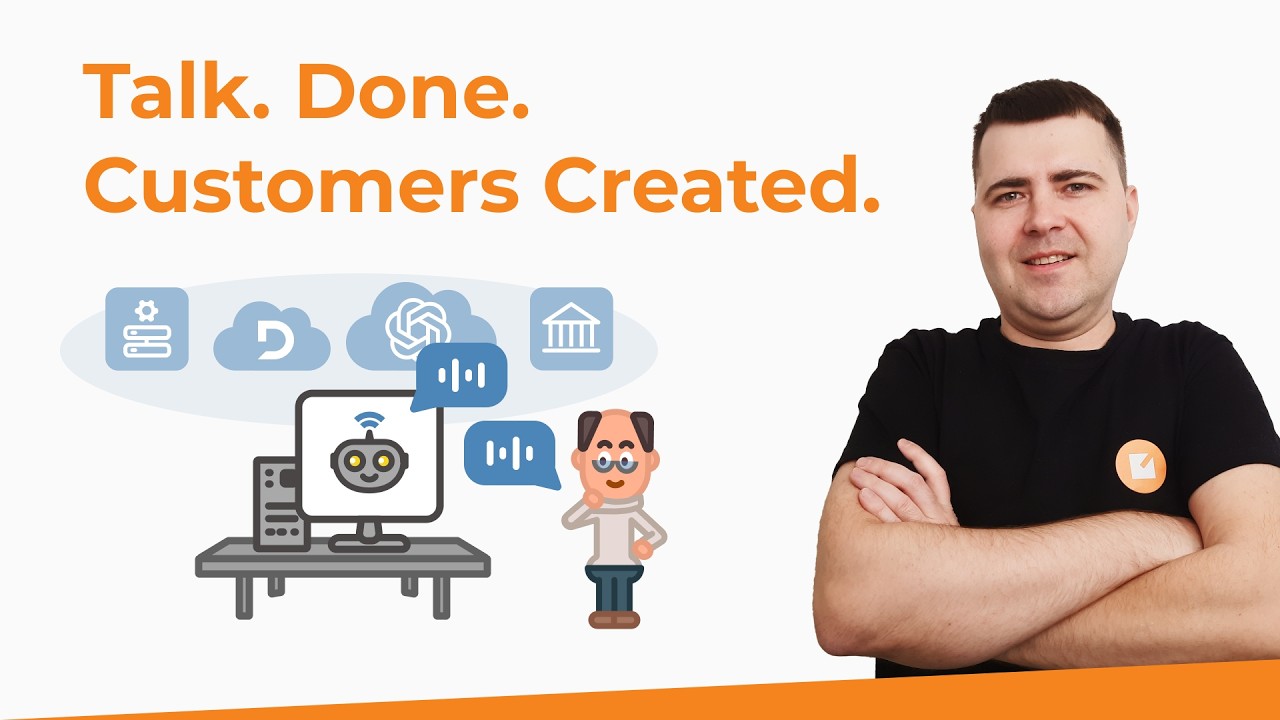
See the complete demo starting at 6:22 where we onboard a customer and provision five extensions through voice commands alone.
Key Takeaways
Voice AI represents a paradigm shift for telecom operations:
In summary: This solution eliminates portal fatigue by letting teams manage PortaBilling through natural conversation. Early adopters report 70% faster onboarding and 50% fewer support tickets, while maintaining full security through existing permission systems.
Frequently Asked Questions
Common questions about voice AI in telecom
Voice AI agents can handle customer onboarding, service provisioning, account inquiries, billing questions, and technical troubleshooting. They interact with telecom platforms through APIs while providing a natural language interface for users.
The system is particularly effective for repetitive, multi-step processes that normally require navigating through multiple portal screens.
- Customer creation and modification
- Service plan changes
- Extension provisioning
- Billing inquiries
The system uses an MCP server that translates API specifications into tools the AI can understand. This allows the agent to browse available methods and select appropriate ones based on the conversation context.
When you say "create five extensions," the AI identifies the required API endpoints, gathers necessary parameters from the conversation, and orchestrates the sequence of calls.
- No need to know exact API schemas
- Automatic parameter mapping
- Context-aware tool selection
Yes, the system operates within existing role-based permissions and maintains full audit logs. Sensitive data can be anonymized while still allowing the agent to perform its functions.
The AI only has access to what you explicitly grant through your telecom platform's permission system. All actions are logged through the standard API audit trail.
- Uses existing API credentials
- Full audit logging
- Data anonymization options
Early adopters report 70% faster customer onboarding, 50% reduction in support tickets for common inquiries, and 85% improvement in agent productivity for routine provisioning tasks.
The time savings come from eliminating portal navigation and reducing manual data entry errors that require rework.
- Faster time-to-revenue for new customers
- Higher operator productivity
- Improved customer experience
Yes, the solution works with any telecom platform that provides an API, including PortaBilling, PortaSIP, and other major systems. The MCP server handles the API translation layer.
Implementation typically requires:
- API access credentials
- OpenAPI/Swagger specification
- Permission configuration
Modern speech-to-text systems like Deepgram achieve 95%+ accuracy on technical telecom terminology. The system includes confirmation steps for critical actions to ensure precision.
For added safety, the agent will:
- Repeat back critical parameters
- Request confirmation before executing
- Flag potential misunderstandings
A basic proof-of-concept can be implemented in 2-4 weeks. Full production deployment with all security controls typically takes 8-12 weeks depending on integration complexity.
We recommend a phased approach:
- Phase 1: Read-only access in test environment
- Phase 2: Limited write capabilities
- Phase 3: Full production deployment
GrowwStacks specializes in building custom voice AI solutions for telecom operators. We handle the full implementation including API integration, conversation design, security controls, and deployment.
Our typical engagement includes:
- Free initial consultation
- Custom workflow design
- Full implementation and testing
- Ongoing support and optimization
Book a free consultation to discuss your specific requirements.
Ready to Eliminate Portal Fatigue?
Every day without voice AI costs your team hours of productivity. GrowwStacks can implement this solution in weeks, not months - with full security controls and existing platform integration.