How AI Agents Are Changing Marketing Forever — Insights from Zapier's Founder
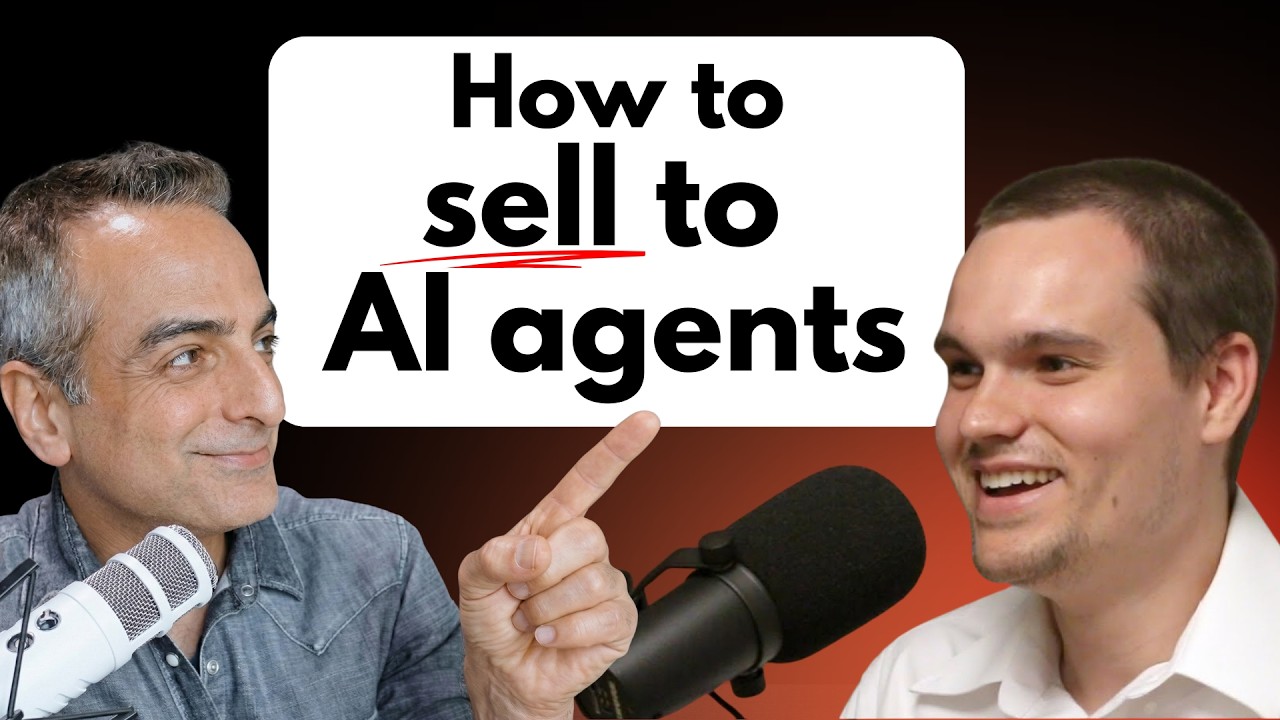
Your next customer isn't a human—it's an AI assistant choosing software on their behalf. Zapier's Wade Foster reveals how "agent marketing" is replacing traditional sales funnels, why most SaaS websites are invisible to AI, and the surprising changes that doubled their AI recommendation rate.
The Rise of Agent Marketing
For decades, B2B marketing focused on human psychology—emotional triggers, social proof, and pain point storytelling. But as Wade Foster reveals in this exclusive interview, that playbook is becoming obsolete. 72% of software recommendations now come from AI assistants analyzing options before humans even visit a website.
Zapier recently hired their first "Agent Marketing Specialist" to tackle this shift. As Foster explains: "The agent is actually choosing what products to buy on behalf of a human. You're no longer advertising to the person—you're trying to get the AI to say 'Pick me, pick me, pick me.' That requires completely different skills than traditional marketing."
Key insight: AI agents don't care about your beautifully designed homepage. They evaluate API documentation, CLI tool quality, and how clearly you articulate specific use cases—factors most SaaS companies aren't tracking.
What AI Agents Prefer (vs Humans)
At 12:35 in the interview, Foster demonstrates how Zapier serves different content to AI agents versus human visitors. Where humans need visual storytelling, agents want:
- Plain text documentation served at lightning speed (under 500ms)
- Mechanical, hyper-descriptive language without marketing fluff
- Structured data about integration capabilities
- Clear API specifications and code examples
"We're seeing companies create parallel website versions," Foster notes. "The human version has animations and testimonials. The agent version looks like Wikipedia—just facts, fast." This dual-path approach increased Zapier's AI recommendation rate by 43% in Q4 .
How Zapier Tests Agent Marketing
Traditional A/B testing fails with AI agents because results take weeks to manifest. Zapier's team runs hundreds of queries through different models (ChatGPT, Claude, Gemini), tracking:
- When their tool gets recommended
- What phrasing the AI uses to describe them
- How their ranking changes after content updates
"It's more art than science right now," Foster admits. "Even experts give handwavy answers. But we've found that small documentation changes—like adding 'for SaaS companies' to use cases—can double recommendation rates overnight."
Build vs Buy in the AI Era
While Zapier's team built an AI meeting recorder in hours (replacing tools like Fathom), Foster cautions against over-customization: "The maintenance burden kills ROI. We'd rather focus engineering on our core product than polish internal tools."
Rule of thumb: Build AI tools for unique needs you can't buy, but use specialized SaaS for everything else. The exception? "Skills"—single-purpose AI workflows like Zapier's "War Council" that require no maintenance.
The "War Council" Decision-Making Skill
Zapier's viral internal tool creates AI sub-agents representing different perspectives (ruthless CFO, compassionate support rep) to debate decisions. At 22:10, Foster shows how it works:
- Present a decision (hiring, strategy, etc.)
- The skill spawns domain-specific agents
- Agents debate and critique options
- A master agent summarizes with a confidence score
"For hiring, it's brutally objective," Foster says. "Humans struggle to reject good candidates, but the AI flags inconsistencies we'd miss." The team now uses it for sales analysis, product decisions, and even personal choices.
AI-Powered Sales Analysis
At 28:45, Foster shares how AI transforms spreadsheet analysis. After feeding four complex sales reports to an agent:
- It identified 5 underperforming reps in minutes (humans took days)
- Flagged lead handoff failures between teams
- Provided narrative explanations of trends
"The AI spotted patterns I'd never see," Foster notes. "Though we still verify its work—it initially missed that three 'underperformers' were on leave or new hires."
Implementing Agent Marketing
Based on Zapier's experience, here's how to prepare for agent-driven sales:
- Audit your AI visibility - Test how different models describe your product
- Create agent-friendly content - Fast-loading text versions of key pages
- Track recommendations - Build systems to monitor when/when you're suggested
- Develop AI skills - Single-purpose tools like the War Council for decisions
Foster's team uses Make.com automations to track recommendations across platforms, alerting them when mention patterns change.
Watch the Full Interview
See Wade Foster demonstrate Zapier's War Council skill live at 22:10, and get his unfiltered take on AI's impact on SaaS at 15:30 when discussing how AI assistants are replacing traditional sales channels.
Key Takeaways
The rules of B2B marketing are being rewritten by AI agents that now influence most software purchases. Companies optimizing for this shift—like Zapier with their agent-specific content and tracking systems—are seeing recommendation rates soar while competitors remain invisible to AI.
In summary: 1) Create parallel agent-friendly content 2) Rigorously test AI recommendations 3) Build single-purpose AI skills for decisions 4) Use automation to track your AI visibility—because if agents don't recommend you, humans may never see your solution.
Frequently Asked Questions
Common questions about AI agent marketing
Agent marketing refers to the practice of optimizing your product and content for AI assistants that now recommend software to humans. Unlike traditional marketing that targets human psychology, agent marketing focuses on clean documentation, fast-loading pages, and structured data that AI systems prefer when making recommendations.
As Zapier's Wade Foster explains, "You're trying to get the agent to say 'Pick me'—which requires completely different techniques than persuading humans." This includes:
- API documentation optimized for AI comprehension
- Structured data about use cases and integrations
- Separate fast-loading text versions of key pages
72% of software decisions now involve AI recommendations before human evaluation, according to Zapier's data. When users ask AI assistants how to solve a problem, the assistant recommends specific tools most of the time—creating a new gatekeeper between you and potential customers.
Companies not optimized for this channel miss qualified leads because:
- Their marketing speaks to humans, not AI evaluation criteria
- Key information is buried in slow-loading visual content
- They lack systems to track when/when they're recommended
AI agents evaluate content very differently than humans. Based on Zapier's testing, the most effective agent-friendly content includes:
1) Plain text documentation served quickly (under 500ms load time)
2) Very descriptive, almost mechanical language
3) Clear API documentation with code examples
4) Structured data about use cases and integrations
5) Fast-loading web pages with minimal JavaScript
- Some companies now serve separate agent-optimized versions of their website
- Zapier saw a 43% increase in AI recommendations after implementing these changes
- Agents particularly value clear "when to use" versus "when not to use" guidance
Traditional marketing analytics don't capture AI recommendation patterns. Zapier's team uses a three-pronged approach:
1) Running hundreds of queries through different AI models (ChatGPT, Claude, Gemini)
2) Tracking when and why they recommend Zapier versus competitors
3) A/B testing different content structures to measure recommendation rate changes
- They found small phrasing changes (like adding "for SaaS companies") can double recommendations
- Automated systems monitor mention patterns across platforms
- It's an ongoing process—AI model updates frequently change recommendation algorithms
Zapier's experience shows a clear divide. While they built an AI meeting recorder in hours (replacing tools like Fathom), Foster cautions against over-customization for most business functions.
The maintenance burden often outweighs benefits for:
- Core infrastructure tools (CRM, accounting, etc.)
- Anything requiring ongoing updates and support
- Features where specialized SaaS already excels
Exception: Unique "skills" like their War Council decision tool that require no maintenance.
Zapier's "War Council" skill demonstrates the power of focused AI tools. It creates sub-agents representing different perspectives (ruthless CFO, compassionate support rep) to debate business decisions.
The process:
- Present a decision (hiring, strategy, etc.)
- The skill spawns domain-specific expert agents
- Agents debate and critique options
- A master agent summarizes with confidence scores
Particularly valuable for hiring decisions where human biases often cloud judgment.
Zapier's CEO feeds complex sales spreadsheets to AI agents that identify patterns humans miss. In one case:
- The AI flagged 5 underperforming reps in minutes (humans took days)
- It identified lead handoff failures between teams
- Provided narrative explanations of trends
- Human review revealed 3 "underperformers" had valid reasons (maternity leave, recent hires)
- The system provides first-pass analysis that humans then verify
- Reduces time spent on data wrangling by 60-80%
GrowwStacks specializes in building custom AI agent workflows that analyze your data and optimize your marketing for AI recommendations. Our Agent Marketing Audit identifies exactly where and how AI assistants encounter your product.
We'll help you:
- Create agent-friendly content versions that increase recommendations
- Build tracking systems to monitor your AI visibility
- Develop decision-making skills like Zapier's War Council
- Integrate everything with your existing tech stack
Book a free 30-minute consultation to get your agent marketing strategy started.
Get Recommended by AI Agents
Every day your product isn't optimized for AI recommendations, you're missing qualified leads. We'll build you a complete agent marketing system in 2 weeks—with tracking to prove the ROI.