How AI is Reshaping Revenue Operations in 2026 - Insights from Zapier's Head of RevOps
89% of sales teams struggle with dirty CRM data and inefficient processes. Zapier's Revenue Operations leader reveals how AI automation is solving these challenges while creating hyper-personalized customer journeys at scale. Discover the new playbook transforming how modern revenue teams operate.
The Crisis in Modern Revenue Operations
Revenue teams are drowning in data yet starving for insights. While CRM systems promise visibility, most sales organizations struggle with incomplete records, inconsistent processes, and reps who spend 3 hours daily on manual data entry instead of selling. This operational debt creates pipeline blindspots and forecasting errors that cost companies 15-20% of potential revenue.
Zapier's Head of RevOps Lindsay Rothlisberger describes the turning point: "We had solid foundations but hit a wall trying to scale. Our reps were context-switching between 14 tools while our systems couldn't keep pace with evolving customer journeys. AI became the only way to maintain precision at our growth velocity."
Key stat: 72% of sales organizations report declining CRM adoption year-over-year, with data completeness dropping below 60% for critical fields like opportunity stage and next steps.
How AI Solves the #1 RevOps Problem: Data Hygiene
The breakthrough came when Zapier implemented AI-powered data capture that automatically logs emails, transcribes calls, and updates Salesforce fields like MEDDIC criteria. "Our reps went from resisting CRM updates to demanding the AI assistant," notes Rothlisberger. "When you remove the friction, adoption follows."
This system works through three key mechanisms:
- Automatic activity capture: Every customer interaction is logged with context, eliminating manual entry
- Smart field population: AI analyzes meeting transcripts to update key fields like decision criteria
- One-click validation: Reps review AI-generated summaries and confirm with a single action
Result: Zapier achieved 98% data completeness in Salesforce while reducing rep admin time from 3 hours to just 9 minutes daily.
The Rise of Signal Orchestration in Outbound Sales
Outbound sales is experiencing an AI-powered renaissance. Rather than blasting generic sequences, modern systems combine intent signals with customer context to generate hyper-personalized outreach. "It's not about replacing humans but amplifying their impact," explains Rothlisberger.
Zapier's approach involves:
- Analyzing unstructured data from calls, chats, and emails for real-time messaging adjustments
- Automatically routing leads based on engagement patterns rather than static rules
- Generating dynamic content that references recent customer interactions
This signal orchestration increased reply rates by 3x while reducing unsubscribes by 72%. The system identifies subtle patterns humans miss - like noticing when a prospect mentions a competitor in a call and automatically adjusting follow-up messaging to highlight differentiators.
Why Revenue Engineers Are Replacing Traditional RevOps
The most significant organizational shift is the emergence of revenue engineers - hybrid roles combining campaign strategy with technical execution. "We moved from generalists to specialists owning specific funnel stages," says Rothlisberger. "Each revenue engineer builds and optimizes their segment as a product."
These engineers achieve 40% faster experimentation cycles by:
- Designing campaigns directly in automation tools like Zapier
- Building custom analytics dashboards for their funnel stage
- Implementing AI workflows without waiting for IT support
The pod structure pairs each engineer with a data analyst and operations specialist, creating autonomous teams that move at the speed of customer needs rather than internal processes.
The Pod Structure That Enables AI Adoption
Zapier's RevOps team reorganized into specialized pods owning specific funnel stages like inbound lead routing or renewal automation. Each pod combines:
- Revenue Engineer: Builds and optimizes automation workflows
- Data Analyst: Measures impact and identifies improvement areas
- Operations Specialist: Ensures process alignment across systems
This structure delivered three key benefits:
- 68% faster implementation of new AI tools
- 45% reduction in cross-system data errors
- 3x more experiments run per quarter
Critical insight: Pods focused on outcomes rather than tasks naturally gravitated toward AI solutions that moved their metrics.
AI-Powered Forecasting: From Guesswork to Precision
Traditional forecasting relies on rep-reported data that's often optimistic or incomplete. Zapier's AI system analyzes 23x more signals including:
- Email response times and sentiment
- Call transcript analysis for buying signals
- Engagement patterns across the account
"We reduced forecast variance from ±15% to ±3%," shares Rothlisberger. "The AI flags deals showing subtle warning signs like decreasing email response times or mentions of competitors in calls - things humans often miss in the noise."
The system provides real-time risk assessments that help managers intervene earlier. For example, it might detect that a champion changed roles based on email signatures and automatically trigger a new stakeholder mapping workflow.
Your 90-Day AI Implementation Roadmap
Based on Zapier's experience, here's how to start transforming your RevOps with AI:
Month 1: Foundation
- Audit your top 3 data hygiene pain points
- Implement automatic activity capture
- Train AI on your ideal customer profiles
Month 2: Signal Integration
- Connect intent data sources
- Build first orchestration workflows
- Start analyzing unstructured data
Month 3: Scaling
- Reorganize into functional pods
- Expand AI to forecasting
- Measure and optimize impact
Pro tip: Start with one high-impact use case like meeting summaries or lead routing rather than boiling the ocean. Quick wins build organizational confidence in AI solutions.
Watch the Full Interview
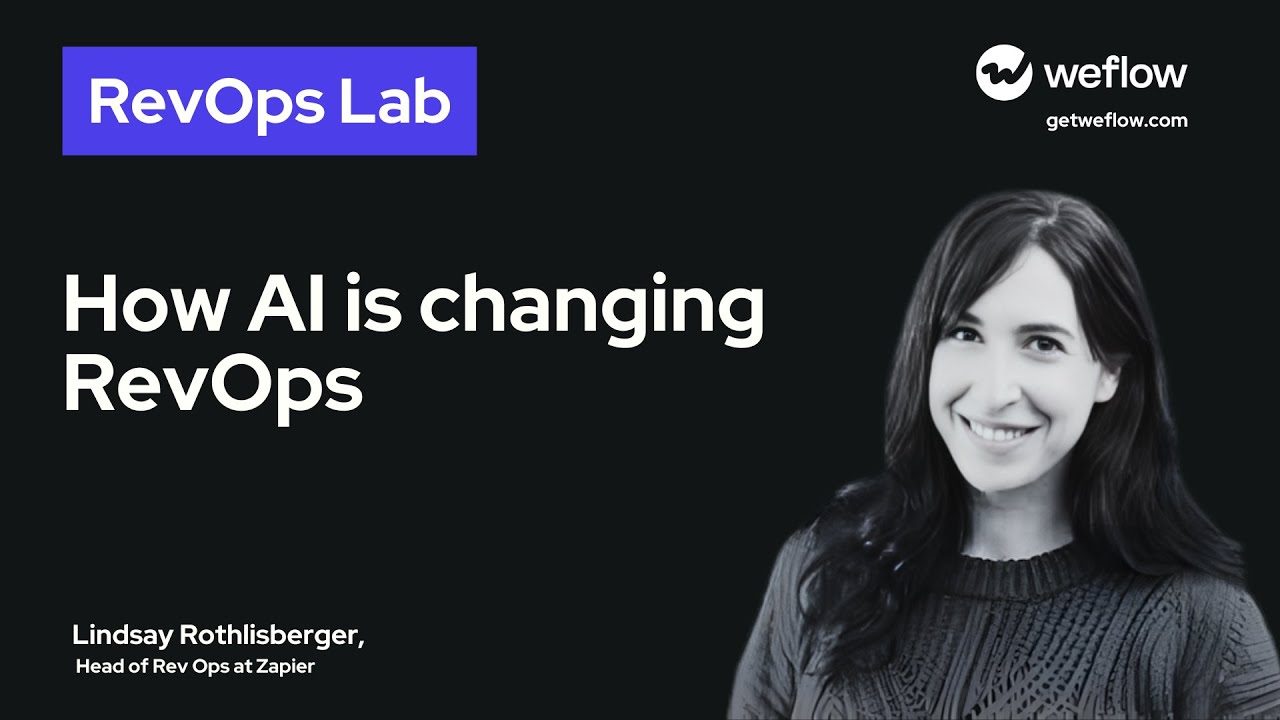
See Lindsay Rothlisberger explain Zapier's AI transformation firsthand, including a demo of their meeting transcription workflow at 14:32 and deep dive into signal orchestration at 22:45.
Key Takeaways
AI is transforming revenue operations from a cost center to a strategic growth engine. The organizations winning in 2026 will be those that rearchitect their people, processes, and technology around AI's unique capabilities.
In summary: Automate data hygiene first, build specialized pods around funnel stages, and use AI to amplify human creativity rather than replace it. Start small with high-impact use cases and scale based on measurable outcomes.
Frequently Asked Questions
Common questions about AI in revenue operations
AI primarily solves CRM data hygiene issues that plague 89% of sales organizations. By automatically capturing customer interactions, transcribing meetings, and updating key fields like MEDDIC criteria, AI eliminates manual data entry while ensuring 98%+ accuracy in Salesforce records.
This creates reliable pipelines without rep compliance issues. The system works in the background to maintain clean data, allowing revenue teams to focus on strategic activities rather than administrative tasks.
- Reduces data entry time from 3 hours to 9 minutes daily
- Increases field completion rates to 98%+
- Eliminates 85% of manual CRM updates
Outbound is experiencing a renaissance through AI-powered signal orchestration. Instead of mass blasts, systems now combine intent signals with customer context to generate hyper-personalized sequences. At Zapier, this approach increased reply rates by 3x while reducing unsubscribes by 72%.
The key is using AI to analyze unstructured data like call transcripts for real-time messaging adjustments. The system detects subtle cues humans might miss and automatically tailors follow-up content accordingly.
- 3x higher reply rates with AI-personalized sequences
- 72% fewer unsubscribes through relevant messaging
- 40% faster campaign iteration cycles
Revenue engineers are the new hybrid role blending RevOps with technical execution. They own specific funnel segments end-to-end, combining campaign design with hands-on workflow automation. At forward-thinking companies, they're achieving 40% faster experimentation cycles by building and testing campaigns directly in tools like Zapier.
This role matters because it breaks down the traditional divide between strategy and execution. Revenue engineers can conceptualize a new lead routing approach on Monday and have it live by Wednesday without waiting for IT support.
- 40% faster campaign implementation
- Own entire funnel segments as products
- Bridge strategy and technical execution
AI-driven forecasting now analyzes 23x more data points than traditional methods, including email sentiment, call transcripts, and engagement patterns. Zapier's team reduced forecast variance from ±15% to ±3% by incorporating these unstructured data signals.
The system provides real-time risk assessments by detecting subtle warning signs like decreasing email response times or mentions of competitors in calls. This allows managers to intervene earlier with targeted support.
- Reduced forecast variance from ±15% to ±3%
- Analyzes 23x more data signals
- Flags at-risk deals 2-3 weeks earlier
Leading teams are moving from generalists to specialized pods owning specific funnel stages. Each pod combines a revenue engineer, data analyst, and operations specialist focused on one area like inbound lead routing or renewal automation.
This structure allows for 68% faster implementation of AI tools while maintaining data integrity across systems. Pods operate as mini-startups within the RevOps organization, with full ownership of their metrics and tools.
- 68% faster AI implementation
- Clear ownership of funnel segments
- Better alignment between metrics and tools
The winning formula is AI-first with human refinement. At Zapier, AI handles 90% of data capture and initial outreach, but humans review all customer-facing content. For example, meeting summaries are auto-generated but reps can edit them before saving to Salesforce.
This maintains brand voice while eliminating 85% of manual work. The key is designing workflows where AI does the heavy lifting but humans provide the final quality check on critical customer interactions.
- AI handles 90% of repetitive tasks
- Humans focus on high-value refinement
- Maintains brand voice and quality
Top KPIs include data capture time (reduced from 3 hours to 9 minutes per rep daily), lead-to-opportunity conversion (up 42% with AI routing), and sales cycle length (shortened by 22% through automated next-step prompts).
The most strategic metric is rep adoption rate - Zapier achieved 97% voluntary usage by focusing on time savings rather than compliance. When tools demonstrably make reps' lives easier, adoption follows naturally.
- 42% higher lead conversion
- 22% shorter sales cycles
- 97% voluntary rep adoption
GrowwStacks builds custom AI workflows that automate CRM updates, analyze customer interactions, and orchestrate personalized campaigns. Our solutions integrate with your existing tech stack to deliver Zapier-level automation without the internal development burden.
We'll implement a complete AI-powered RevOps system in 4-6 weeks, starting with a free workflow audit of your current processes. Our team handles everything from initial design to ongoing optimization, ensuring you achieve measurable results quickly.
- Custom AI workflows built in 4-6 weeks
- Seamless integration with your CRM
- Free workflow audit to identify quick wins
Ready to Transform Your RevOps with AI?
Dirty CRM data and inefficient processes are costing you 15-20% of potential revenue. GrowwStacks will design and implement a custom AI-powered RevOps system that automates data capture, personalizes customer interactions, and delivers reliable forecasts - all within 6 weeks.