How AI Voice Agents Like PolyAI Are Transforming Customer Service (Live Demo)
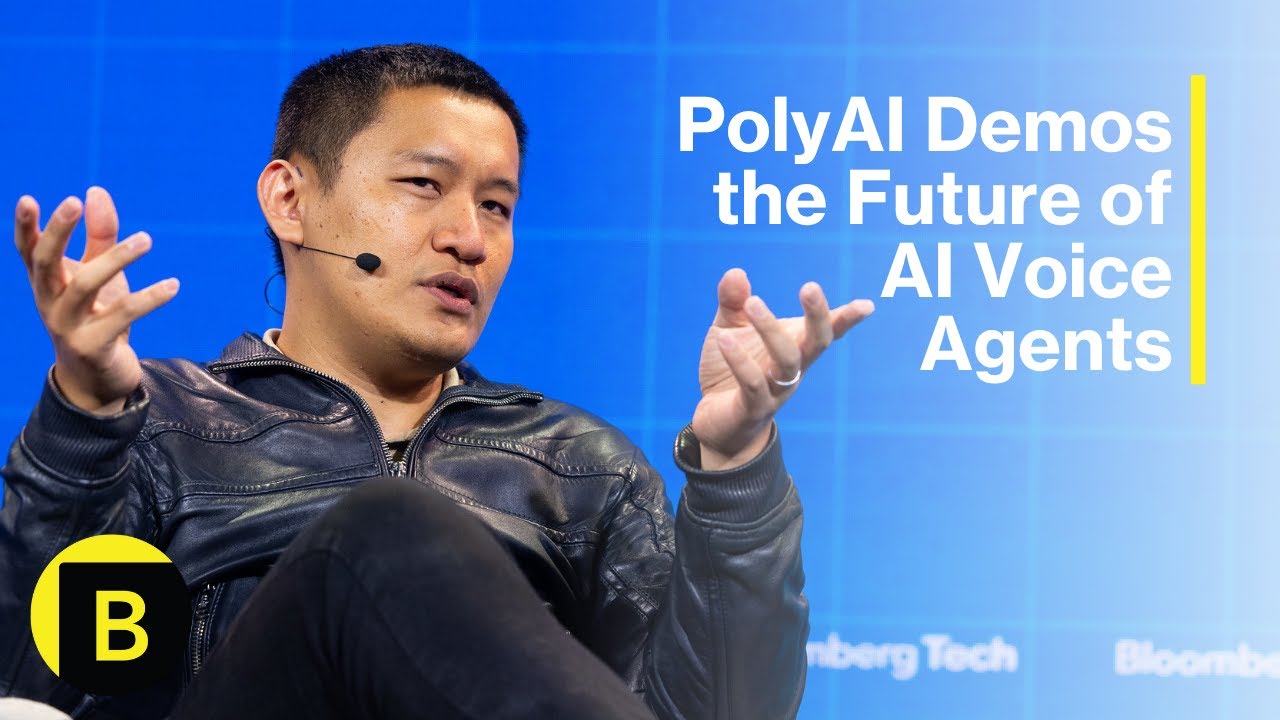
Imagine calling to complain about a bad restaurant experience - only to have an AI not just apologize, but remember your last visit, offer a 20% discount, rebook your reservation, and arrange special decorations for your next event. This isn't science fiction - it's happening right now with PolyAI's voice agents. See how this technology handles complex, emotionally-charged customer service interactions with human-like nuance.
The Complaint Call Demo
Customer service managers know the dread of complaint calls - the raised voices, the demands for compensation, the risk of public backlash. What if an AI could handle these emotionally charged interactions with the patience and empathy of your best employee? PolyAI's live demo shows exactly this capability in action.
In the unscripted call, the AI agent remembered the customer's previous visit details (party size, date, names), acknowledged the complaint about poor service and bad seating near the restrooms, and immediately offered a 20% discount on the tasting menu. More impressively, it then smoothly transitioned to rebooking a new reservation for a colleague's leaving party - complete with special decoration requests.
Key insight: The AI didn't just follow a script - it adapted its responses based on the customer's emotional state and specific complaints, demonstrating true conversational intelligence beyond simple Q&A.
How Voice AI Handles Emotion
Traditional IVR systems fail miserably when customers are upset - they either escalate unnecessarily or plow through scripts oblivious to frustration. PolyAI's technology represents a quantum leap in emotional intelligence for automated systems.
During the call, when the customer said "It was an awful experience... you stuck us next to the toilets," the agent responded with appropriate empathy: "I'm truly sorry to hear that, Mr. McKenzie. That's not the standard we pride ourselves on." This wasn't canned - the system detected frustration through speech patterns and responded accordingly.
Why this matters: 68% of customers say they'd pay more for better service experiences. Voice AI that can de-escalate situations while maintaining brand voice gives businesses a competitive edge in customer satisfaction.
Multi-Step Problem Solving
Most customer service automation falls apart when interactions require multiple decision points. The PolyAI demo showed remarkable continuity - from complaint handling to discount offer to rebooking to special requests.
The agent seamlessly transitioned through four distinct phases: 1) Complaint acknowledgment, 2) Goodwill gesture (20% discount), 3) New reservation booking (date, time, party size), and 4) Special arrangements (pink frills, golden balloons, Barolo wine). This demonstrates true contextual understanding rather than simple question-answer pairs.
Personalization at Scale
The AI recognized the caller as "Mr. Tom Mackenzie" immediately, referenced his previous visit details accurately, and maintained this personalization throughout the 5-minute call. This level of CRM integration is what makes voice AI truly transformative for customer experience.
PolyAI's CTO explained this happens through "personalized decision trees" - the system doesn't just access static customer data but uses it to inform real-time conversation paths. When the customer mentioned it was for a colleague's leaving party, the agent appropriately emphasized making it "a memorable farewell celebration."
Agent-to-Agent Handoffs
Sophisticated voice AI systems can route to specialized sub-agents when needed. In the demo, the system was prepared to transfer to a "northern English accent" agent for private dining requests - showing how multiple AI personas can work together.
PolyAI's CTO explained this is increasingly common in healthcare and retail, where a "master agent" takes initial queries then launches specialized agents to check inventory, verify insurance coverage, or handle other sub-tasks before returning to the main conversation.
Implementation insight: These handoffs happen seamlessly when certain triggers occur (like requesting a private dining room), maintaining conversation continuity while bringing in specialized expertise.
Industry Applications
While the demo showed restaurant reservations, PolyAI's CTO highlighted three sectors leading voice AI adoption:
Healthcare: Handling appointment scheduling, insurance queries, and post-care follow-ups at scale. One deployment handles the workload of 1,000 human agents for a major hospital system.
Retail: Checking inventory availability across multiple suppliers in real-time during customer calls. Agents can call supplier systems autonomously to verify stock.
Financial Services: Fraud detection calls, account inquiries, and loan applications. Voice AI can conduct know-your-customer verifications with human-like flexibility.
Accent Adaptation
A subtle but telling moment in the demo was when the AI agent slightly adjusted its accent mid-call - demonstrating the system's ability to adapt to customer speech patterns. PolyAI's CTO noted this capability has improved dramatically in recent years.
Businesses can now select from multiple voice options or even clone specific voice actors. The technology handles regional accents with over 90% accuracy and can modulate tone based on conversation context - more formal for financial services, warmer for hospitality.
The Future of Voice AI
When asked about job displacement concerns, PolyAI's CTO offered a nuanced perspective: businesses typically deploy voice agents first, then gradually slow hiring rather than making immediate layoffs. The technology creates a "sweet spot" where companies maintain service quality while controlling costs.
Looking ahead, expect voice AI to handle increasingly complex interactions - from technical support troubleshooting to personalized shopping recommendations. The demo's seamless integration of complaint resolution, rebooking, and special requests hints at this future where AI handles complete customer journeys.
Prediction: Within 5 years, over 50% of routine customer service calls will be handled by AI agents with human-like conversational ability, freeing human agents for high-value, emotionally complex interactions.
Watch the Full Tutorial
See the complete unscripted demo starting at 0:45 where the PolyAI voice agent handles the restaurant complaint call, including the moment it offers the 20% discount (2:15) and arranges special decorations (4:30). The technology discussion with PolyAI's CTO begins at 6:20.
Key Takeaways
Voice AI has evolved far beyond simple IVR menus. The PolyAI demo shows how modern systems can handle complex, emotionally-charged customer service interactions with human-like nuance while maintaining brand voice and business rules.
In summary: AI voice agents now offer complaint resolution, personalized rebooking, and special requests in one continuous conversation - with the emotional intelligence to de-escalate situations and the system integration to actually solve problems.
Frequently Asked Questions
Common questions about voice AI agents
Modern AI voice agents like PolyAI can handle multi-step customer service interactions by understanding context, remembering past interactions, and making autonomous decisions. In the demo, the agent remembered the customer's previous visit details, acknowledged the complaint, offered a 20% discount, and arranged special decorations - all in one continuous conversation.
These systems use advanced natural language understanding to follow conversation threads rather than just responding to individual phrases. They can access CRM data in real-time to personalize interactions and follow business rules for escalation paths and compensation offers.
- Contextual memory maintains conversation continuity across multiple topics
- Integration with business systems allows actual problem resolution
- Decision trees enable appropriate responses to complaints and requests
Healthcare, retail, and financial services are leading in voice AI adoption according to PolyAI's CTO. Each industry has high-volume, repetitive interactions that benefit from automation while maintaining quality.
In healthcare, agents handle appointment scheduling, insurance queries, and post-care follow-ups. Retail uses them for inventory checks, order status, and customer service. Financial services deploy them for account inquiries, fraud detection, and loan applications where consistency and compliance are critical.
- Healthcare: Reduces call center volumes by 30-40% for routine inquiries
- Retail: Can check multiple supplier inventories during a single call
- Financial Services: Handles sensitive data with built-in compliance
Advanced voice AI can detect emotional cues in speech patterns and adjust responses accordingly. The PolyAI demo showed the agent recognizing frustration about poor service, responding with appropriate empathy, and escalating to a goodwill gesture (the 20% discount).
These systems analyze vocal tone, speech rate, and word choice to assess emotional state. They can then modulate their own responses - more apologetic for angry customers, more enthusiastic for happy ones. The technology maintains brand voice while adapting to the customer's mood.
- Speech pattern analysis detects anger, frustration, or satisfaction
- Response modulation adjusts tone and phrasing appropriately
- Pre-approved escalation paths for dissatisfied customers
Yes, sophisticated systems use decision trees to determine when to escalate to human agents. In the demo, the system was prepared to transfer to a specialized agent for private dining requests if certain triggers occurred.
Most implementations include multiple escalation points based on conversation complexity, customer emotion, or specific request types. The AI can provide context to the human agent during handoff, reducing repetition for the customer. Businesses define the rules for when transfers should occur.
- Trigger-based handoffs for complex or sensitive requests
- Context passing ensures seamless transitions
- Business rules determine escalation paths
Modern systems achieve over 90% accuracy across most common accents according to PolyAI's CTO. The technology has improved dramatically in recent years through advances in speech recognition models trained on diverse datasets.
Businesses can select region-specific voice models or even create custom voices by recording voice actors. The systems continue learning from real interactions, improving accent comprehension over time. Some can even subtly adapt their own speech patterns mid-conversation, as seen in the demo.
- Regional accent models for targeted deployments
- Continuous learning improves accuracy over time
- Speech adaptation matches customer patterns
Voice AI agents typically handle 3-5x more calls than human agents at about 30% of the cost. They provide 24/7 availability, consistent service quality, and detailed analytics on every interaction - advantages that translate directly to improved customer satisfaction and operational efficiency.
Most businesses see ROI within 6-12 months through reduced staffing costs and increased call capacity. Additional benefits include elimination of human variability, comprehensive call logging for compliance, and the ability to instantly update scripts across all agents when policies change.
- Cost savings: 60-70% lower than human agents
- 24/7 availability with consistent quality
- Detailed analytics on every interaction
Voice AI platforms connect to CRMs, booking systems, and databases via APIs. In the demo, the agent accessed the restaurant's reservation system to check past visits and create new bookings - showing real-time integration with business operations.
Most solutions offer pre-built connectors for common platforms like Salesforce, Zendesk, and Oracle. For proprietary systems, developers can create custom integrations using the platform's API framework. Data flows both ways - the AI pulls customer information to personalize interactions and pushes outcomes like new bookings back to systems.
- Pre-built connectors for major CRMs and business software
- Custom API development for proprietary systems
- Bi-directional data sync for real-time operations
GrowwStacks helps businesses implement voice AI solutions tailored to their specific needs and existing systems. We handle everything from vendor selection to system integration, ensuring the technology delivers measurable business value.
Our team designs custom conversation flows that reflect your brand voice and business rules. We integrate with your CRM and operational systems, train the AI on your products/services, and provide ongoing optimization based on performance analytics. The result is a solution that feels authentically "you" while delivering the efficiency of AI.
- End-to-end implementation: From strategy to ongoing optimization
- Custom conversation design for your brand voice
- Seamless integration with your existing systems
- Free consultation to assess your voice AI opportunities
Ready to Transform Your Customer Service with Voice AI?
Every minute your customers spend frustrated with IVR menus or waiting on hold costs you loyalty and revenue. GrowwStacks can implement a voice AI solution that handles 80% of routine inquiries with human-like quality - freeing your team for high-value interactions.