How to Build an AI Voice Agent That Sounds 100% Human (ElevenLabs Expressive Mode)
Robotic phone systems make customers hang up in frustration, costing businesses billions. ElevenLabs' breakthrough Expressive Mode creates AI voices that laugh naturally, show empathy, and pause conversationally - just like human agents. Here's how to implement this game-changing technology for your customer service.
The $75 Billion Problem With Robotic Voices
Every business owner knows the frustration of phone systems that drive customers away. That stilted robotic voice saying "Press one for..." doesn't just annoy callers - it costs companies an estimated $75 billion annually in lost business when customers hang up within 15 seconds.
The fundamental issue isn't the technology itself, but the complete lack of human qualities. Traditional IVR systems can't laugh at jokes, show empathy for frustrations, or naturally pace conversations. This creates what psychologists call the "uncanny valley" effect - close enough to human to be recognizable, but clearly artificial in ways that trigger discomfort.
Key insight: Customers don't hate automated systems - they hate bad automated systems. When an AI agent can mirror human conversational patterns naturally, acceptance rates skyrocket while support costs plummet.
ElevenLabs' Expressive Mode Breakthrough
ElevenLabs recently launched what may be the most significant advancement in voice AI since speech synthesis began - Expressive Mode in their version 3 model. This isn't just incremental improvement; it's a fundamental shift in how AI handles conversation.
The demo shows an AI named Hope reacting naturally to a joke: "[laughter] Bro, bro, I don't know why that sent me." The laughter isn't canned - it emerges organically from the context. The pacing includes natural pauses, snorts, and emotional inflections that would fool most listeners in a blind test.
Why this matters: Expressive Mode moves beyond robotic predictability by introducing three human elements: 1) Emotional resonance 2) Conversational pacing 3) Contextual vocal behaviors (like clearing throat or sighing).
How Audio Tags Create Human Emotion
The secret sauce behind ElevenLabs' human-like voices are audio tags - simple square bracket notations that trigger specific vocal behaviors. These aren't sound effects layered over speech; they're instructions telling the AI how to perform the text.
Basic tags like [laughter] or [excited] can be inserted directly into scripts, but the real power comes from programming the AI to use them contextually. For customer service, you might configure:
- [patient] when explaining complex processes
- [empathy] when hearing customer frustrations
- [excited] when delivering good news
- [laughter] during light moments to build rapport
This creates what linguists call "paralinguistic features" - the non-word elements of speech that convey meaning. In human conversations, these features account for nearly 40% of what we communicate.
3-Step Setup for Human-Sounding AI Agents
Creating a basic Expressive Mode agent takes under 10 minutes. Here's the streamlined process:
Step 1: Enable Expressive Mode
In ElevenLabs' interface, create a new agent and toggle on Expressive Mode. Select version 3 (the most advanced model) and choose your preferred voice from their library (Hope works well for customer service).
Step 2: Program Audio Tags
Define when different vocal behaviors should trigger. For a refund agent, you might set:
- [excited] when greeting customers
- [empathy] when hearing complaints
- [patient] during explanations
- [laughter] for lighthearted moments
Step 3: Configure Knowledge Base
Upload your FAQ documents and SOPs. Enable RAG (Retrieval Augmented Generation) so the AI can reference these accurately during calls.
Pro tip: Start with one primary use case (like refunds) before expanding. Narrow focus yields more natural conversations.
Advanced Prompt Engineering for Natural Conversations
The system prompt is where you define your AI's personality and rules of engagement. For human-like interactions, it needs more nuance than typical chatbot prompts.
A well-crafted Expressive Mode prompt includes:
- Tone guidelines: "Keep responses conversational with expressive delivery"
- Emotional rules: "Show genuine empathy for frustrations but never fake emotions"
- Audio tag instructions: "Use [laughter] for light moments, [patient] for explanations"
- Persona details: "You are Hope, a warm but professional customer support specialist"
This level of detail prevents the "uncanny valley" effect by ensuring emotional responses feel appropriate rather than forced.
Knowledge Base and Workflow Integration
Human-sounding voices need accurate information to be effective. ElevenLabs Agents allow deep integration with your existing systems:
Knowledge Bases
Upload FAQs, policy documents, and product details. Enable RAG (Retrieval Augmented Generation) so the AI can reference these accurately during calls.
Workflow Rules
Configure decision trees for common scenarios. For refunds, you might set rules like:
- If customer mentions "damaged item," request photos
- If they say "refund," confirm order details
- If frustrated, escalate tone to [empathy]
Human Handoffs
Set clear transfer rules for when live agents are needed (like final refund approvals). This maintains trust while automating routine interactions.
Real-World Demo: Handling an Angry Customer
The true test comes when facing frustrated callers. In the demo, the AI handles an angry customer requesting a refund for a crushed product:
AI: "I hear how upset you are and I'm really sorry the product has left you feeling this way. [empathy] I can't process a refund myself, but I can absolutely help you get this moving right now."
Notice the natural flow - acknowledging emotion first, then explaining limitations, before offering solutions. The [empathy] tag triggers appropriate vocal tone without sounding manipulative.
When the customer asks about refund timing, the response includes both information and reassurance:
AI: "Totally fair question. [patient] Once approved, refunds take 5-7 business days depending on your bank. If you choose store credit, that's often faster."
This demonstrates how Expressive Mode handles complex emotional labor - validating concerns while guiding to resolution.
Watch the Full Tutorial
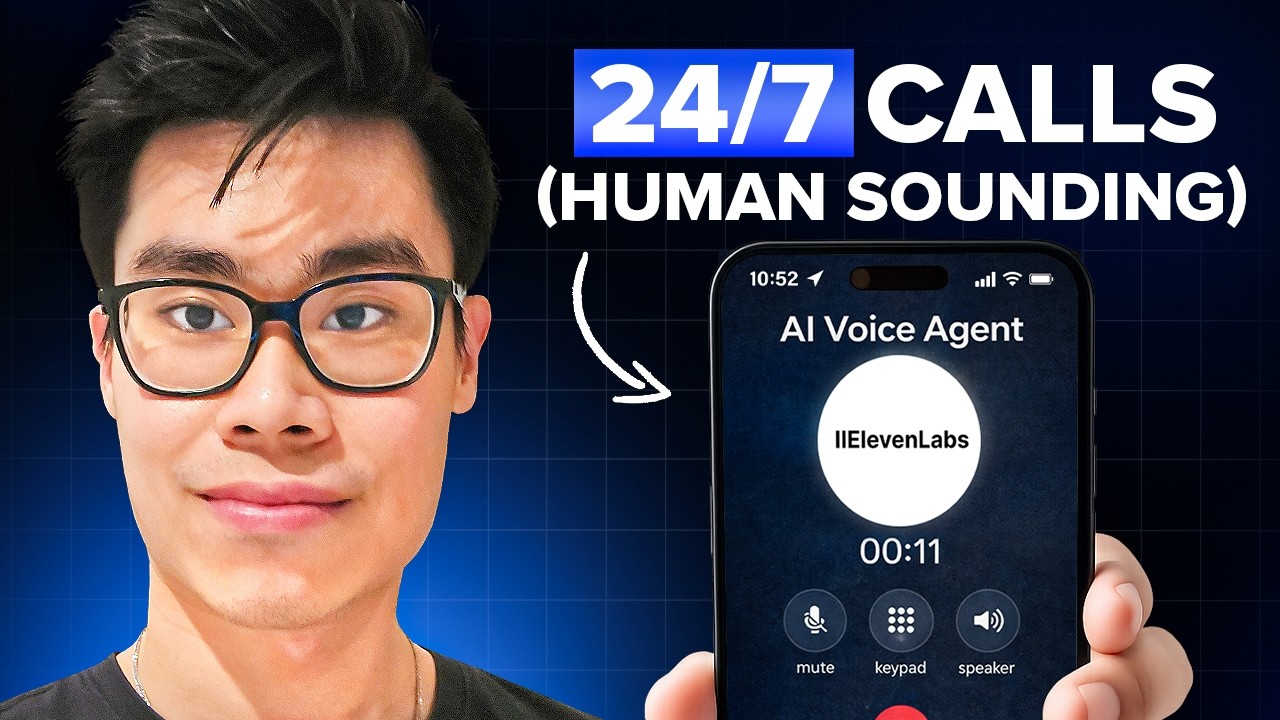
See the complete implementation process in action, including how to configure audio tags for different emotional responses (jump to 4:12 for the laughter demonstration).
Key Takeaways
Voice AI has reached an inflection point where synthetic voices can now handle the emotional complexity of human conversations. This changes everything for customer service, sales, and support operations.
In summary: ElevenLabs' Expressive Mode solves the $75 billion robotic voice problem through three innovations: 1) Natural emotional responses 2) Contextual audio tags 3) Advanced prompt engineering. When implemented correctly, customers can't tell they're talking to AI - they just feel heard.
Frequently Asked Questions
Common questions about human-sounding AI voice agents
Businesses lose approximately $75 billion every year due to customers hanging up on robotic phone systems within the first 15 seconds of interaction. The lack of human emotion and natural conversation flow frustrates callers and damages customer relationships.
This staggering figure comes from abandoned calls leading to lost sales, increased support costs from repeat callers, and damage to brand reputation. Industries with complex customer service needs (like telecoms and financial services) are hit hardest.
ElevenLabs' Expressive Mode introduces human-like qualities including natural laughter, emotional responses, conversational pauses, and tone variations. Unlike traditional robotic voices, it can handle jokes, show empathy, and match the caller's emotional state through advanced audio tags like [laughter] and [excited].
The technology analyzes conversation context to determine appropriate emotional responses rather than relying on pre-recorded snippets. This creates genuinely dynamic interactions that adapt to each caller's needs and mood.
Audio tags are square bracket notations that trigger specific vocal behaviors. For example, [laughter] produces natural laughter, [excited] increases pitch and speed, while [patient] slows speech for explanations. These tags are inserted directly into the script where emotional responses are appropriate.
Advanced implementations use conditional logic to apply tags contextually. The AI might apply [empathy] when detecting frustration keywords or [laughter] when the conversation turns lighthearted. This creates organic-feeling interactions rather than scripted responses.
Customer support centers, property management firms, eCommerce stores, and any business handling frequent phone inquiries see dramatic improvements. The technology is particularly effective for handling frustrated customers, as the AI can mirror empathy and de-escalate tension naturally.
Industries with high call volumes (like insurance and healthcare) benefit from reduced wait times while maintaining quality interactions. The AI handles routine inquiries, allowing human agents to focus on complex cases requiring judgment calls.
A functional prototype can be created in under 10 minutes using ElevenLabs' interface. The three key steps are: 1) Selecting version 3 with Expressive Mode enabled 2) Programming audio tags into the system prompt 3) Configuring tone rules for different customer emotions.
Production-ready implementations typically take 2-3 days including knowledge base integration and workflow testing. Complex deployments with CRM connections may require 1-2 weeks for full optimization across all use cases.
Yes, when properly configured with a knowledge base and workflow rules. The demo showed handling a damaged product return with multiple decision points - assessing eligibility, offering store credit alternatives, and transferring to human agents when needed.
Advanced setups can manage multi-step processes like insurance claims or technical troubleshooting by integrating with backend systems. The AI references documentation in real-time while maintaining natural conversation flow through appropriate emotional responses.
Eleven Creative is for voice experimentation and testing different vocal styles. Eleven Agents is the production environment where you build deployable AI agents with full conversational flows, knowledge bases, and integration capabilities for business use.
Creative focuses on voice quality and emotional range testing, while Agents adds workflow logic, API connections, and enterprise features like analytics and team collaboration tools for managing deployed solutions.
GrowwStacks specializes in implementing human-sounding AI voice agents tailored to your specific business needs. Our team handles the complex prompt engineering, knowledge base integration, and workflow configuration - delivering a complete solution that reduces customer frustration while cutting support costs by up to 40%.
We go beyond basic setup to optimize for your industry's unique conversation patterns and compliance requirements. Whether you need a simple FAQ bot or a fully integrated voice AI system, we'll design a solution that sounds authentically human while delivering accurate information.
- Custom voice AI agents built for your workflows
- Seamless integration with your existing systems
- Free 30-minute consultation to assess your needs
Ready to Eliminate Robotic Customer Service?
Every day with outdated voice systems means more frustrated customers and missed opportunities. GrowwStacks can implement a human-sounding AI solution for your business in as little as 2 weeks - cutting support costs while improving customer satisfaction.