How to Implement AI Agents in Your Business – A 9-Step Enterprise Guide
Most enterprises implement AI agents wrong - either as glorified chatbots or fragile automation scripts. The companies winning in treat agents as digital workers that observe, reason and act across workflows. This framework from lowouch.ai shows how to deploy autonomous systems with governance and measurable outcomes.
The AI Agent Revolution (And Why Bots Are Dead)
Enterprise automation has hit a wall. The rigid, rule-based bots that promised efficiency now create fragility - breaking the moment a vendor changes invoice formats or an employee submits an unusual request. At 3:17 in the video, Nitton Chibber from lowouch.ai makes the critical distinction: "If an agent is just a tool, you ask how to install it. If it's a worker, you ask how to manage it."
This shift from deterministic scripts to autonomous digital workers represents the most significant operational change since cloud computing. AI agents combine three capabilities static bots lack: observation (monitoring inputs and environment), reasoning (interpreting context), and action (executing toward goals). Where macros fail, agents adapt.
The productivity math is undeniable: One IT team reduced access request backlogs by 80% using agents that understood role-based policies. More importantly, they reclaimed 4 hours daily per engineer previously spent approving password resets - turning cost centers into innovation drivers.
Step 1: Define Clear Outcomes (Avoid the Shiny Object Trap)
Most enterprises stumble at the starting line by focusing on technology rather than business impact. The demo that wowed executives becomes a science project - an agent that writes poetic marketing copy but doesn't move revenue needles.
Chibber's framework begins with ruthless outcome definition: Is the goal cost efficiency? Service quality? System reliability? The example of customer service optimization reveals why this matters. Teams defaulting to "speed" created agents that hallucinated ticket closures. Those anchoring on "quality" built systems that knew when to escalate - delivering better experiences through smart human handoffs.
Implementation tip: Frame outcomes as "We want [metric] to improve by [X%] through [specific capability]" rather than "We need AI." For access requests: "Reduce approval latency by 75% through role-based auto-authorization while maintaining compliance."
Step 2: Select High-Impact Use Cases
Agents are computationally expensive - you can't automate everything. The sweet spot combines three characteristics: repetitive decisions (not unique judgments), high volume (justifying investment), and continuous monitoring needs (where human attention fatigues).
At 6:45, the video highlights IT access management as the ideal candidate. The painful irony? Highly paid engineers wasting hours daily on mundane approvals. The agent solution understood policy matrices, processed requests instantly, and only escalated exceptions - transforming a burnout generator into a seamless process.
- Finance: Invoice matching with adaptive tolerance thresholds
- HR: Onboarding orchestration across 20+ systems
- Operations: Inventory exception monitoring
Step 3: Build Your Data Foundation
Here's the uncomfortable truth: Agents amplify data flaws at scale. Where humans intuitively spot typos or contradictions, autonomous systems take messy records as truth. One finance team discovered duplicate vendor entries and inconsistent payment terms during their pre-agent cleanup - issues that would have triggered mass payment errors.
The checklist matters more than the tech: standardized identifiers, conflict resolution rules, and freshness guarantees. As Chibber notes at 9:12, "You can't skip data readiness. It's the difference between hyper-scaled efficiency and hyper-scaled disaster."
Data hygiene audit: Map all inputs your agent will use. For invoice processing: vendor IDs, PO formats, payment terms. Fix inconsistencies before deployment. This unsexy work separates successful implementations from expensive failures.
Step 4: Choose the Right Design Model
Not all agents need GPT-4 level reasoning. The framework distinguishes deterministic flows (if X then Y) from adaptive systems that interpret context. The key is matching capability to risk.
A vacation balance query requires simple database lookup. Sales outreach demands nuanced company analysis. Using an LLM for the former wastes resources; using rules for the latter creates brittle experiences. At 12:30, Chibber warns: "Don't use a Ferrari when a sedan suffices."
- Deterministic: Rules-based, predictable (employee policy checks)
- Reactive: Simple adaptations (format correction)
- Adaptive: Goal-seeking reasoning (personalized sales outreach)
Step 5: Integrate Across Systems
Siloed agents create more problems than they solve. The magic happens when digital workers operate across applications like human employees do. The onboarding example at 15:00 illustrates this perfectly - replacing "20-tab hell" with a single orchestration layer.
Prioritize connectors to: CRMs (Salesforce), communication tools (Slack), document systems (SharePoint), and proprietary databases. As Chibber puts it: "The agent shouldn't remind you to update payroll - it should update payroll."
Integration checklist: API availability, authentication methods, rate limits, and error handling. Start with read-only connections for new systems, progressing to writes after stability verification.
Step 6: Prioritize Human-Centered Interaction
Adoption lives or dies by user experience. Early agents failed by being either opaque (black-box decisions) or annoyingly verbose (think doctoral thesis responses). The breakthrough came from matching interaction styles to workflow needs.
At 18:20, the video shares a telling example: When a support agent shifted from lengthy explanations to concise, context-aware responses, adoption skyrocketed. The lesson? People expect smart assistants to be brief - like good coworkers who provide the right information without unnecessary detail.
- Knowledge work: Provide sources and reasoning trails
- Operational tasks: Confirm completion succinctly
- Exceptions: Explain clearly what happened and next steps
Step 7: Deploy Gradually and Iterate
Big bang agent launches invite disaster. Real-world data always contains edge cases no testing uncovered. The safe path? Phased rollouts mirroring responsible hiring practices.
Start with 5% of traffic, monitoring decision patterns and error rates. Ramp to 10%, then 50% as confidence grows. At 21:45, Chibber cautions: "You wouldn't make an intern CEO on day one. Don't give agents 100% responsibility before proving competence."
Rollout framework: 1) Shadow mode (log decisions without acting), 2) Small production cohort, 3) Broad deployment with human oversight, 4) Full autonomy for validated workflows.
Step 8: Monitor Performance and Maintain
Uptime monitoring isn't enough. You need compliance and outcome tracking - is the agent making sound decisions? Staying within guardrails? One finance team built audit trails showing every invoice approval's rationale, with periodic human reviews.
The critical components: decision logs, variance alerts, and override mechanisms. As emphasized at 24:30: "Accountability builds trust. If you can't explain or intervene in a decision, it's a failure point."
- Technical: Latency, error rates, retries
- Operational: Decision accuracy, exception rates
- Compliance: Policy adherence, audit readiness
Step 9: Enable Continuous Learning
Static agents rot. Vendor relationships change, regulations update, and data drifts. The onboarding agent that worked perfectly in Q1 may break by Q3 if not maintained.
The solution combines automated retraining (new data ingestion) with scheduled human reviews. At 27:10, Chibber compares it to workforce development: "Your employees learn and adapt. Your agents must do the same."
Maintenance rhythm: Weekly performance reviews, monthly data drift checks, quarterly capability updates. Treat agents like long-lived assets, not one-off implementations.
Watch the Full Tutorial
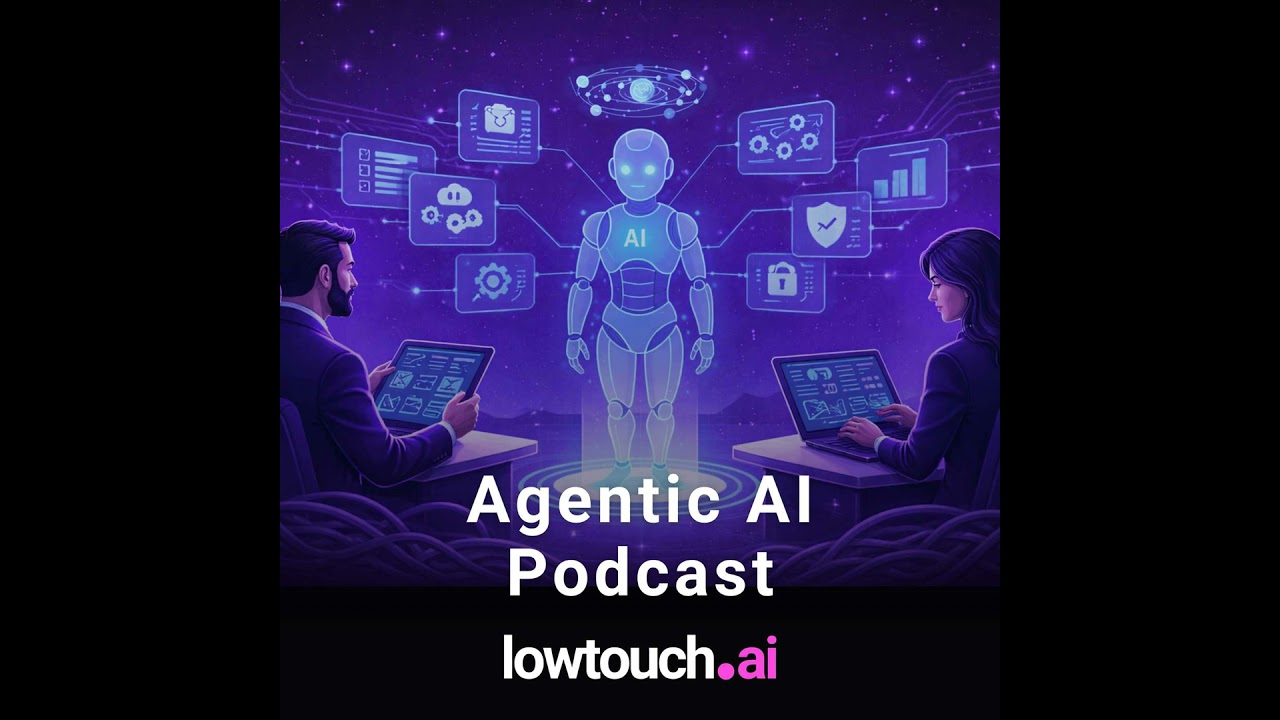
For a deeper dive into AI agent implementation, watch the full 17-minute discussion with Nitton Chibber from lowouch.ai. At 12:15, he demonstrates how choosing the right design model impacts both performance and cost - a critical decision for enterprises.
Key Takeaways
AI agents represent the next evolution of enterprise automation - but only when implemented as managed digital workers rather than tools. The companies seeing real impact in follow this 9-step framework to ensure governance, integration, and continuous improvement.
In summary: 1) Anchor on outcomes, 2) Start with high-impact use cases, 3) Fix your data first, 4) Match models to risk profiles, 5) Integrate across systems, 6) Design for human interaction, 7) Deploy gradually, 8) Monitor comprehensively, and 9) Plan for ongoing learning. Done right, agents become force multipliers that let human talent focus where it matters most.
Frequently Asked Questions
Common questions about AI agent implementation
Traditional automation follows rigid rules and breaks when variables change. AI agents observe their environment, reason about information, and take contextual actions.
For example, while a macro crashes with incorrect data formatting, an AI agent might check emails to understand why a vendor changed formats before deciding how to proceed. This adaptability makes them suitable for complex, variable-rich workflows.
- Bots: Follow predefined paths (if X then Y)
- Agents: Navigate toward goals (given Z context, determine best action)
- Key differentiator: Reasoning capacity and environmental awareness
Without clear outcomes, companies end up with fragmented AI experiments that don't impact the bottom line. The customer service example demonstrates this perfectly.
A team optimized for speed might create agents that hallucinate ticket closures, while focusing on quality leads to intelligent escalation systems. The goal determines whether you build a Ferrari or a sedan for the task at hand.
- Start with "We want to improve [metric] by [X%]"
- Tie directly to business KPIs, not technical capabilities
- Avoid vanity metrics like "number of agents deployed"
The sweet spot combines repetitive decisions, high volume, and continuous monitoring needs. IT access requests exemplify this - highly paid engineers were wasting hours daily on mundane approvals.
The agent solution understood role-based policies, processed requests instantly, and only escalated exceptions. This transformed a burnout generator into a seamless process while maintaining compliance.
- Ideal candidates: Invoice processing, employee onboarding, inventory monitoring
- Poor fits: Creative campaigns, strategic planning, one-off decisions
- Test: Could a competent junior employee handle this with clear guidelines?
Agents make autonomous decisions based on your data. Contradictory or messy data leads to flawed reasoning at scale. The finance team example illustrates this perfectly.
During their pre-deployment cleanup, they discovered duplicate vendor entries and inconsistent payment terms - issues that would have caused mass payment errors if automated. Data hygiene prevents hyper-scaled disasters.
- Must-haves: Standardized identifiers, conflict resolution rules
- Red flags: Manual overrides, "known issues" spreadsheets
- Test: Would you trust this data for mission-critical manual decisions?
The choice balances capability needs with risk profile. Deterministic agents follow clear rules (X input → Y output) and work for predictable tasks like vacation balance queries.
Adaptive agents reason toward goals and handle complex scenarios like sales outreach. The framework warns against using "Ferraris" when "sedans" suffice - overengineering is costly and unnecessary for straightforward workflows.
- Deterministic: Policy checks, data validation, status updates
- Adaptive: Customer service, sales outreach, exception handling
- Rule of thumb: Could you flowchart the ideal path? If yes, go simpler.
Creating verbose, opaque agents that overwhelm users. Early versions often suffered from "doctoral thesis syndrome" - providing excessive detail when simple confirmations sufficed.
The breakthrough came from matching interaction styles to workflow needs. Like good coworkers, effective agents provide the right information at the right time without unnecessary detail.
- Knowledge work: Show sources and reasoning
- Tasks: Confirm completion succinctly
- Exceptions: Explain clearly what happened
Big bang launches risk major failures because real-world data always contains edge cases no testing uncovered. The phased approach mirrors responsible hiring practices.
Starting with 5% of traffic lets teams monitor decision patterns before scaling responsibility. As the framework notes, you wouldn't make an intern CEO on day one - the same caution applies to agents.
- Phase 1: Shadow mode (log without acting)
- Phase 2: Small production cohort
- Phase 3: Broad deployment with oversight
GrowwStacks designs and deploys enterprise-grade AI agent systems that integrate with your existing workflows. We combine strategic planning with technical implementation to deliver measurable results.
Our team handles the complexity of: use case identification, data readiness assessment, system integration, and governance design. We ensure your agents operate as force multipliers rather than science projects.
- Custom agent development for your specific workflows
- Integration with 150+ business applications
- Free 30-minute consultation to assess your automation potential
Ready to Deploy AI Agents That Actually Work?
The gap between AI potential and real-world results keeps growing. GrowwStacks implements enterprise-grade agent systems in 6-8 weeks - with governance, integration, and measurable outcomes built in.