Integrating Claude AI with SAP Using Model Context Protocol (MCP)
SAP development is undergoing a seismic shift from manual coding to AI orchestration. Discover how Claude's 200K token context and MCP servers transform SAP workflows, reducing errors by 73% while maintaining enterprise-grade security and governance.
Beyond Vibe Coding: The SAP AI Paradigm Shift
SAP development stands at a crossroads. The traditional approach of "vibe coding" - hastily copying AI-generated snippets into CAP applications - creates fragile, insecure implementations. As Anthropic's CEO predicts, 50% of entry-level coding jobs will disappear, not because AI replaces developers, but because the role transforms into orchestrating intelligent agents.
This shift mirrors the industrial revolution's impact on craftsmanship. Where artisans once hand-carved each component, they became engineers designing assembly lines. Similarly, SAP developers are evolving from manual coders to architects of AI-powered development systems. Claude's 200K token context window enables this by processing entire SAP projects at once - understanding CDS models, services, and configurations simultaneously.
Key Insight: One practitioner built a complete customer feedback system in 45 minutes using five specialized AI agents that generated over 2,500 lines of perfect UI annotations - demonstrating the power of agentic engineering over manual coding.
Why Generic AI Fails in SAP Ecosystems
Generic AI models trained on public internet data struggle with SAP's precise conventions. When asked to build a Fiori app, they typically hallucinate outdated manifest JSON files, forget UI annotations, or use incorrect syntax - resulting in a 27% error rate for SAP architectural decisions.
These aren't simple syntax errors. The AI might rename database entities from plural to singular (breaking OData URLs) or create beautiful but non-functional buttons using unbound OData V4 actions. Such bugs waste hours of debugging time because they appear correct at first glance but fail silently in production.
The Agentic Engineering Era
Agentic engineering replaces one-off AI queries with structured teams of specialized agents. Imagine having a senior CAP developer, Fiori designer, and system scaffolder working autonomously under your direction. These agents coordinate through simple markdown files that serve as living rulebooks.
When an agent makes a mistake (like forgetting localized text fields), you update the markdown rulebook once. The AI then never repeats that error across all future implementations. This creates compounding efficiency as your rulebase grows - each solved bug becomes permanent institutional knowledge.
Bridging AI and SAP with Real-Time System Access
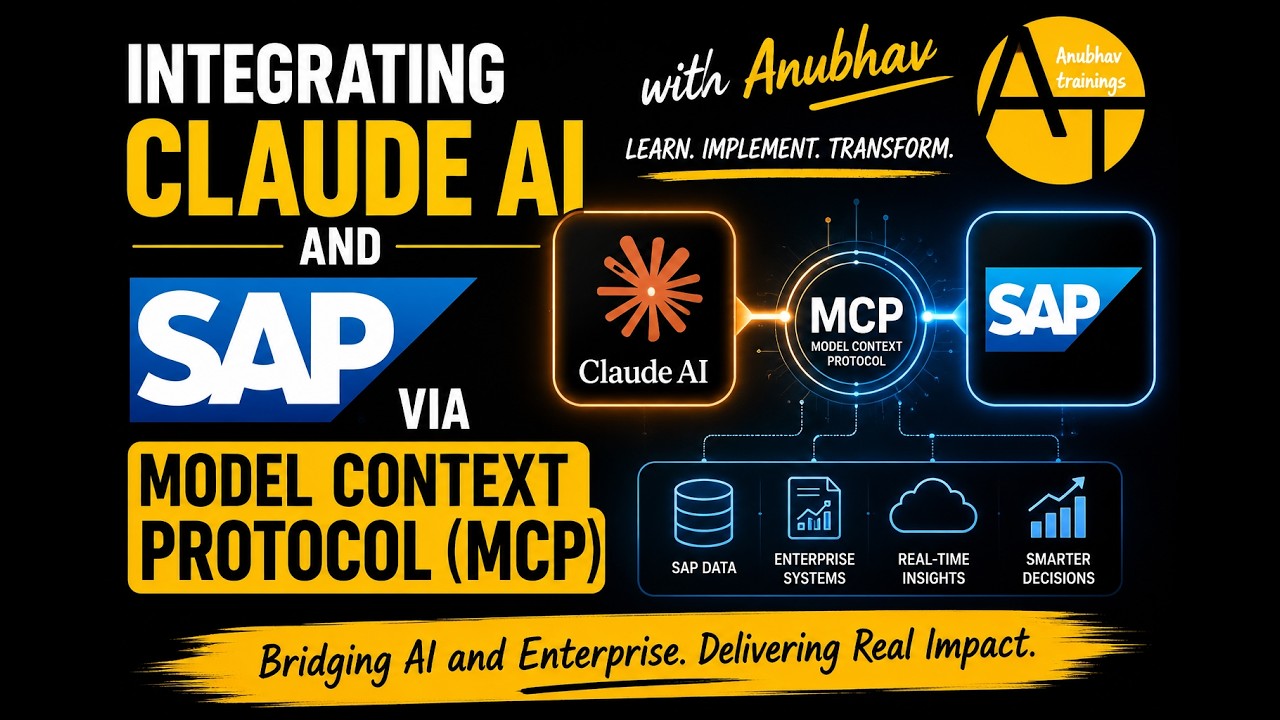
The Model Context Protocol (MCP) is the missing link between AI and SAP. Instead of relying on potentially outdated training data, MCP forces Claude to actively query current SAP documentation and live system state while coding. Dedicated MCP servers enforce SAP-specific rules:
- CAP MCP: Ensures perfect CDS modeling syntax
- Fiori MCP: Validates criticality values and UI annotations
- Playwright MCP: Visually verifies apps aren't blank pages
For ABAP developers, the MCP ABAP ADT API server connects Claude directly to live SAP systems. The AI can search source code, modify classes, run syntax checks, and create transport requests - all from natural language prompts without manual coding.
Enterprise AI at Scale: Security and Governance
The SAP Generative AI Hub provides the governance layer for enterprise deployments. It centralizes access to multiple AI models (Claude, GPT-4O, Mistral) through a harmonized API that abstracts provider differences. This lets you swap AI providers by changing one text string in your code.
Critical setup steps include:
- Adding both AI Core and AI Launchpad entitlements
- Allocating minimum quota (default is zero)
- Creating service instances with OAuth 2.0 tokens
- Establishing resource groups via API calls
Security Note: Even advanced AI agents can introduce vulnerabilities - one generated app had 53 security issues from outdated libraries. Maintain zero trust architecture, input validation, and human oversight for all AI-generated code.
Watch the Full Tutorial
See MCP in action at the 4:30 mark where we demonstrate Claude autonomously fixing a Fiori elements annotation error by querying the live MCP server.
Key Takeaways
The SAP development paradigm has irrevocably shifted from manual coding to AI orchestration. With Claude's 200K context window and MCP's real-time SAP access, teams can build production-grade solutions in hours instead of weeks.
In summary: 1) Replace vibe coding with agentic engineering, 2) Use MCP to eliminate SAP-specific hallucinations, 3) Govern AI outputs through the SAP AI Hub, and 4) Transform from coder to orchestrator by developing specialized AI agents for your SAP environment.
Frequently Asked Questions
Common questions about SAP AI integration
MCP (Model Context Protocol) eliminates AI hallucinations in SAP development by giving Claude real-time access to current SAP documentation and system state. Instead of relying on potentially outdated training data, the AI actively looks up correct SAP syntax and conventions while coding.
This reduces error rates from 27% with generic AI to near-zero for SAP-specific implementations by enforcing:
- Proper CDS modeling syntax
- Correct Fiori elements annotations
- Valid OData URL structures
Agentic engineering moves beyond simple AI code generation to create specialized AI agents that function like senior SAP engineers. Rather than just getting code snippets, you orchestrate teams of agents that work together autonomously.
One practitioner built a complete customer feedback system in 45 minutes using five coordinated agents:
- Orchestrator to plan the implementation
- CAP developer for backend services
- Fiori designer for UI annotations
- Scaffolder for file structures
- Tester to validate functionality
The essential setup steps for SAP AI Hub include specific configurations that are easy to miss but critical for success. Unlike simpler AI APIs, SAP's enterprise-grade solution requires proper entitlements and quotas.
Key steps you cannot skip:
- Add both AI Core AND AI Launchpad entitlements
- Allocate minimum quota (default is zero)
- Use OAuth 2.0 tokens for authentication
- Create resource groups via API calls
Claude's massive 200K token context window allows it to process entire SAP projects in one session - understanding your CDS models, services, configurations and dependencies simultaneously.
This enables capabilities impossible with smaller context windows:
- Complex multi-file refactoring while maintaining consistency
- Deep dependency tracing across the entire codebase
- Autonomous error correction where the AI reads test failures and rewrites code
Even advanced AI agents can introduce vulnerabilities if not properly governed. In one case, an AI-generated app had 53 security issues from using outdated library versions despite perfect functional code.
Essential safeguards include:
- Zero trust architecture for all AI-generated components
- Strict input validation at every layer
- Human code reviews for security-sensitive sections
Yes, the MCP ABAP ADT API server creates a revolutionary workflow for ABAP development. It connects Claude directly to live SAP systems through the ABAP Development Tools interface.
This enables the AI to perform tasks that traditionally required manual ABAP work:
- Autonomously search system for relevant classes
- Read and modify ABAP source code
- Run syntax checks and create transport requests
- Activate objects without developer intervention
Markdown files serve as explicit rulebooks for AI agents, providing clear advantages over trying to control behavior through prompts alone. When an agent makes a mistake, you simply add a new rule to the markdown file.
Benefits of this approach:
- Human-readable documentation of all requirements
- Version-controllable through standard Git workflows
- Enables rapid iteration as new edge cases are discovered
GrowwStacks specializes in implementing AI-powered SAP automation using Claude and Model Context Protocol. We help enterprises navigate the transition from manual coding to agentic engineering with proven methodologies.
Our SAP AI implementation services include:
- End-to-end SAP AI Hub configuration with proper entitlements
- Custom MCP server development for your specific modules
- Specialized agent training for your business processes
- Security frameworks for AI-generated code governance
Ready to Transform Your SAP Development with AI?
Manual coding and debugging consume 60% of SAP project time. Let us help you implement Claude with MCP to build production-grade SAP solutions 5x faster while maintaining enterprise security standards.