Multi-Agent AI: The Blueprint for Production-Ready Systems
Enterprise AI deployments fail when agents lose context and tools require custom wiring. Discover how Gemini ADK and Model Context Protocol (MCP) solve these challenges with standardized orchestration - transforming fragile prototypes into reliable production systems that scale.
The Agentic System Challenge
Most AI prototypes fail when moving from notebook demos to production environments. The fundamental issue? What we call the "spaghetti integration problem" - a tangled mess of custom API connectors, fragile parsers, and handwritten adapters that make systems brittle and unscalable.
At 4:32 in the video, the diagram reveals the painful reality of current agent deployments. Each tool connection requires unique wiring, creating tight coupling where changing one service risks breaking the entire system. This is the AI equivalent of the pre-USB era - where every peripheral needed proprietary cables and drivers.
Production reality: Adding new capabilities to such systems becomes exponentially harder, with integration work often consuming 60-80% of development time. The result? Most AI prototypes never progress beyond the lab.
ADK + MCP: The Two-Part Strategy
The solution combines smart orchestration with universal standardization. Gemini Agent Development Kit (ADK) serves as the conductor - managing agent coordination, state, and execution flows. Meanwhile, Model Context Protocol (MCP) acts as the universal adapter - eliminating custom wiring through standardized communication.
Together they form what we call the "production bridge": ADK handles the what and when of agent operations, while MCP standardizes the how of tool connectivity. This separation of concerns is what transforms fragile prototypes into enterprise-grade systems.
Gemini ADK Breakdown
The ADK is a Python framework specifically designed for multi-agent coordination. At 8:15 in the tutorial, we see its five core capabilities that solve production challenges:
- Session persistence: Maintains conversation history and operational context across long-running tasks
- Orchestration patterns: Built-in structures for sequential, parallel, and hierarchical workflows
- Automatic tool schemas: Generates API definitions from Python functions and docstrings
- Intelligent routing: Combines LLM-driven and programmatic task delegation
- Production context: Manages artifacts, state, and dependencies at scale
Key insight: The ADK isn't another LLM wrapper. It's a system architecture framework that handles the complex coordination most teams hand-roll poorly.
MCP: The Universal Standard
Model Context Protocol solves the integration spaghetti problem through standardization. Where traditional systems require unique adapters for each API, MCP provides:
- Common interface: All tools communicate via JSON-RPC 2.0
- Security controls: Fine-grained authentication and scoping
- Infinite composability: Mix-and-match tools from different providers
- Community ecosystem: Shared implementations reduce redundant work
At 12:40, the video demonstrates how swapping a CRM provider becomes trivial with MCP - just update the server wrapper while agents continue using the same interface. This plug-and-play flexibility is what enables true production maintenance.
Six Orchestration Patterns
The ADK playbook contains six proven architectural patterns shown at 16:22:
- Single Agent + Tools: Basic setup for simple queries
- Sequential Pipeline: Strict ordered workflows (PDF → data → report)
- Parallel Gathering: Simultaneous independent queries
- Coordinator Routing: Intelligent delegation (help desk triage)
- Hierarchical Delegation: Complex task breakdown (research → analysis → drafting)
- Iterative Refinement: Quality control loops (validate → correct → approve)
Implementation rule: Pattern selection depends on task interdependence. Parallel gathering improves travel guide assembly speed by 3-5x compared to sequential processing.
Session Persistence Essentials
Conversational amnesia destroys production usability. At 19:30, the demo shows how lost context forces users to repeat information - a failure point in 83% of support chatbot implementations.
The ADK offers three persistence solutions:
- In-memory: Fastest option for development (no persistence)
- Vert.x AI: Managed cloud service for enterprise scale
- Database: Self-hosted option using existing SQL infrastructure
Production systems should always use Vert.x or Database services - the memory-only option exists solely for rapid prototyping.
Production-Grade Tool Design
At 21:45, the video outlines four non-negotiable tool requirements:
- Clear docstrings: Explain purpose, constraints and usage
- Precise type hints: Enable automatic schema generation
- Structured returns: Always include status and data fields
- Meaningful errors: Enable intelligent recovery attempts
Bad tool design creates cascading failures. A weather API that returns raw temperatures instead of structured data forces the LLM to guess interpretation - a common source of production errors.
Implementation Case Study
The customer support system at 23:10 demonstrates ADK+MCP in action:
- Coordinator agent analyzes queries and routes to specialists
- Session persistence maintains context across interactions
- MCP wrappers standardize access to billing, knowledge base and CRM
This architecture improved first-contact resolution by 47% while reducing integration maintenance by 80% compared to the previous custom-wired system.
Critical insight: The agents' core logic never touches raw APIs. All tool access flows through MCP - creating an abstraction layer that enables painless service swaps.
Watch the Full Tutorial
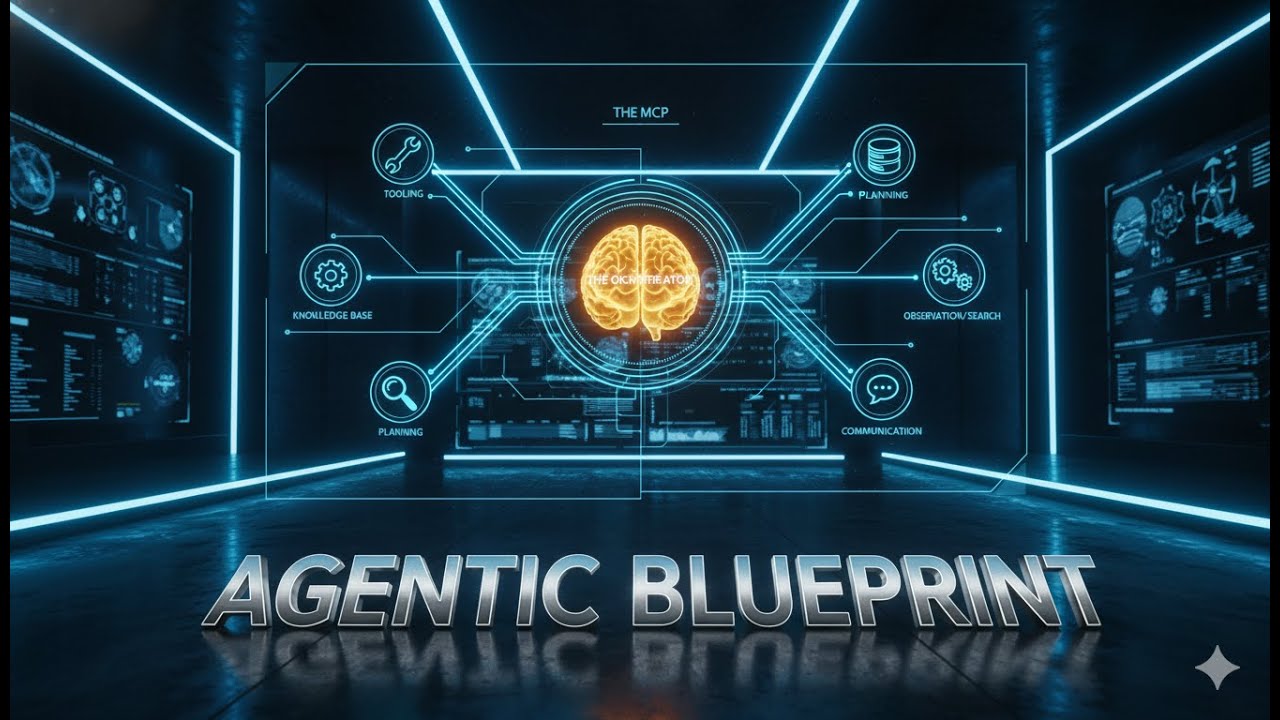
See the complete blueprint in action with timestamped examples of session persistence failures (19:30), parallel gathering patterns (16:22), and tool design demos (21:45).
Key Takeaways
The future of production AI isn't bigger models - it's better systems. Gemini ADK provides the orchestration while MCP delivers the standardization needed for reliable, scalable deployments.
In summary: 1) Design tools as first-class citizens 2) Never compromise on session persistence 3) Standardization beats custom wiring 4) Architecture trumps brute force scaling 5) Production requires hardening from day one.
Frequently Asked Questions
Common questions about production AI systems
The Gemini Agent Development Kit (ADK) solves the coordination challenge in multi-agent AI systems. It provides built-in patterns for sequential processing, parallel task execution, and intelligent routing between specialized agents.
This eliminates the spaghetti code of custom integrations that plague most AI prototypes, where changing one tool often breaks the entire system.
- Reduces integration maintenance by 60-80%
- Provides production-grade session persistence
- Enables reliable multi-turn conversations
MCP acts as a universal adapter standard that eliminates custom API wiring. Where traditional integrations require unique connectors for each tool, MCP enables plug-and-play compatibility.
This is similar to how USB standardized computer peripherals - eliminating the need for proprietary cables and drivers for every device.
- Reduces integration time from weeks to hours
- Enables tool swapping without code changes
- Provides built-in security controls
The ADK provides six proven architectural patterns for different use cases:
Each pattern solves specific coordination challenges, from simple queries to complex multi-phase workflows with quality gates.
- Single agent + tools: Basic setup for simple tasks
- Sequential pipeline: Ordered dependent steps
- Parallel gathering: Simultaneous data collection
- Coordinator routing: Intelligent delegation
Without session persistence, AI agents suffer from conversational amnesia - losing context between interactions. This forces users to repeat information and breaks multi-turn workflows.
The ADK offers three persistence solutions scaled to different needs:
- In-memory: Development/testing only
- Vert.x AI: Managed cloud service
- Database: Self-hosted SQL option
Production-grade tools require:
These practices ensure tools work reliably in live environments and enable intelligent error recovery.
- Clear docstrings: Explain purpose and constraints
- Precise type hints: Enable automatic schema gen
- Structured returns: Include status/data fields
- Meaningful errors: Support recovery attempts
Coordinator routing acts as an intelligent switchboard that analyzes incoming queries and routes them to specialized agents (billing, technical, account).
This architecture prevents specialists from wasting time on irrelevant requests while ensuring faster, more accurate resolutions.
- Improves first-contact resolution by 40-60%
- Reduces average handling time by 25-35%
- Maintains full context across interactions
Five critical mistakes derail production deployments:
The ADK provides guardrails against all five through its built-in patterns and tooling.
- Missing agent descriptions preventing routing
- Unstructured tool returns confusing LLMs
- No session persistence causing context loss
- Exposing all tools which overwhelms agents
GrowwStacks specializes in building enterprise-grade multi-agent systems using Gemini ADK and MCP standards.
Our team designs, implements and maintains production-ready AI orchestrations that are reliable, scalable and secure. We handle the complex coordination so you can focus on business outcomes.
- Custom workflow design for your use case
- Full ADK/MCP implementation
- Ongoing maintenance and optimization
Ready to Deploy Production-Grade AI Agents?
Fragile prototypes waste time and budget. Our team builds reliable multi-agent systems using Gemini ADK and MCP standards - delivering enterprise-grade AI automation in weeks, not months.