OpenAI Swarm Hype Explodes: AgentKit Drives Multi-Agent AI Revolution
If you've been on X recently, you've seen the explosion of AI agent demos automating everything from code reviews to complete workflows. But here's what most people are missing - this isn't about OpenAI's deprecated Swarm framework. The real story is how AgentKit is powering a fundamental shift in how businesses leverage AI teams rather than single agents.
Swarm vs AgentKit: What's Really Happening
Many developers scrolling through X right now are confused - why is everyone suddenly talking about OpenAI's Swarm framework again when it was officially deprecated back in March 2025? The answer reveals a fundamental shift in how we're approaching AI automation.
Swarm was OpenAI's 2024 prototype - a lightweight way to link stateless agents using their old chat completions API. While innovative for its time, it lacked critical production features: no built-in memory, no tracing capabilities, and none of the safety guardrails modern systems require.
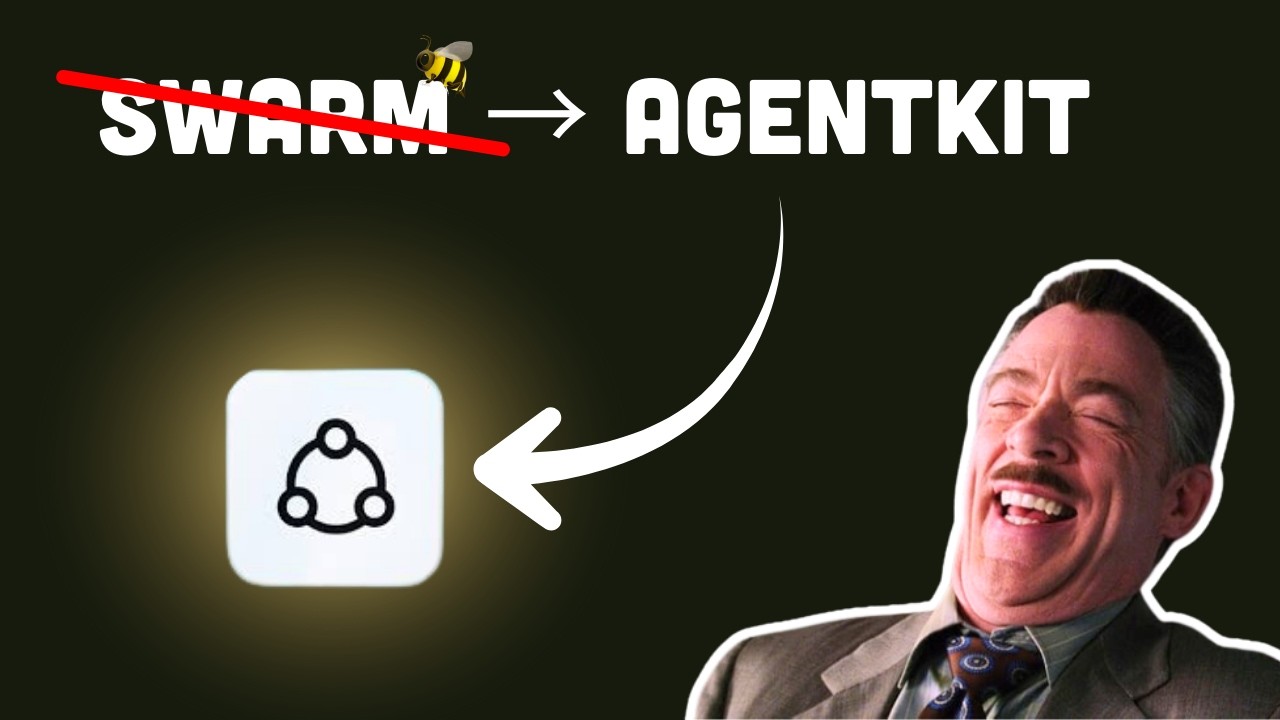
The key insight: AgentKit isn't Swarm reborn - it's the evolution of what developers actually needed. Launched on October 6th at Dev Day 2025, Agent Kit represents OpenAI's vision for production-ready multi-agent systems.
AgentKit's Production-Ready Capabilities
What makes Agent Kit fundamentally different from its experimental predecessor? Three core components that transform AI agent development from academic exercise to business reality.
The visual Agent Builder provides a drag-and-drop interface for chaining together planners, executors, and retrievers - like building with AI Lego blocks. Chatkit then lets you deploy these agents directly into applications. But the game-changer is the Connector Registry with over 200 plug-and-play integrations.
November's RFT beta update brought custom reasoning capabilities that improved token efficiency by 30% on GPT-4 Mini. More importantly, it introduced enterprise-grade safety features like PI masking and jailbreak detection that Swarm never offered.
The Real-World Impact of Multi-Agent Systems
Theoretical advantages are one thing - measurable business impact is another. Early adopters of Agent Kit and similar systems are seeing transformational results.
Payment processor CLA has automated resolution of 2/3 of their support tickets using multi-agent workflows. RAMP cut their iteration cycles by 70% through agent-assisted development. These aren't lab experiments - they're production deployments solving real business problems at scale.
The Multi-Agent Boom Defining 2025
Zoom out from any single tool, and you'll see this isn't just about OpenAI. We're witnessing the emergence of AI teams - multiple specialized agents collaborating like human teams to accomplish complex tasks.
A November 10th research paper demonstrated that ant colony-style optimization across LLM swarms helps them converge on solutions significantly faster. While compute overhead remains a challenge, new model architectures like GPT-5's multimodel stack are making these approaches more efficient.
On X, Jensen's swarm sampling approach has gone viral for boosting quant trading rewards by 94% - just one example of why McKenzie calls this "the top frontier of tech" for .
The Competitive Landscape Heats Up
OpenAI isn't the only player in this space. The rapid evolution of multi-agent systems has sparked an ecosystem war with fundamentally different approaches.
Anthropic's MPC ecosystem has grown to include over 200 open tools in just six months, offering developers a more flexible, open-source alternative to OpenAI's structured Agent Kit. Meanwhile, Meta's $70 billion Capex investment signals their belief in an agent-driven future.
Massive Upside for Developers
For developers and technical teams, this shift represents both opportunity and urgency. Agent systems are already demonstrating potential to 10x productivity in certain workflows.
The key differentiator? These systems are now polished enough that mid-to-senior level developers can build and ship real implementations - not just research prototypes. This accessibility is fueling the current hype cycle.
Current Challenges and Limitations
Amidst the excitement, it's crucial to understand the real limitations facing multi-agent systems today.
The 30-day AI war cycle means rapid iteration but also more bugs slipping through. Vendor lock-in debates rage between proprietary platforms and open standards. Most critically, complex agent interactions create latency spikes that can impact user experience.
2026 Outlook: Agent Economies Emerge
Looking ahead, we're moving toward true agent economies where swarms don't just execute tasks but maintain systems with minimal human oversight.
Open-source players like Deepseek and Alma 3 could challenge OpenAI's dominance in specific niches. The competitive landscape will likely fragment as different approaches specialize for particular use cases.
The bottom line: This isn't hype that fades - it's hype that's accelerating. Agent Kit represents the first toolkit making multi-agent systems practical for mainstream business applications.
Watch the Full Tutorial
For a deeper dive into how AgentKit compares to Swarm and why multi-agent systems are transforming AI workflows, watch our full analysis at the 2:15 mark where we break down CLA's support ticket automation architecture.
Key Takeaways
The AI landscape is shifting from single-agent tools to collaborative systems that mirror human team dynamics. While challenges remain, the business impact is already measurable.
In summary: Agent Kit isn't Swarm reborn - it's the engine powering a fundamental shift in how we approach AI automation. Early adopters are seeing 2-10x productivity gains, and the ecosystem is evolving rapidly to support more complex implementations.
Frequently Asked Questions
Common questions about this topic
Agent Kit is OpenAI's production-ready multi-agent framework launched in October 2025. It represents the evolution beyond their experimental Swarm prototype.
The platform includes three core components: a visual Agent Builder for creating workflows, Chatkit for deployment, and a Connector Registry with over 200 integrations.
- Visual drag-and-drop interface for building agent teams
- Enterprise-grade safety features like PI masking
- Proven in production by companies like CLA and RAMP
The renewed interest comes from Agent Kit's capabilities that fulfill what developers originally wanted from Swarm. The timing coincides with broader industry adoption of multi-agent approaches.
Real-world implementations are demonstrating significant productivity gains that validate the multi-agent concept. For example, Jensen's swarm sampling approach boosted quant trading rewards by 94%.
- Agent Kit delivers Swarm's promised functionality
- Visible business impact driving discussion
- Broader multi-agent trend gaining momentum
Multi-agent systems allow specialized AI agents to collaborate like teams, handling complex workflows more efficiently than single agents. This mirrors how human organizations tackle large projects.
Research shows they converge on solutions faster through swarm optimization techniques. GPT5's improved token efficiency (30% better with RFT beta) makes these systems more practical for production use.
- Specialization improves task performance
- Swarm intelligence emerges from collaboration
- Easier to scale complex processes
The rapid development cycle means some implementations ship with undiscovered bugs or hallucinations. Vendor lock-in concerns exist with proprietary platforms like Agent Kit.
Technical challenges include increased latency from complex agent interactions and the compute overhead of running multiple agents simultaneously. These factors currently limit real-time applications.
- Higher latency than single-agent systems
- Vendor lock-in risks with closed platforms
- Compute costs scale with agent count
OpenAI's Agent Kit offers a polished, integrated solution with enterprise support and safety features. Anthropic's MPC ecosystem provides more flexibility with 200+ open tools.
The choice depends on project requirements. Agent Kit excels for businesses needing turnkey solutions, while open-source options better suit developers prioritizing customization.
- Agent Kit: easier onboarding, better support
- MPC: more customization options
- Hybrid approaches emerging
Financial services are leading adoption, with quant trading seeing 94% reward boosts from swarm sampling. Customer support automation (like CLA's ticket system) and software development are other early use cases.
These industries benefit from processes that can be broken into specialized agent tasks with clear handoffs. The measurable ROI makes the case for investment in agent systems.
- Financial services (trading, risk analysis)
- Customer support (ticket resolution)
- Software development (code review, testing)
Current implementations suggest augmentation rather than replacement. The 10x productivity gains for developers indicate these systems will change job functions more than eliminate positions.
As with previous technological shifts, new roles will emerge to manage and work alongside agent systems. The most significant impact may be enabling smaller teams to achieve output previously requiring larger organizations.
- Augmentation more likely than replacement
- New job categories will emerge
- Small teams can achieve enterprise-scale output
GrowwStacks specializes in implementing AI agent systems tailored to your specific business needs. We assess workflows, identify automation opportunities, and build custom multi-agent solutions.
Our team stays current with all major platforms (Agent Kit, MPC, open-source options) to recommend the best approach for your use case. We handle integration with your existing systems and provide ongoing optimization.
- Custom multi-agent workflow design
- Platform-agnostic recommendations
- Ongoing performance monitoring
Ready to Explore Multi-Agent AI for Your Business?
Every day without automation puts you further behind competitors already seeing 2-10x productivity gains. Our team can have a custom agent workflow prototype built for your specific needs in under 2 weeks.