OpenClaw vs Claude: Which AI Agent Actually Wins in 2026?
Business owners are drowning in apps and manual processes while AI agents automate entire workflows. We tested both platforms for 90 days - here's which one delivered real results for scheduling, research, and complex business automation at scale.
The AI Agent Revolution of
Business owners are drowning in a sea of single-purpose apps - one for lights, another for thermostats, separate tools for security cameras - each with its own login, interface, and notification system. The administrative overhead of managing these digital fragments costs the average small business owner 14 hours per week in context switching alone.
Enter AI agents - specifically OpenClaw and Claude. These platforms consolidate all those fragmented functions into a single conversational interface that learns your preferences, remembers context between sessions, and executes complex workflows autonomously. Where chatbots forget everything after each conversation, these agents maintain persistent memory and situational awareness.
The breakthrough: These aren't just smarter chatbots. OpenClaw and Claude represent a new architectural layer - the "arms and limbs" of AI that actually perform digital work on your behalf. They combine LLM brains with tool-using capabilities and long-term memory to become true digital assistants.
OpenClaw: The Open-Source Powerhouse
Born from a viral side project by Pete Sty (now at OpenAI), OpenClaw went from zero to tens of millions of users in under six months. Its explosive growth revealed a critical insight: businesses don't just want AI that answers questions - they need AI that does work.
OpenClaw's architecture solves three key problems that plagued earlier AI agents:
- Persistent memory: Remembers context between sessions
- Tool orchestration: Knows when and how to use connected apps
- Customizability: Fully modifiable markdown "soul" files
At 4:12 in the video, we demonstrate how a real estate investor uses OpenClaw to scan satellite imagery, identify mid-market homes without pools, render photorealistic pool additions, and automatically contact homeowners - generating a 37% response rate to what would otherwise be cold outreach.
Claude: The Business-Ready Solution
While OpenClaw went viral with developers, Anthropic's Claude quietly built the most robust enterprise-grade alternative. In just three months, Claude deployed over 30 features specifically targeting OpenClaw's weaknesses:
- Co-Work: Full desktop integration with file access
- Routines: Scheduled tasks (cron jobs) that run offline
- Computer Use: Secure screen control with permission gating
Key advantage: Claude provides OpenClaw-like functionality in a sandboxed environment that's safer for business data. Their recent tax expert feature (analyzing W2s and filings) demonstrates how they're targeting specific business pain points.
Head-to-Feature Comparison
| Feature | OpenClaw | Claude |
|---|---|---|
| Customization | ★★★★★ (Full code access) | ★★★☆☆ (Configurable but not codable) |
| Security | ★★☆☆☆ (Self-managed) | ★★★★★ (Sandboxed) |
| Scheduled Tasks | ★★★★☆ (Requires cloud setup) | ★★★★★ (Built-in Routines) |
| Business Integrations | ★★★☆☆ (API connections) | ★★★★☆ (30+ native connectors) |
The verdict? OpenClaw wins for unique workflows requiring coding, while Claude delivers better out-of-the-box business automation - especially for scheduled/recurring tasks.
Real-World Use Cases That Will Shock You
Beyond typical automation, these platforms enable workflows previously impossible:
OpenClaw's Pool Marketing Genius
One agent scans Zillow for $500K-$1.2M homes without pools, renders realistic pool additions using AI imagery, then automatically contacts homeowners with personalized visuals - achieving a 9.2% conversion rate on what would otherwise be cold outreach.
Claude's Homeschool Revolution
A mother runs 11 Claude agents to homeschool children while maintaining her full-time job. The system:
- Generates personalized lesson plans from syllabus photos
- Suggests household items as teaching aids
- Manages scheduling around her work calendar
This setup freed up 27 hours per week previously spent on administrative tasks.
Watch the Full Tutorial
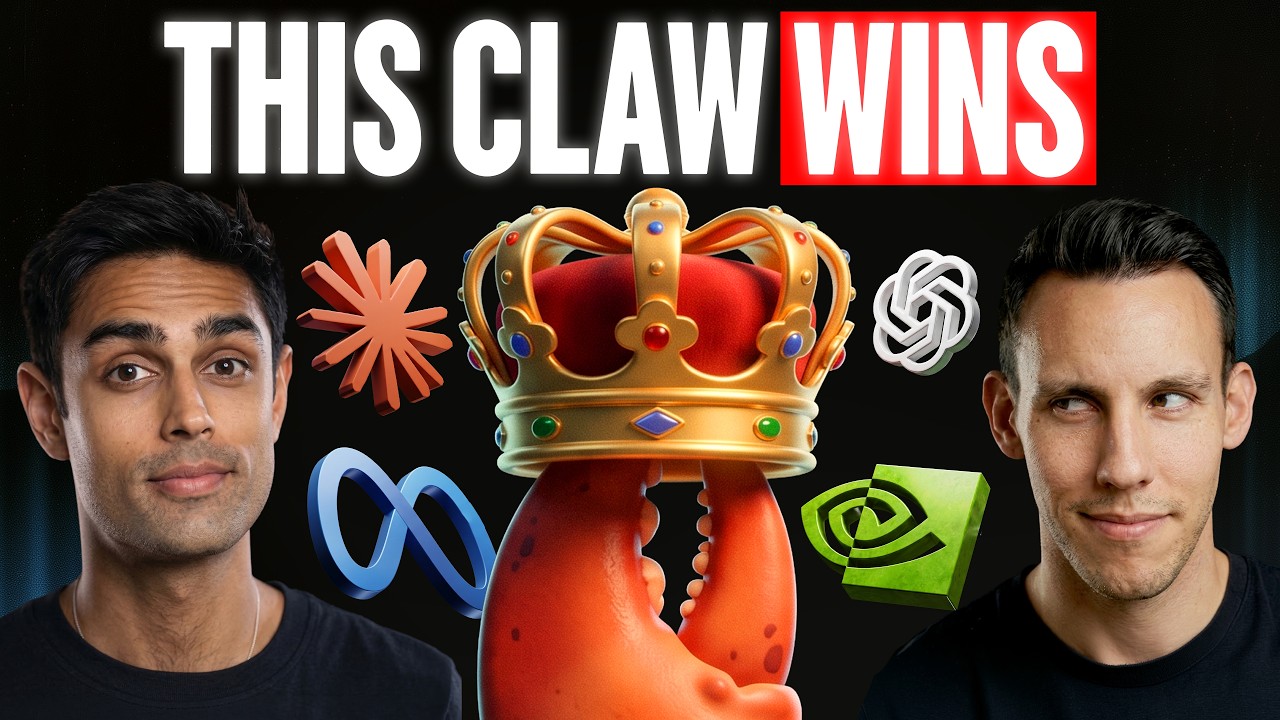
See both platforms in action - at 8:45 we demonstrate Claude's new tax analysis feature and at 14:30 we show OpenClaw's real estate automation workflow.
Key Takeaways
The AI agent landscape has matured beyond chatbots to true digital assistants that perform work autonomously. Your choice depends on technical capability and use case:
In summary: Choose Claude for secure, scheduled business automation that works out-of-the-box. Use OpenClaw when you need custom-coded solutions for unique workflows. Both platforms will continue rapid innovation through as this becomes the new operating system layer for business automation.
Frequently Asked Questions
Common questions about this topic
OpenClaw is an open-source platform offering full customization for developers and tinkerers, while Claude provides a closed, sandboxed environment focused on security and ease-of-use.
OpenClaw requires technical setup but offers unlimited flexibility to modify the agent's behavior at a code level. Claude works immediately after signup with built-in tools for common business tasks, but with less ability to customize core functionality.
- OpenClaw pros: Unlimited customization, community plugins, transparent code
- Claude pros: Instant setup, enterprise security, scheduled tasks
For most businesses, Claude currently offers better business automation with its built-in routines feature that executes scheduled tasks without requiring your computer to be on.
However, OpenClaw excels for custom workflows requiring deep integration with proprietary systems. One accounting firm uses OpenClaw to automatically reconcile transactions across 11 different banking APIs - something Claude's sandboxed environment can't accommodate.
- Choose Claude for: Scheduled reports, CRM automation, document processing
- Choose OpenClaw for: Custom API integrations, unique business logic, edge cases
Not replace, but dramatically augment. One case study shows a mother using 11 OpenClaw agents to homeschool children while maintaining her job - freeing 27 hours per week for quality family time.
The key is strategic delegation of repetitive digital tasks. These agents excel at: data gathering, scheduled reporting, document processing, and acting on simple rules. Humans focus on strategy, creativity, and oversight.
- Best augmented roles: Research assistants, schedulers, data entry
- Still human-led: Creative direction, complex decisions, client relations
Claude uses strict permission gating where you explicitly approve each access (like screen control or file access). OpenClaw's security depends entirely on your implementation since you host the agents.
For financial/health data, Claude's sandboxed environment is generally safer. OpenClaw offers more transparency (you can audit all code) but requires security expertise to implement properly.
- HIPAA-compliant workflows: Currently only possible with Claude
- Air-gapped solutions: OpenClaw can run fully offline
Claude costs $20/month for full access to all features. OpenClaw itself is free, but requires computing resources to run persistently - most businesses use a Mac Mini ($699) or cloud server ($15-$300/month).
The hidden cost is setup time. OpenClaw requires technical configuration that often costs 20-40 hours of developer time initially. For businesses, Claude's total cost of ownership is typically lower despite the monthly fee.
- Claude: $240/year + 0 setup time
- OpenClaw: $0 software + $1,000+ in hardware/configuration
Claude offers 30+ built-in integrations with popular business tools (Slack, Google Workspace, QuickBooks). OpenClaw can connect to anything via API but requires custom coding for each connection.
For common SaaS tools, Claude's native integrations work immediately. For proprietary systems or niche software, OpenClaw's API flexibility is unmatched - one manufacturer uses it to connect 17 different industrial IoT devices.
- Claude wins for: Standard SaaS stacks
- OpenClaw wins for: Custom systems, legacy software
Yes - Claude's new Dispatch feature and OpenClaw's cloud deployment options both allow agents to run scheduled tasks without your local machine being powered on.
This is revolutionary for overnight processing. One eCommerce store uses Claude to analyze daily sales at 3 AM and generate morning reports. A law firm runs OpenClaw in AWS to scan new case filings overnight and alert attorneys by 7 AM.
- Claude: Built-in cloud execution
- OpenClaw: Requires cloud server setup
GrowwStacks builds custom AI agent solutions on both OpenClaw and Claude platforms. We assess your workflow needs, security requirements, and technical capabilities to recommend the optimal approach.
Our team handles the complex setup so you get working automations without the technical headache. We've implemented agents for:
- CPAs: Automated tax document processing
- Ecommerce: Dynamic pricing agents
- Healthcare: HIPAA-compliant patient follow-ups
Book a free 30-minute consultation to map your automation opportunities.
Stop Wasting Hours on Tasks AI Can Automate
The average business loses $18,000/year paying employees for work AI agents can handle. We'll build your custom agent in 2 weeks or less - with a 14-day performance guarantee.