ServiceNow AI Control Tower & Agent Fabric: The Complete Guide for Enterprise Automation
Most ServiceNow teams implementing AI agents focus on building capabilities first - only to discover costly overspending and governance gaps later. The Control Tower and Agent Fabric solve these problems, but only if you understand their three hidden limitations that determine implementation success.
AI Control Tower: Monitoring vs. Enforcement
ServiceNow's AI Control Tower appears to be the perfect governance solution at first glance - a centralized dashboard showing real-time spending by department, model performance comparisons, and compliance risks. But at 2:15 in the video, the critical limitation becomes clear: it's an observation tool, not an enforcement mechanism.
While the Control Tower provides unparalleled visibility into your AI operations, it doesn't automatically stop agents from exceeding budgets. This distinction catches many teams off guard when they discover their $10,000 monthly limit was surpassed without any automatic intervention from the system.
Key insight: The Control Tower gives you the data to govern AI costs, but you must build the enforcement workflows separately in Flow Designer. Its power is in detailed analytics, not automatic spending controls.
Agent Fabric's Debugging Challenge
Where traditional workflows fail with clear error messages, AI agents fail when their reasoning process derails. At 4:30 in the tutorial, you'll see how Agent Fabric's decision logs reveal this critical difference - they show the agent's thought process rather than just error locations.
This creates a new debugging paradigm where you're not looking for broken code, but rather illogical reasoning paths. The logs might show an agent considering irrelevant data points or making decisions based on misunderstood priorities - issues that wouldn't appear in standard workflow logs.
Your CMDB Is the Secret Weapon
The most surprising revelation comes at 6:10 - your CMDB data quality matters more than the AI models themselves. An agent with perfect logic but inaccurate CMDB references will make poor decisions, while a simpler agent with pristine CMDB data delivers consistent value.
This changes implementation priorities dramatically. Instead of chasing the most advanced AI capabilities first, successful teams focus on preparing their CMDB for AI consumption. They identify key use cases, then clean and validate all related CMDB records before building any agents.
3-Step Implementation Checklist
Based on these insights, here's the prioritized approach ServiceNow teams should take:
Step 1: Build Your Response Workflow First
Create a simple Flow Designer workflow that generates high-priority incidents when Control Tower detects cost overruns. This "panic button" gives your team a trackable process for responding to alerts before you deploy any agents.
Step 2: Train on Decision Logs
Practice reading Agent Fabric decision logs during testing. If you can't understand why an agent made a choice from its logs, simplify the agent's logic until the reasoning becomes transparent.
Step 3: Prepare Your CMDB Slices
Identify 3-5 priority use cases and validate all related CMDB data. Ensure business services are mapped correctly, ownership data is current, and dependencies are accurate for these specific areas.
Building a Cost Control Workflow
The simplest effective workflow combines Control Tower visibility with human governance. At 3:45 in the video, you'll see how to create a run-on-demand flow that:
- Generates a high-priority incident when triggered
- Pre-populates details from Control Tower data
- Routes to your AI governance team with urgency indicators
This approach acknowledges that AI spending decisions often require human judgment. The workflow ensures those decisions happen through formal channels rather than ad-hoc reactions.
Mastering Decision Logs
Agent Fabric's decision logs require a new debugging mindset. At 5:20, the tutorial shows how to:
- Run test scenarios for your agent
- Review the decision log for each test
- Identify points where the agent's reasoning diverged from expectations
- Simplify the agent's logic until the logs show clear, understandable decisions
Pro tip: If multiple team members can't independently interpret an agent's decision log, the logic is too complex for reliable enterprise use.
CMDB Preparation Strategy
The video's most practical advice comes at 6:45 - start small with CMDB preparation. Instead of attempting enterprise-wide cleanup:
- Define your first agent's top 3 use cases
- Identify all CMDB classes and attributes those use cases require
- Validate data accuracy for just those elements
- Document any gaps as requirements for future CMDB improvement
This focused approach delivers immediate AI value while building a roadmap for broader CMDB enhancement.
Watch the Full Tutorial
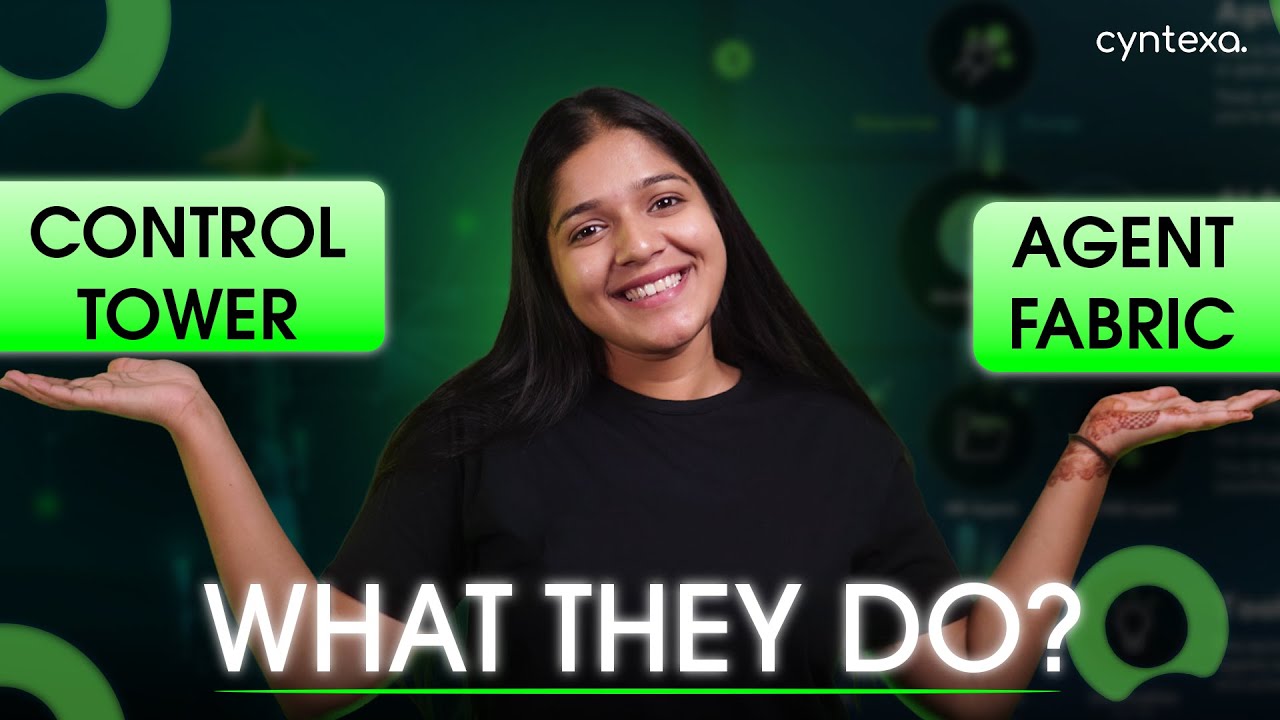
See these concepts concepts in action between 2:15-3:00 where the presenter demonstrates Control Tower's spending alerts and again at 5:45-6:30 for a live debugging session using Agent Fabric decision logs.
Key Takeaways
ServiceNow's AI governance tools shift the automation conversation from pure capability to responsible scaling. The Control Tower provides the visibility, Agent Fabric enables the execution, but your CMDB determines the quality of outcomes.
In summary: Implement Control Tower response workflows before agents, master decision log debugging, and prioritize CMDB preparation over advanced AI features.
Frequently Asked Questions
Common questions about ServiceNow AI governance
The AI Control Tower is a monitoring dashboard that tracks costs and performance across all your AI agents, while Agent Fabric is the runtime environment that executes those agents and connects them to ServiceNow platform capabilities.
Control Tower shows you when spending exceeds thresholds, but doesn't automatically stop agents - you need to build workflows to respond to respond to its alerts.
Traditional workflows fail with clear error messages pointing to specific steps, but AI agents fail when their reasoning process goes off track.
ServiceNow provides decision logs that let you see the agent's thought process - these logs are essential for debugging since they reveal why the agent made certain choices rather than just showing where it failed.
Your CMDB gives AI agents critical context about business services, dependencies, and ownership.
An agent that can reference accurate CMDB data makes smarter decisions - for example, knowing which teams to notify based on service ownership or understanding outage impacts through mapped dependencies.
No - Control Tower is primarily an observation tool that alerts you to cost overruns.
You need to build complementary workflows in Flow Designer to create tickets or trigger approvals when thresholds are exceeded. Think of Control Tower as your dashboard and build the enforcement mechanisms separately through standard ServiceNow automation tools.
Decision logs are detailed records showing how an AI agent arrived at its conclusions.
They appear in the testing interface and reveal the agent's step-by-step reasoning. These logs are crucial for debugging because they help you understand whether the agent followed appropriate logic - if the logs are confusing to humans, the agent's logic needs simplification.
Start by identifying 3-5 priority use cases for your first AI agents.
Then audit all related CMDB records - verify service mappings, ownership data, and dependencies. Focused preparation of relevant CMDB sections delivers more value than attempting enterprise-wide cleanup before seeing how agents will actually use the data.
Create a simple Flow Designer workflow that generates high-priority incidents when Control Tower detects cost overruns.
This gives your team a trackable process for responding to alerts. The workflow should include assignment to your AI governance team and predefined actions based on the severity of the overspend.
GrowwStacks helps enterprises design and deploy ServiceNow AI solutions that balance automation with governance.
Our team can configure Control Tower dashboards, build Agent Fabric integrations, and develop complementary workflows that make your AI implementation both powerful and manageable. We offer free consultations to assess your CMDB readiness and AI use case potential.
Ready to Implement ServiceNow AI With Confidence
Uncontrolled AI spending and unpredictable agent behavior can derail your automation initiatives. GrowwStacks helps enterprises implement ServiceNow's AI governance tools with proven workflows that keep costs visible and decisions traceable.