Stop Losing Context: Shared AI Memory for Claude & Cursor - Part 2b
Most AI tools operate in isolation, forcing you to repeat context across different interfaces. Discover how MCP protocol creates a shared memory layer that persists knowledge between Claude, Cursor, and other tools - with production-grade performance and reliability patterns.
The Shared Memory Problem in AI Tools
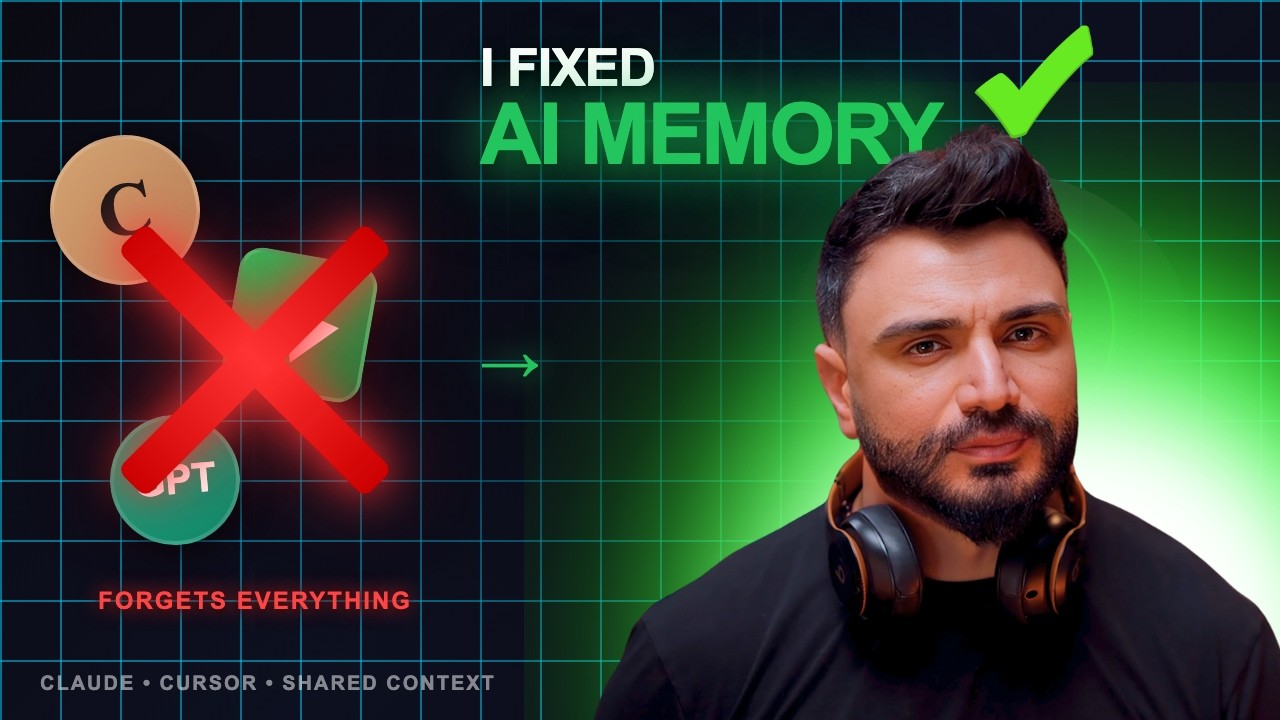
Every developer using AI tools faces the same frustration: context loss between applications. You explain a project's requirements in Claude, then switch to Cursor and start from scratch. Your agent in one tool has no memory of what happened in another.
This fragmentation creates massive productivity drains. Teams waste hours re-explaining context, while AI assistants make decisions without complete information. The core issue? Each tool maintains its own isolated memory with no shared context layer.
Context switching costs: Developers lose up to 40% productivity when constantly re-establishing context between tools. For AI-assisted workflows, this translates to slower iterations and more manual intervention.
MCP Protocol: The Shared Memory Solution
The Model Context Protocol (MCP) solves this fragmentation by creating a centralized memory server that multiple tools can connect to. Instead of each application maintaining its own knowledge graph, they all tap into the same temporal memory store.
Graffiti's MCP server comes bundled with a production-ready database in a single Docker container. As shown at 3:15 in the video, Cloud Desktop launches it as a child process while Cursor connects via HTTP - but both access the same memory graph.
Real-world impact: When you update a project deadline in Cloud Desktop, Cursor knows about it immediately. No more copying information between tools or explaining changes multiple times.
10x Faster Database for Real-Time Agents
While Neo4j works for basic memory implementations, production systems need faster performance. Felore DB delivers sub-140ms response times at P99 - roughly 10x faster than Neo4j for agentic workloads.
Built on Radius and written in C, Felore DB optimizes specifically for the operations AI memory systems need most: aggregation, expansion, and relationship traversal. The difference is most noticeable in real-time interactions where latency directly impacts user experience.
When to choose Neo4j: If you need deep BI integration or complex graph analytics, Neo4j's mature ecosystem still wins. But for pure agentic memory where speed is critical, Felore DB is the clear choice.
Critical Production Patterns
Implementing shared memory requires handling edge cases that don't appear in prototypes. Graffiti 0.27 introduces sagas to ensure atomic operations when adding episodes to the memory graph.
Without sagas, failed LLM calls during entity extraction or relationship mapping could leave the graph in an inconsistent state. The saga pattern treats each memory update as a transaction that either completes fully or rolls back completely.
Regulatory compliance: Graffiti's temporal memory preserves full history through transaction time tracking. This lets you prove what your system believed when it made decisions - critical for healthcare, finance, and legal applications.
LLM Cost Optimization Strategies
Memory extraction triggers multiple LLM calls per episode - for entity recognition, relationship mapping, and edge invalidation. These costs add up quickly in production environments.
The most effective optimization? Use smaller models like GPT-4 or Claude Mini for extraction while reserving larger models for complex queries. This simple change can reduce memory operation costs by approximately 80%.
Bulk loading tip: When bootstrapping your graph with historical data, use add_bulk instead of individual calls. It's 5-10x faster for loading Slack messages, Jira tickets, and meeting notes.
Building a Complete Context Layer
Combined with skills from Part 1, temporal memory creates a full context layer for AI agents. Procedural knowledge (how to do things) meets episodic knowledge (what happened) through the MCP connection.
This architecture understands not just current facts but how they changed over time. When combined with proper evaluation (coming in Part 3), it creates AI assistants that maintain continuity across tools and time.
Implementation summary: One MCP server connects all your tools. Felore DB handles real-time performance. Sagas ensure reliability. Cost optimization makes it sustainable. Together they solve the context loss problem permanently.
Watch the Full Tutorial
See the shared memory system in action from 5:30 in the video, where a project update in Cloud Desktop immediately becomes available in Cursor through the MCP connection.
Key Takeaways
Shared memory architecture transforms how AI tools work together. No more repeating yourself across interfaces or losing critical context between sessions.
In summary: MCP protocol connects tools to a central memory graph. Felore DB delivers production-grade performance. Sagas and temporal tracking handle edge cases. Together they create AI assistants that remember everything - across every tool you use.
Frequently Asked Questions
Common questions about shared AI memory
MCP (Model Context Protocol) enables shared memory across different AI tools. It solves context loss between tools by allowing multiple applications to connect to a single temporal knowledge graph.
Information stored during one session becomes immediately available in other connected tools. This creates continuity that's impossible with isolated memory systems.
- Eliminates context switching between tools
- Maintains single source of truth for temporal facts
- Supports both procedural and episodic knowledge
Felore DB is roughly 10 times faster than Neo4j for agentic workloads, achieving sub-140 millisecond response times at P99.
This performance difference is critical for real-time voice agents or high-concurrency customer service ports where latency directly impacts user experience. The specialized C implementation optimizes specifically for graph operations AI memory systems need most.
- Optimized for aggregation and relationship traversal
- Built on Radius architecture for high throughput
- Default choice in Graffiti's MCP server
Sagas ensure atomic operations when adding episodes to the memory graph. They treat the entire ingestion process as a single logical unit that either completes fully or not at all.
If an LLM call fails during relationship mapping, for example, the saga ensures partially created entities don't corrupt the graph. The operation either retries safely or rolls back completely.
- Handles entity extraction, relationship mapping, edge invalidation as one unit
- Prevents inconsistent states from failed LLM calls
- Critical for production reliability
Use Neo4j when you need deep integration with existing business intelligence tools or complex graph analytics capabilities.
Felore DB specializes in agentic memory operations where speed is paramount. Neo4j remains better suited for:
- Enterprise visualization systems
- Graph data science applications
- BI tool integrations
The most effective optimization is using smaller models like GPT-4 or Claude Mini for entity extraction while reserving larger models for complex queries.
This simple change can reduce extraction costs by approximately 80% while maintaining accuracy for most memory operations. Other strategies include:
- Bulk loading historical data with add_bulk (5-10x faster)
- Prompt optimization to reduce token usage
- Caching frequent queries
Procedural knowledge represents how to do things (skills and processes), while episodic knowledge captures what happened (events and facts).
Together they form a complete context layer for AI agents. Procedural knowledge enables action execution, while episodic knowledge provides temporal understanding of changes over time.
- Procedural: "How to create a React component"
- Episodic: "When we changed the project deadline"
- Both connected through MCP protocol
Graffiti maintains full history through transaction time tracking, allowing you to prove what your system believed when it made decisions.
This is critical for compliance in healthcare, finance, and legal applications where audit trails are required. Key features include:
- Complete history of fact changes
- Timestamped transaction records
- Non-destructive updates
GrowwStacks specializes in implementing production-grade AI memory systems for businesses. We design and deploy shared memory architectures tailored to your specific toolchain and workflows.
Our team handles everything from MCP server configuration to Felore DB optimization and compliance-ready temporal tracking. We ensure your AI tools share context seamlessly while meeting performance and reliability requirements.
- Custom MCP integration for your tool stack
- Performance optimization for real-time use cases
- Free consultation to assess your memory architecture needs
Ready to Eliminate Context Loss Between Your AI Tools?
Every minute wasted re-explaining context costs your team productivity and momentum. Let GrowwStacks implement a production-grade shared memory system that connects all your AI tools in days, not months.