Stop Building Agent Loops - Managed Agents Are the Future
If you're still building custom infrastructure for long-running AI agents, you're wasting weeks of development time on solved problems. Major providers like Google and Anthropic have shifted to managed agents that handle persistence, tool execution, and recovery logic - letting you focus on what the agent does rather than how it runs.
What Are Managed Agents Solving?
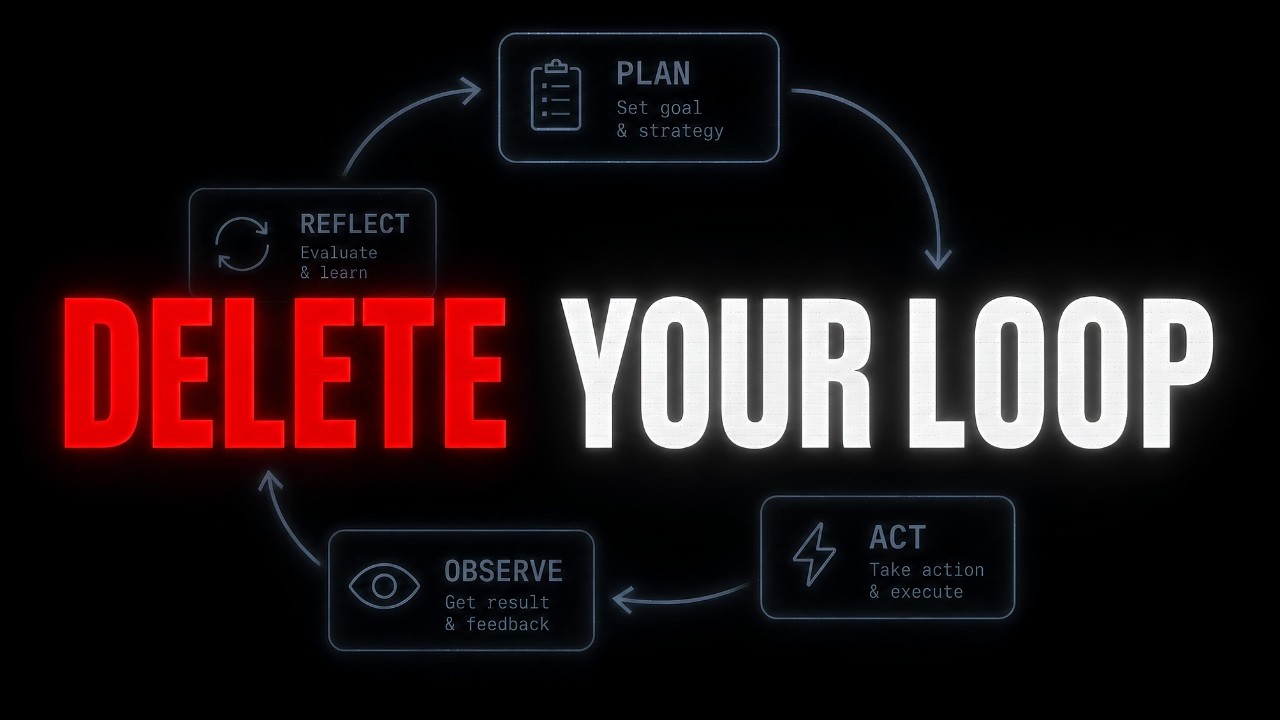
Every AI developer building complex agents faces the same infrastructure headaches - persistent state across tool calls, secure sandboxing for code execution, OAuth credential management, and recovery from failures. What starts as a simple "while loop with tool calls" quickly becomes an operations nightmare as sessions run longer.
Managed agents flip this model entirely. Instead of you building the runtime, providers like Anthropic and Google now offer hosted environments where you define the agent (model, system prompt, and tools) while they handle execution. The platform manages session state, spins up sandboxes, persists context beyond window limits, and provides recovery mechanisms - all as a service.
The breakthrough: Decoupling the "brain" (stateless model), "hands" (disposable tools/sandbox), and "memory" (durable event log) creates resilience. If any component fails, the system can reboot just that piece while maintaining session continuity.
Four Critical Challenges Managed Agents Solve
Building custom agent infrastructure requires solving four complex problems that managed agents now handle automatically:
1. Code Execution Sandboxing
Agents need to run scripts (bash, Python, etc) safely. Managed agents provide containerized environments per session with isolated filesystems, package managers, and network policies - automatically destroyed when the session ends.
2. Persistent State Management
Long-running agents require append-only event logs that survive container restarts and exist outside model context windows. This allows resuming from failure points rather than starting over.
3. Credential Management
Agents acting on user behalf need secure OAuth token handling with refresh logic - kept separate from sandboxes to prevent prompt injection leaks.
4. Failure Recovery
Network blips, memory limits, and rate limits can crash sessions. Managed agents implement automatic retries by reconstructing state from durable logs.
Time savings: Implementing these systems properly takes most teams 6-8 weeks of development time - time now better spent on agent capabilities rather than infrastructure.
Anthropic vs Google: Two Visions for Managed Agents
While both Anthropic and Google now offer managed agents, their implementations reflect fundamentally different philosophies about where value lies in agent ecosystems.
Anthropic's Depth-First Approach
Anthropic treats the agent runtime as a full operating system - exposing components like credential vaults, memory stores, and multi-agent coordination as first-class API resources. Their architecture has separate endpoints for:
- Agent definitions (versioned)
- Environments (reusable)
- Sessions (with typed event streams)
- Tools (pre-built and custom)
Google's Simplicity Bet
Google's managed agent API reduces everything to a single interactions.create call with agent ID, input, and environment parameters. The platform handles planning, execution, and tool calling autonomously before returning final output.
Key difference: Anthropic gives developers fine-grained control at the cost of complexity. Google sacrifices flexibility for a "it just works" experience where the runtime disappears into a simple function call.
Key Implementation Differences
Beyond philosophical differences, Anthropic and Google's managed agents diverge in concrete ways that affect development:
| Feature | Anthropic | |
|---|---|---|
| API Structure | Separate endpoints for agents, environments, sessions | Single interactions.create call |
| Tools | Full pre-built set + custom tools + MCP server | Basic (code exec, search, URL fetch) |
| Credentials | Per-user OAuth vaults (WALTs) | Enterprise version only |
| Memory | Cross-session versioned stores | Coming in enterprise tier |
| Execution | Hosted cloud or self-hosted sandbox | Cloud-only currently |
Notably, Google's simpler Gemini API version lacks many Anthropic features, but their enterprise tier (in private preview) adds MCP support, credential management, and memory banks - suggesting eventual feature parity.
Cost and Runtime Considerations
Managed agent pricing models reveal another key difference in provider strategies:
Anthropic Pricing
- Standard token rates for the model
- $0.08 per active session hour
- No additional charge for sandbox compute
Google Pricing
- Token rates only (sandbox free during preview)
- Gemini Flash runs ~4x faster than comparable models
- But per-token costs are higher than previous generations
Reality check: Long agentic tasks can burn through 3-5 million tokens per run. Google's own tests show costs around $5 per interaction at this scale - proving that "cheap per token" doesn't always mean "cheap per task."
The Vendor Lock-In Reality
Adopting managed agents introduces two forms of lock-in that teams often underestimate:
1. API Lock-In
Anthropic's API won't work with Gemini and vice versa. You're committing to a provider's roadmap, pricing, and availability constraints.
2. Behavioral Lock-In
More insidiously, providers frequently update models (system prompts, quantization, safety tuning) without notice. These changes can alter agent behavior in ways that break your application.
The solution? Implement evaluation harnesses to track outputs over time, and avoid baking assumptions about model behavior into critical systems. Assume drift will occur.
Current limitation: Neither platform yet supports zero data retention or HIPAA compliance, making them unsuitable for sensitive data processing.
Watch the Full Tutorial
For a deeper dive into managed agent architectures and live examples of the Anthropic and Google implementations in action, watch the full video tutorial (timestamp 8:45 shows a side-by-side code comparison).
Key Takeaways
The shift to managed agents represents a maturation of AI infrastructure - providers absorbing the complex operational layer so developers can focus on what agents do rather than how they run.
In summary: 1) Managed agents solve four critical infrastructure challenges 2) Anthropic offers depth and control while Google prioritizes simplicity 3) Costs vary significantly based on task duration 4) Vendor lock-in requires careful planning around evaluation and drift monitoring.
Frequently Asked Questions
Common questions about managed agents
Managed agents are hosted AI runtimes that handle the entire agent loop for you - including state persistence, tool execution, and recovery logic. Instead of building your own infrastructure for long-running AI tasks, providers like Google and Anthropic now offer this as a service.
You define the agent (model, prompt, and tools) while the platform handles the execution environment, sandboxing, credential management, and failure recovery automatically.
- Eliminates weeks of infrastructure development
- Provides built-in resilience for long-running tasks
- Scales automatically with your agent workload
Managed agents solve four critical infrastructure challenges that plague custom implementations:
1) Persistent state across tool calls and container restarts 2) Secure sandboxing for code execution 3) OAuth credential management 4) Automatic recovery from failures like network blips or rate limits.
- 6-8 weeks - typical time saved by using managed agents
- Built-in monitoring and logging
- Automatic scaling with workload
Anthropic focuses on depth with separate endpoints for agents, environments, sessions and events - plus advanced features like cross-session memory and credential vaults. Google prioritizes simplicity with a single API call that handles everything autonomously.
Anthropic's approach offers more control for complex use cases while Google's is easier to implement for straightforward tasks. Their enterprise version (in preview) bridges some gaps with features like MCP support and memory banks.
- Anthropic: 5-6 weeks since launch
- Google: Released just 1 week ago
- Enterprise features coming to both
While pricing models vary, long-running agentic tasks can consume 3-5 million tokens per run. Google's Gemini Flash runs faster but at higher per-token costs, while Anthropic charges standard token rates plus $0.08 per active session hour.
The actual cost depends heavily on task duration and complexity. Google's own tests show costs around $5 per interaction at scale - proving that "cheap per token" doesn't always mean "cheap per task" when agents run long loops.
- Evaluate both token rates and expected run duration
- Test with realistic workloads before committing
- Monitor for unexpected cost spikes
Currently no - both Anthropic and Google's managed agents are stateful by design and not eligible for zero data retention or HIPAA compliance. The enterprise versions under development may address this, but for now these solutions are best suited for non-sensitive automation tasks.
If you handle regulated data, you'll need to either build custom infrastructure with appropriate controls or wait for compliant managed offerings to emerge.
- Not HIPAA eligible currently
- Enterprise versions may add compliance
- Evaluate data sensitivity before adoption
A key challenge with managed agents is model drift - providers frequently update system prompts, quantize models, and adjust safety parameters without notice. These changes can affect agent behavior unpredictably, sometimes causing regressions in tool use or reasoning quality.
The solution is to implement evaluation harnesses that track outputs over time rather than assuming consistent model behavior. Bake observability into your agent architecture from day one.
- Assume model behavior will drift
- Implement output monitoring
- Design for adaptability
Anthropic provides a full pre-built toolset including bash, file operations, web search, and custom tools - plus a first-class MCP server for workflow integration. Google currently offers more limited capabilities (code execution, search, URL fetch) but is expanding their toolset in enterprise versions.
Both platforms handle the secure sandboxing required for tool execution - spinning up isolated containers per session that get destroyed after use to prevent cross-contamination.
- Anthropic: Full toolset + MCP
- Google: Basic tools (expanding)
- Both provide secure sandboxing
GrowwStacks designs and deploys custom AI agent solutions tailored to your specific business needs. We evaluate whether managed agents or custom implementations make the most sense for your use case, handle all the integration work, and provide ongoing monitoring to ensure consistent performance.
Our team stays current with the latest developments from Anthropic, Google, and other providers to recommend the optimal approach. We'll build you a complete agent system in weeks rather than months - with none of the infrastructure headaches.
- Free consultation to assess your needs
- Managed agent or custom implementation
- Ongoing monitoring and optimization
Stop Wasting Time on Agent Infrastructure
Every hour spent building custom agent loops is an hour not spent on what matters - your actual AI capabilities. Let GrowwStacks implement a managed agent solution tailored to your business needs, with none of the infrastructure headaches.