How Temporal + OpenAI Agents SDK Solve the Biggest AI Agent Reliability Problems
Most AI agents fail silently when APIs time out or processes crash - losing state and wasting expensive LLM tokens. By integrating Temporal's durable workflow engine with OpenAI's Agents SDK, you get automatic retries, crash recovery, and persistent state for complex agent workflows.
The Hidden Costs of Unreliable Agents
AI agents promise autonomous operation, but most implementations suffer from silent failures that waste resources and frustrate users. When an agent process crashes or gets rate-limited, all progress is lost - requiring complete restarts that burn additional LLM tokens.
The Temporal team discovered this firsthand when working with OpenAI's image generation systems. Early implementations would lose hours of processing if interrupted, requiring expensive recomputation.
Industry data shows: Unreliable agents waste 35-75% of LLM token budgets on redundant recomputation after failures. Temporal eliminates this by persisting state after every step.
Temporal: Durable Workflows for AI
Temporal is an open-source workflow engine that powers mission-critical systems at companies like Snapchat, Airbnb, and OpenAI. It provides "durable execution" - automatically persisting application state and recovering from failures.
Key capabilities for AI agents:
- Automatic retries with configurable backoff policies
- Crash recovery from exact failure point
- State persistence without manual checkpointing
- Visibility tools for debugging complex agent flows
At 4:12 in the demo video, Cornelia Davis shows how Temporal's UI displays the complete execution history of an agent workflow - critical for debugging when LLMs make unexpected tool invocation decisions.
OpenAI Agents SDK Integration
The Temporal-OpenAI integration makes the Agents SDK durable with minimal code changes. The key modification was abstracting the SDK's runner class to enable Temporal's persistence layer.
Implementation highlights:
# Before: Standard Agents SDK usage agent = OpenAIAgent(name="helper", instructions="...") # After: Temporal-enhanced version agent = TemporalOpenAIAgent( name="helper", instructions="...", temporal_retry_policy=RetryPolicy(max_attempts=5) ) The integration automatically wraps every LLM call and tool execution in a durable Temporal activity while preserving the original agent orchestration logic.
Demo Architecture Breakdown
The demo implements a weather alert agent with three key components:
- Tool Activities - Decorated Python functions for API calls
- Agent Workflow - Temporal workflow containing the OpenAI agent
- Worker Processes - Scalable execution hosts

At 7:35 in the video, Cornelia demonstrates how the dynamic activity handler enables adding new tools without modifying the core agent logic - critical for evolving production systems.
Crash Recovery in Action
The most compelling demo occurs at 12:18 when Cornelia forcibly crashes the worker process mid-execution. Temporal automatically:
- Persisted all previous LLM responses
- Recorded completed tool invocations
- Resumed execution from the exact interruption point
Result: Zero wasted tokens despite the crash, with the workflow completing successfully after restarting the worker.
This demonstrates Temporal's core value for AI agents - ensuring progress isn't lost regardless of infrastructure failures, rate limits, or process interruptions.
Production Benefits Beyond Reliability
While crash recovery is critical, Temporal provides additional production advantages:
Horizontal scaling: Agent workers can be scaled independently based on workload. Temporal handles task distribution and exactly-once execution.
- Operational visibility: Web UI shows real-time workflow execution graphs
- Cost control: Prevents redundant LLM calls during retries
- Long-running flows: Supports agents running for hours/days
At 15:42, Cornelia discusses how Temporal enables "human-in-the-loop" patterns where agents can pause for days waiting on user input without consuming resources.
Watch the Full Tutorial
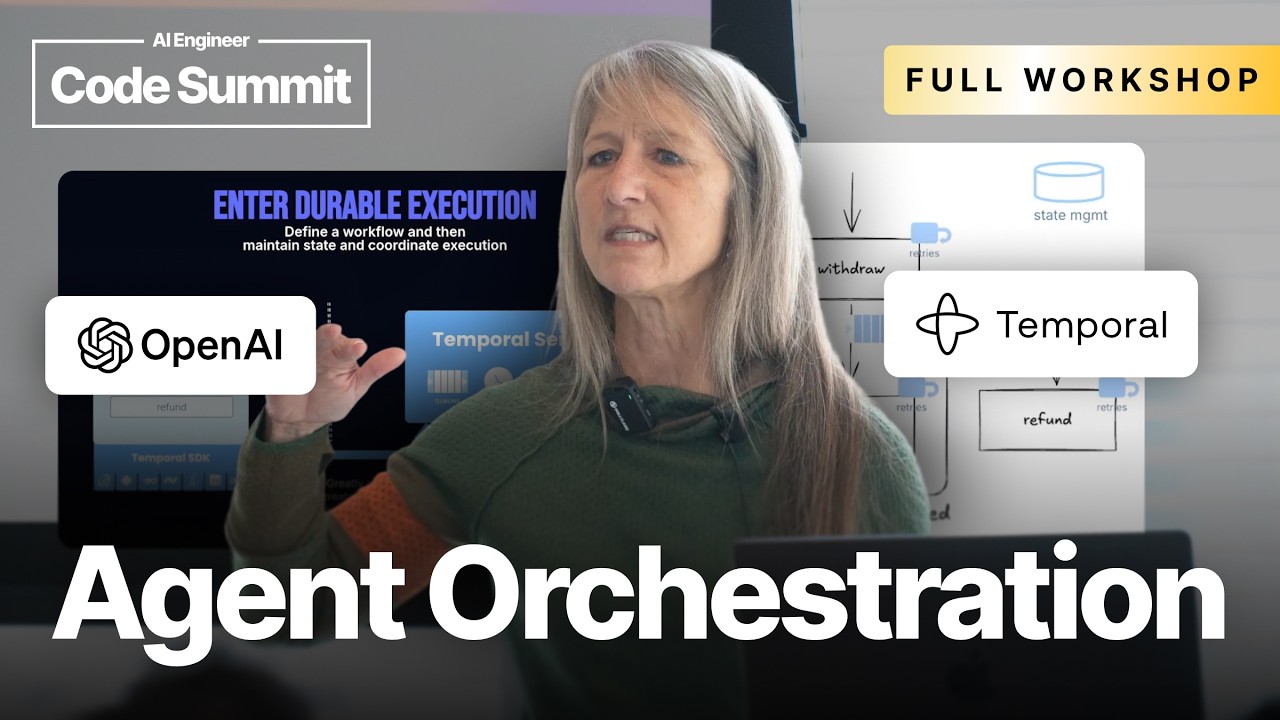
The video demonstrates key concepts like dynamic tool registration and crash recovery between 7:00-14:00. Cornelia also shows Temporal's UI for inspecting workflow history - invaluable for debugging complex agent behaviors.
Key Takeaways
Temporal transforms OpenAI Agents SDK implementations from fragile prototypes to production-ready systems by adding:
In summary: Automatic retries + crash recovery + persistent state = reliable agents that don't waste resources or frustrate users.
- Durability: Survives crashes, rate limits, and infrastructure failures
- Visibility: Complete audit trails of LLM decisions and tool usage
- Cost control: Eliminates wasted tokens from redundant recomputation
Frequently Asked Questions
Common questions about Temporal for AI agents
Temporal automatically persists the complete state of your agent workflow after every step.
If the process crashes, Temporal will restart execution from the last recorded state without re-executing completed steps or re-consuming LLM tokens. This prevents wasted API costs from redundant LLM calls.
Temporal provides built-in retry logic with exponential backoff for all API calls.
You configure retry policies once (like max 5 retries with 2x backoff) and Temporal automatically applies them to every LLM call and tool invocation in your agent workflow.
Yes. Temporal workers are stateless and can be scaled horizontally.
The Temporal service handles all task distribution and ensures each task executes exactly once. Companies like Snapchat run thousands of concurrent workers processing millions of workflows daily.
Temporal officially supports Python, TypeScript, Java, Go, PHP, and .NET with community SDKs for Swift and Rust.
The Python SDK used in the demo provides full feature parity with other language implementations.
Temporal modified the OpenAI Agents SDK runner class to make it abstract.
Their implementation wraps every LLM call and tool execution in durable Temporal activities while preserving the original agent orchestration logic. This happens transparently to your application code.
Temporal provides a web UI showing real-time workflow execution graphs with timings for each step.
You can drill into any past execution to see the exact sequence of LLM calls, tool invocations, and intermediate state - critical for debugging complex agent behaviors.
Yes. Temporal offers a single-binary dev server you can run locally with Docker or directly on your machine.
All demos in this article use the local development mode while being production-ready with just configuration changes.
GrowwStacks specializes in production AI automation systems. We can design and deploy Temporal-powered agent workflows tailored to your use case with guaranteed reliability.
Book a free consultation to discuss your agent architecture and get a customized implementation roadmap.
Stop Wasting Tokens on Unreliable Agents
Every crash or rate limit costs you real money in wasted LLM calls. Let GrowwStacks build you a Temporal-powered agent system that survives failures and scales effortlessly.