Voice AI Agents Are Now Solving Real Business Problems — Here's How
Remember waiting 20 minutes on hold just to schedule an appointment? Traditional customer service is broken. But AI voice agents are now resolving complex issues 8x faster while handling 31 languages. Discover how enterprises are deploying conversational AI that actually works.
The Broken State of Customer Service
If you've ever spent 20 minutes navigating phone menus only to be transferred five times for a simple appointment, you've experienced the fundamental breakdown of traditional customer service. Enterprises have been stuck in this pattern for decades: contact centers filled with human operators, IVR systems that redirect users through endless menu options, and frustrating chatbots that rarely solve actual problems.
The reality is that resolving even basic issues like unrecognized transactions or billing questions typically takes 10-30 minutes through traditional channels. Customers wait on hold, navigate complex menu systems, then repeat their story to multiple agents. Meanwhile, the alternative—basic chatbots—has been equally disappointing, often just redirecting users to generic help articles that don't address their specific concerns.
The turning point: AI models have advanced to the point where voice agents can now understand context, maintain natural conversations, and actually take action rather than just redirecting to help articles. This represents a fundamental shift from frustrating automation to genuinely helpful AI assistance.
Conversational AI Changes Enterprise Economics
When enterprises handle 10,000 support calls daily, the economics of customer service become staggering. Traditional models require massive human resources, extensive training, and significant infrastructure. But conversational AI transforms this equation entirely by delivering instant support at scale.
The most powerful aspect of modern voice agents is their ability to both support and upsell simultaneously. Unlike human agents who must follow strict procedures, AI agents can access CRM data, understand customer history, and identify opportunities while resolving issues. A telecom company's voice agent can troubleshoot Wi-Fi problems while recognizing that the customer qualifies for a premium package—something that's incredibly difficult for human agents to do consistently.
Customer expectations are shifting rapidly: As more brands deploy advanced voice agents, customers will come to expect instant, intelligent support. Companies that delay adoption risk being perceived as outdated compared to competitors offering seamless conversational experiences.
What's Holding Enterprises Back from Voice AI?
Despite the clear benefits, many enterprises hesitate to deploy voice AI at scale. The primary concern isn't technical capability—it's trust and control. CTOs worry about agents behaving unpredictably, issuing unauthorized refunds, or saying something that damages brand reputation.
These concerns are valid, which is why enterprise-grade solutions now include comprehensive guardrails. Companies can precisely define what actions agents can and cannot take, ensuring compliance with internal policies. Additionally, data security and regulatory requirements—particularly around data residency—have been major adoption blockers for global organizations.
The compliance solution: Leading voice AI platforms now offer SOC 2, HIPAA, and PCI compliance, regional data residency options, and zero retention modes. These enterprise-grade features address the security and compliance concerns that previously prevented widespread adoption.
Real-World Results: 8x Faster Resolution Times
The proof of voice AI's effectiveness comes from real-world deployments. Revolut, one of the largest fintech providers serving 70 million customers globally, recently achieved remarkable results using ElevenLabs' voice agents. They deployed AI agents to handle customer support across 31 languages, resulting in an 8x faster time to resolution for complex issues like card disputes and transaction problems.
This dramatic improvement didn't happen by accident. The AI agents could instantly authenticate customers, understand their issues in multiple languages, and execute resolution workflows without manual intervention. For a company operating in over 40 markets, the ability to provide consistent, high-quality support across language barriers represented a massive operational breakthrough.
Scale matters: At Revolut's volume—serving millions of customers worldwide—even small efficiency gains translate to massive cost savings and customer satisfaction improvements. An 8x faster resolution time means happier customers and significantly reduced operational costs.
Why Latency Makes or Breaks Voice Conversations
Technical specifications might seem abstract, but latency—the delay between speaking and receiving a response—is what separates robotic interactions from natural conversations. The magic number for feeling human is under 80 milliseconds for full conversation cycles including transcription, reasoning, and speech generation.
This speed requires sophisticated technical architecture. Voice AI platforms need to process speech through transcription models, pass the text to LLMs for reasoning, generate responses, and convert them back to speech—all while detecting natural conversation cues like sentence endings and vocal patterns. The best platforms achieve this by colocating all necessary models on single servers and optimizing each component for speed.
The human threshold: At 80 milliseconds, responses feel instantaneous to human perception. This near-real-time interaction is what makes conversations with AI agents feel natural rather than frustrating, building trust and engagement that basic chatbots could never achieve.
The Future of Voice AI: What's Coming Next
Currently, less than 1% of companies have AI voice agents in production at scale. But industry experts predict that within the next 18-24 months, approximately one in three brands will implement this technology. This rapid adoption will fundamentally change customer expectations around instant support.
The next wave of innovation will focus on even more expressive and realistic interactions. With models like ElevenLabs' V3 conversational agent platform, voice agents are becoming increasingly emotionally expressive to the point where users may not be able to distinguish them from human agents. This advancement will open up new use cases in retail, where conversational agents can help customers make purchase decisions through natural dialogue.
The retail revolution: Imagine conversing with an AI agent that understands your preferences, answers product questions, and provides personalized recommendations—all through natural voice conversation. This is the future of e-commerce and customer engagement that's rapidly approaching.
Watch the Full Tutorial
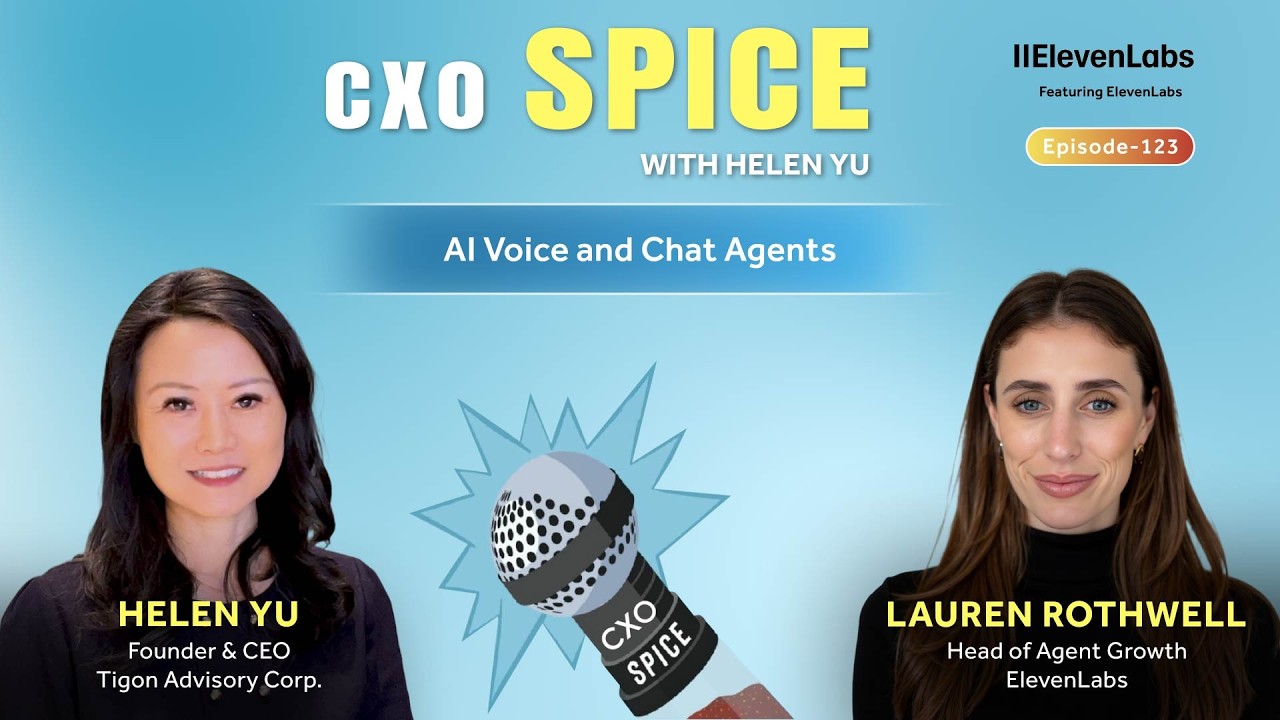
For a deeper dive into how voice AI is transforming enterprise customer service, watch the full conversation with Lauren Roseell from ElevenLabs. Around the 8-minute mark, she shares specific examples of how companies are achieving 8x faster resolution times while maintaining compliance across global markets.
Key Takeaways
Voice AI has moved from experimental technology to production-ready solutions that deliver measurable business results. The conversation with ElevenLabs reveals three critical insights for any enterprise considering voice AI implementation.
In summary: Voice AI agents now resolve issues 8x faster than traditional support, handle 31+ languages seamlessly, and are becoming essential for companies wanting to provide instant, intelligent customer service. The technology has matured to the point where the question isn't whether it works, but how quickly enterprises can deploy it responsibly at scale.
Frequently Asked Questions
Common questions about this topic
AI voice agents are conversational AI systems that use natural language processing and speech synthesis to interact with customers via voice. Unlike traditional chatbots that rely on keyword matching and redirect to help articles, modern voice agents can understand context, maintain conversations, and take real actions like processing transactions or resolving issues.
They provide a more natural, human-like experience compared to the frustrating chatbot experiences of the past 5-10 years. The key difference is that voice agents can actually solve problems rather than just providing information or redirecting users elsewhere.
- Understand context and maintain multi-turn conversations
- Execute actions like processing refunds or updating accounts
- Provide emotionally expressive responses that build trust
AI voice agents can resolve customer service issues up to 8 times faster than traditional human-operated support systems. Where human agents might take 10-30 minutes to handle complex issues like card disputes or billing problems, AI agents can complete the same tasks in minutes.
This speed improvement comes from eliminating hold times, instant authentication, and automated workflow execution without manual intervention. The AI can access multiple systems simultaneously and process information much faster than human operators.
- No wait times or hold music delays
- Instant access to customer data and transaction history
- Automated execution of resolution workflows
Financial services, telecommunications, and retail are seeing significant benefits from AI voice agents. Fintech companies use them for card reissuance and dispute handling across multiple languages. Telecom providers deploy them for technical support and upselling opportunities.
Retail brands are implementing conversational agents to help customers make purchase decisions and provide instant product recommendations. Any industry with high-volume customer interactions can benefit from AI voice agent technology, particularly those requiring multilingual support or 24/7 availability.
- Financial services for transaction disputes and account management
- Telecom for technical support and service upgrades
- Retail for product recommendations and purchase assistance
Latency is critical for natural-feeling conversations. The best AI voice platforms achieve sub-80 millisecond response times for full conversation cycles including transcription, reasoning, and speech generation. This near-instant response makes interactions feel human rather than robotic.
High latency disrupts conversational flow and reduces user trust in the technology, making low latency a key technical requirement for successful voice AI implementations. When responses feel instantaneous, users engage more naturally and are more likely to trust the agent's capabilities.
- Under 80ms for natural conversation flow
- Combined transcription, reasoning, and speech generation
- Critical for building user trust and engagement
Enterprises should prioritize solutions with SOC 2, HIPAA, and PCI compliance, regional data residency options, zero retention modes, and enterprise-grade guardrails. These features ensure data security, regulatory compliance, and controlled agent behavior.
The ability to customize what agents can and cannot do prevents policy violations and brand risk while maintaining compliance with industry-specific regulations across different geographic markets. Data residency is particularly important for global companies with customers in regulated regions.
- SOC 2, HIPAA, and PCI compliance certifications
- Regional data residency for global operations
- Customizable guardrails for controlled agent behavior
Yes, advanced AI voice agents can handle over 31 languages with regional accent variations. This multilingual capability allows global enterprises to provide consistent customer support experiences across different markets without needing language-specific human agents.
The technology automatically detects language and adapts responses accordingly, making it ideal for companies serving international customer bases with diverse language requirements. This eliminates the need for separate support teams for each language market.
- Automatic language detection and adaptation
- Support for regional accents and dialects
- Consistent experience across global markets
Currently, less than 1% of companies have AI voice agents in production at scale. However, industry experts predict that within the next 18-24 months, approximately one in three brands will implement this technology.
The rapid adoption is driven by proven results like 8x faster resolution times, cost savings, and improved customer satisfaction metrics that demonstrate clear ROI for early adopters. As more companies deploy successful implementations, adoption rates will accelerate significantly.
- Current adoption below 1% but growing rapidly
- Expected to reach 33% within 2 years
- Driven by proven ROI and customer satisfaction improvements
GrowwStacks helps businesses implement automation workflows, AI integrations, and scalable systems tailored to their operations. Whether you need a custom workflow, AI automation, or a full multi-platform automation system, the GrowwStacks team can design, build, and deploy a solution that fits your exact requirements.
We specialize in integrating voice AI solutions with your existing CRM, support systems, and business processes to create seamless customer experiences. Our team handles the technical implementation while ensuring the solution aligns with your business goals and compliance requirements.
- Custom automation workflows built for your business
- Integration with your existing tools and platforms
- Free consultation to discuss your automation goals
Ready to Deploy Voice AI That Actually Works?
Your customers are tired of waiting on hold and navigating frustrating menu systems. GrowwStacks can help you implement voice AI solutions that resolve issues 8x faster while handling multiple languages seamlessly. Let's build your conversational AI strategy together.