Why Companies Are Building AI Agent Teams Right Now (And How You Can Too)
By , AI won't just assist your work - it will autonomously handle emails, reports, coding, and customer service while you sleep. Forward-thinking companies are already restructuring around AI agent teams that act as digital coworkers. Discover how this shift will transform every industry and what you need to do today to prepare.
The AI Agent Revolution Has Already Begun
Most business leaders still think of AI as tools that assist human work - chatbots that answer questions, co-pilots that suggest code, or analyzers that process data. But by , a fundamental shift will be complete: AI won't just help you work, it will autonomously do entire categories of work while you sleep.
Microsoft, Google Cloud, and Forbes are calling this the "agentic era" - where AI agents manage complete workflows from start to finish. These aren't simple automation scripts. Modern AI agents can plan multi-step tasks, use business tools (email, calendars, APIs), make judgment calls, and adapt their approach based on outcomes.
Google Cloud reports that security teams using AI agents have reduced threat investigation time from hours to minutes. The agents monitor thousands of alerts, investigate suspicious behavior, cross-check threat databases, and escalate only genuine risks to humans.
Digital Coworkers That Never Sleep
The biggest misconception about AI agents is that they'll replace human workers. Microsoft's research suggests a different future: AI agents will become digital teammates that allow small human teams to accomplish what previously required departments.
Imagine a marketing team of three humans working with:
- A research agent that surfaces daily market trends
- A content agent that drafts initial campaign copy
- A performance agent that optimizes ad spend in real-time
This model - one human plus three AI agents - often outperforms a traditional team of 10 humans working without agent support. The key insight? AI handles volume and consistency while humans focus on creativity and judgment.
How AI Agents Transform Security Teams
Security operations centers (SOCs) face an impossible challenge: monitoring thousands of daily alerts with limited staff. Human analysts burn out from alert fatigue while real threats slip through. AI agents solve this at scale.
Modern security agents don't just flag potential threats - they:
- Investigate suspicious behavior across systems
- Cross-reference against global threat databases
- Assess potential impact based on your infrastructure
- Either resolve low-risk issues or escalate only genuine threats
Result: Human analysts spend time only on cases requiring human judgment, while AI handles 80-90% of routine monitoring. Google Cloud reports this reduces average investigation time from 4 hours to 12 minutes.
Small Human Teams + AI Agents = Big Impact
The most successful companies of won't necessarily have the biggest teams - they'll have the smartest human-AI team structures. Forward-thinking organizations are already restructuring around this principle.
Consider a software development team in :
- Design Agent: Proposes architecture based on requirements
- Coding Agent: Implements features with human review
- Testing Agent: Runs thousands of simulated user scenarios
- Documentation Agent: Automatically updates docs as code changes
Amazon reports that teams using this model ship features 2-4x faster than traditional teams. The humans become creative directors rather than doing all the implementation work themselves.
Developer Superpowers Through AI Agents
For software engineers, AI agents will feel like gaining superpowers. By , agents will handle many routine coding tasks that currently consume developer time:
- Refactoring Legacy Code: Agents can modernize old systems while preserving functionality
- Bug Detection: Finding vulnerabilities before code reaches production
- Performance Optimization: Suggesting improvements based on runtime analysis
- System Modernization: Gradually updating entire codebases to new frameworks
This doesn't eliminate coding jobs - it changes their nature. Developers spend less time on repetitive tasks and more on architectural decisions, creative problem-solving, and overseeing agent work.
Customer Service Reinvented
Customer support teams face a paradox: customers expect 24/7 instant responses, but human agents need sleep and can't scale infinitely. AI agents solve this by handling routine inquiries end-to-end while escalating only complex cases.
Modern customer service agents can:
- Understand natural language requests (no rigid menu navigation)
- Access account history and order systems
- Process refunds or replacements within policy limits
- Recognize when to escalate to human specialists
The result? Customers get instant resolutions for common issues while human agents focus on relationship-building and complex problem-solving. Companies reduce costs while actually improving satisfaction scores.
The Coming Job Market Shift
Yes, some roles will shrink as AI agents take over routine work. Entry-level analysis positions, manual reporting jobs, and repetitive admin roles may decline. But new categories are emerging even faster:
- AI Supervisors: Professionals who oversee agent teams
- Agent Trainers: Experts who teach agents domain knowledge
- Governance Specialists: Ensuring ethical, secure agent operation
- Workflow Designers: Architects of human-AI collaboration
McKinsey predicts that companies succeeding in will shift budgets from pure labor costs to "intelligence augmentation" - combining human expertise with AI scale.
Implementation Challenges to Consider
While the potential is enormous, deploying AI agents isn't without risks. Companies moving too fast may encounter:
- Trust Issues: Will agents make good judgment calls?
- Security Vulnerabilities: New attack surfaces to protect
- Bias Amplification: Agents inheriting training data flaws
- Over-Reliance: Humans deferring too much to AI
The winning approach balances AI speed with human oversight. As Microsoft's research emphasizes: "AI agents work best as digital coworkers, not replacements." Proper governance frameworks and continuous monitoring are essential.
Watch the Full Explanation
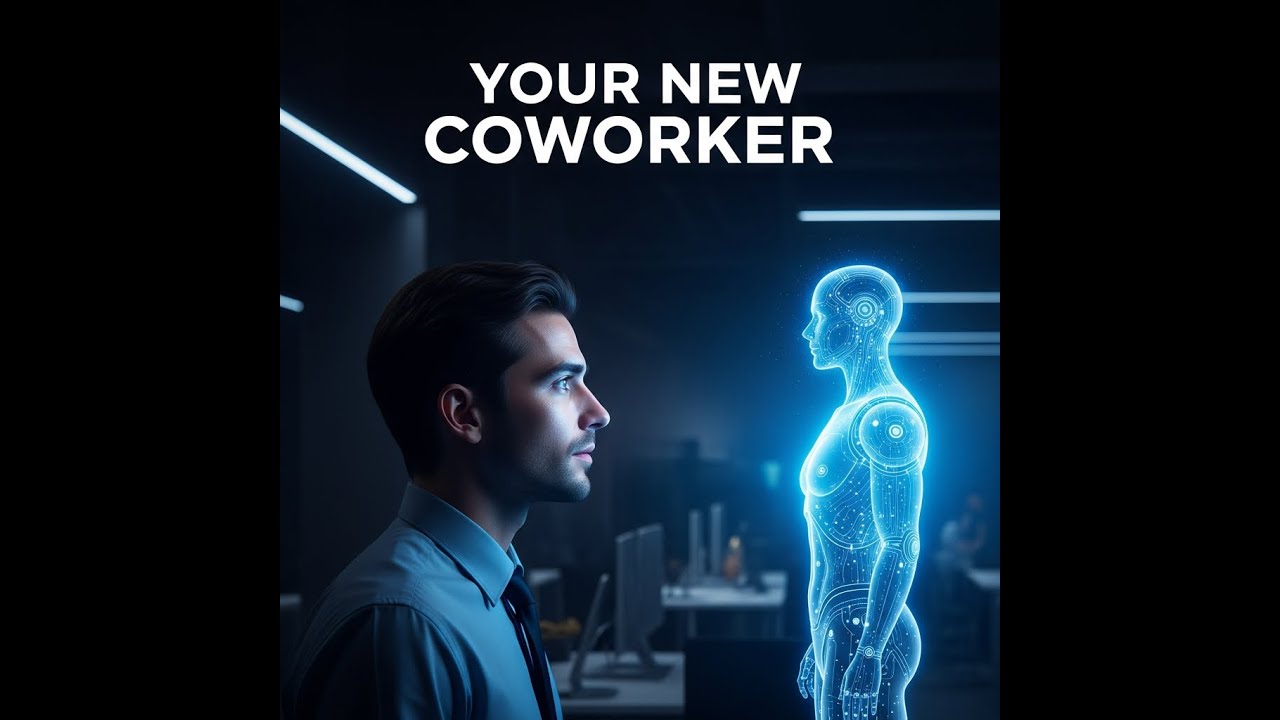
For a deeper dive into how AI agents will transform work by , watch our video breakdown (timestamp 2:15 covers the security team transformation case study in detail):
Key Takeaways
The shift to AI agent teams represents the biggest change in how work gets done since the industrial revolution. Companies that adapt early will gain significant advantages.
In summary: AI agents will autonomously handle routine work by , allowing humans to focus on judgment and creativity. Successful companies will restructure as small human teams working with AI teammates. While implementation challenges exist, the benefits - from 4x faster development to 24/7 customer service - make this transformation inevitable.
Frequently Asked Questions
Common questions about AI agent teams
AI agents are autonomous systems that can plan multi-step tasks, use tools like email and databases, make decisions, execute actions, and adapt based on outcomes. Unlike chatbots that just answer questions, AI agents perform entire workflows independently.
Think of them as digital interns that never sleep and learn instantly. They can handle complete processes from researching market trends to resolving customer service tickets without constant human oversight.
- Autonomously complete multi-step workflows
- Integrate with business tools and APIs
- Make judgment calls within defined parameters
Traditional automation follows predefined rules, while AI agents can make judgment calls and adapt their approach. For example, a security AI agent doesn't just flag threats - it investigates suspicious behavior, cross-checks databases, and only escalates real risks to humans.
This adaptive capability allows AI agents to handle complex, variable workflows that would break rigid automation scripts. Google Cloud reports this approach cuts investigation time from hours to minutes while improving accuracy.
- Makes context-aware decisions
- Learns from outcomes to improve
- Handles exceptions gracefully
AI agents excel at volume-based tasks requiring consistency and speed: 24/7 customer service, code review, threat monitoring, data analysis, and routine administrative work. They're particularly effective for processes with clear rules but high variability.
Amazon reports development teams using agent-based tooling ship features 2-4x faster by automating testing, documentation, and code review. However, creative strategy and complex human relationships still require human oversight and judgment.
- High-volume repetitive tasks
- Processes with clear success metrics
- Work requiring 24/7 availability
While routine roles may shrink, new positions are emerging: AI supervisors, agent trainers, governance specialists, and human-AI workflow designers. Microsoft describes this as augmentation rather than replacement.
In practice, one human plus three AI agents often outperforms a team of 10 humans working without agent support. Companies are shifting budgets from labor to intelligence rather than eliminating positions entirely. The nature of jobs will change more than the number.
- New roles in AI oversight emerging
- Humans focus on judgment/creativity
- Higher productivity enables growth
Tech, cybersecurity, customer service, and software development lead adoption. Google Cloud reports security teams using AI agents reduce threat investigation time from hours to minutes. Customer service teams use agents to handle 80% of routine inquiries.
Development teams leverage coding agents to refactor legacy systems and detect bugs pre-deployment. These sectors benefit most from AI's ability to handle high-volume, rules-based work with some judgment required.
- Cybersecurity threat monitoring
- Software development workflows
- Customer support operations
Key challenges include trust/reliability issues, security vulnerabilities, potential bias, and over-reliance without oversight. AI agents work best when combined with human judgment - Microsoft's model positions them as digital coworkers rather than replacements.
Proper governance frameworks and continuous monitoring are essential for safe deployment. Start with lower-risk implementations (like internal workflows) before customer-facing applications. Build in human review points for critical decisions.
- Requires careful governance
- Human oversight remains critical
- Start with internal use cases
AI agents allow small teams to punch above their weight. A 5-person startup can deploy agents for customer support, market research, and administrative tasks at a fraction of hiring costs. The technology democratizes capabilities previously only available to large enterprises.
GrowwStacks helps SMBs implement affordable agent systems that handle emails, scheduling, and basic workflows - freeing founders to focus on growth. Starting with 1-2 focused agents often delivers 80% of the benefit for 20% of the effort.
- Levels the playing field vs. large competitors
- Affordable entry points available
- Focus on high-impact initial use cases
GrowwStacks designs custom AI agent systems tailored to your business needs. Whether you need autonomous email handling, 24/7 customer support, or development assistants, our team builds secure, governed agent workflows that integrate with your existing tools.
We offer free consultations to map your ideal human-AI team structure and implementation roadmap. Our experts help you identify the highest-impact starting points and scale responsibly. Typical implementations deliver ROI within 3-6 months.
- Custom agent workflow design
- Secure integration with your systems
- Free initial consultation
Ready to Build Your AI Agent Team?
Every day you wait is a day your competitors gain ground. GrowwStacks will design and implement your first AI agents in under 30 days - with zero technical work required on your part.