
The Manual SEO Content Process That Caps Publication Frequency at 2–3 Posts Per Week
Organic search traffic is a compounding asset — the more quality content you publish consistently over time, the more keywords you rank for, the more traffic arrives, and the more authoritative your domain becomes. The mathematics of SEO content favour volume and consistency above almost all other factors. Yet most content teams are structurally capped at 2–3 posts per week not because they lack topics or keyword opportunities, but because the manual production process — keyword research, outline, draft, SEO optimisation, title and meta description writing, formatting, and CMS upload — consumes 4–6 hours per article. Five posts a week requires 20–30 hours of skilled writer time. For most teams, that's the entire content function's capacity, and any unexpected demand immediately creates a backlog.
The quality consistency problem adds to the capacity constraint. Manual SEO optimisation is inconsistent by nature — different writers apply different keyword density, produce different headline structures, write meta descriptions at different lengths and with different CTR optimisation approaches. The result is a content library where some posts are well-optimised and others are not, making overall organic performance lower than it would be if every post met the same SEO standard. Systematic automation solves both problems simultaneously: it removes the per-post time cost that caps volume, and it applies identical SEO best practices to every piece regardless of who submitted the keyword.
.png?updatedAt=1767685878593)
Building the Content Engine: Keyword In, Published Post Out — in Under 30 Minutes
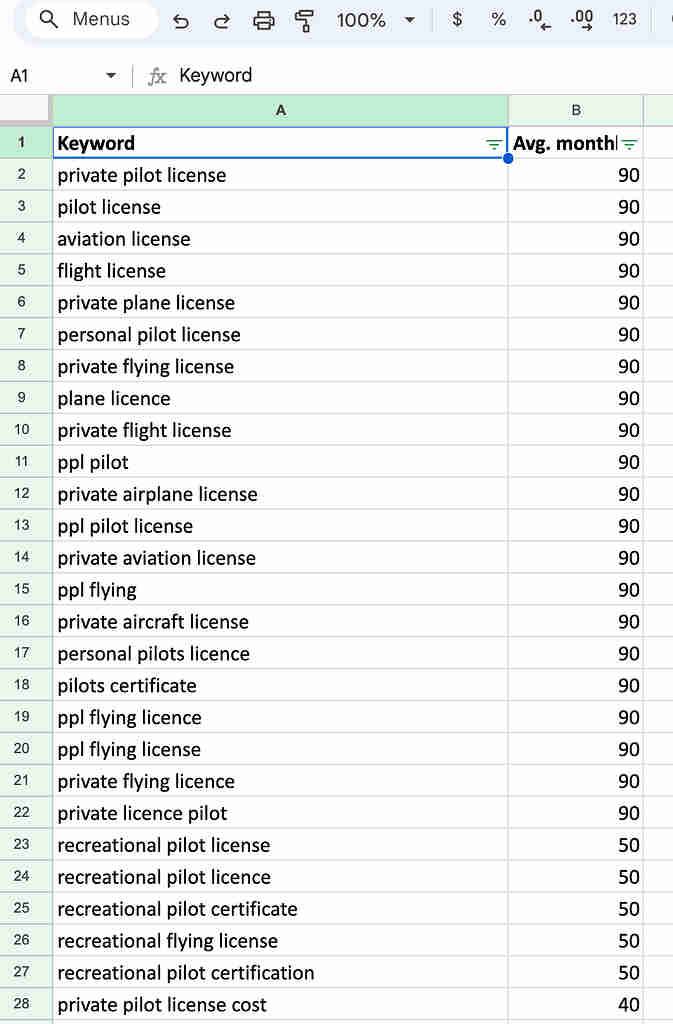
GrowwStacks engineered a complete SEO content production and publishing automation built around a simple workflow: add a target keyword to a Google Sheet row, and within minutes a fully optimised, properly structured blog post appears live on the Webflow website — title written, body drafted, meta description composed, all fields populated in the CMS. The three-module ChatGPT architecture is the core of the system's quality advantage: rather than asking a single AI prompt to produce title, post, and meta description simultaneously (which produces generic, less focused outputs), three purpose-built, SEO-specialised prompts generate each element independently to the highest standard for that specific deliverable.
The Webflow CMS integration via Make.com eliminates the publishing bottleneck that typically consumes the final hour of every content production cycle — opening the CMS, creating the post record, copying the title, pasting the body, reformatting headings, adding the meta description, and checking every field is correct before publish. With this automation, that entire step is reduced to zero human time. The Google Sheets keyword database provides a non-technical interface for the whole team to submit keywords, track publishing status, and manage the content pipeline without requiring CMS access.
From Keyword to Live Published Post: The Complete Four-Stage Pipeline
The system executes across four automated stages that handle every step from keyword input to live website publication without any manual CMS interaction. Here's the complete sequence:
- Keyword input and trigger: A target keyword is entered into the Google Sheets keyword database — either directly into the sheet by any team member, or through the optional custom web app interface that provides a cleaner submission form for non-technical users. The Make.com watch module detects the new row, retrieves the keyword along with any optional parameters (target word count, tone, target audience, related keywords), and initiates the content generation workflow. The Google Sheets "Status" column updates to "Processing" so the team has visibility into where each keyword is in the pipeline.
- Intelligent content routing: The Make.com router module analyses the input type — a raw keyword triggers the full three-module SEO generation sequence, while a custom brief with pre-defined parameters routes through a tailored generation path that respects specific topic constraints or brand voice requirements. This routing flexibility means the same workflow handles both standard SEO keyword-based content and custom brief content from clients or stakeholders without requiring separate automations.
- Three-module ChatGPT generation: The three ChatGPT modules execute sequentially, each with a purpose-engineered SEO prompt. The title module generates a click-worthy, keyword-containing title of 55–65 characters — incorporating the target keyword in the first half of the title where possible, following headline formats proven to perform in search results (how-to, list, question, definitive guide). The blog post module generates a 1,200–1,500 word article structured with an H1 title, H2 section headers, H3 sub-headers where appropriate, natural keyword placement at the target density in the opening paragraph and throughout the body, a clear introduction that establishes the topic and its relevance, substantive body sections that genuinely address the topic, and a conclusion with a call-to-action. The meta description module generates a 150–160 character description that incorporates the primary keyword naturally, communicates the post's specific value proposition, and includes a subtle call-to-action that improves click-through rate from search result pages.
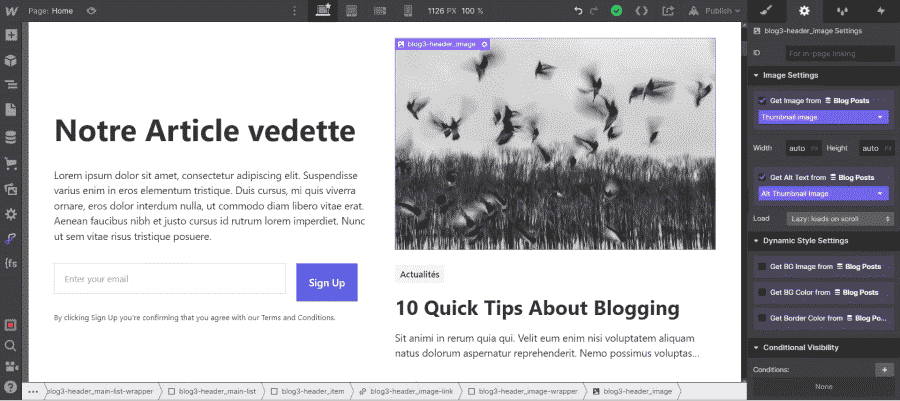
- Webflow auto-publishing: The Make.com Webflow integration module receives the three generated outputs and pushes them to the Webflow CMS via API — populating the post title field, the rich text body field with properly formatted HTML for headings and paragraphs, and the SEO meta description field. The post is created in Webflow's CMS and published to the live site within seconds. The Google Sheets status column updates to "Published" with a timestamp and the live post URL, giving the team a complete record of every published piece alongside its keyword without manual tracking.
💡 Why three separate ChatGPT modules outperform a single combined prompt: The most common failure mode in AI SEO content generation is asking one prompt to produce the title, body, and meta description simultaneously — the model compromises between the different requirements of each format and produces outputs that are mediocre at all three. The title module is optimised exclusively for click-through and keyword placement. The blog post module is optimised for structure, readability, and keyword density. The meta description module is optimised for the 150–160 character constraint and CTR. Three purpose-built prompts produce outputs that each meet their specific format's best practices — which is why this system consistently outperforms single-prompt content generators on both SEO metrics and content quality.
What This System Does That Manual Content Production Can't
Full SEO Optimisation Pipeline
Three dedicated ChatGPT modules generate an SEO-optimised title, a 1,200–1,500 word structured blog post, and a click-optimised meta description — each built to the specific best practices of its format. Every element optimised for search engines without manual SEO expertise, keyword stuffing risk, or inconsistent quality from different writers.
Instant Webflow Publishing
Complete content packages publish automatically to Webflow CMS within seconds — title, formatted body with proper heading structure, and meta description all populated correctly via API. Eliminates the full CMS uploading workflow that typically consumes the final hour of every article's production cycle without any human interaction with the CMS interface.
Google Sheets Content Management
A centralised spreadsheet stores target keywords, tracks publishing status in real-time, records live post URLs, and manages the entire content pipeline. Non-technical team members submit keywords and monitor production progress from a familiar interface without CMS access or technical knowledge required.
Intelligent Content Routing
Router logic analyses input type — raw keyword versus custom brief — directing each through the appropriate generation sequence. Supports multiple content creation workflows from a single automation, handling standard SEO keyword content and custom brief content without separate systems or manual routing decisions.
Structured Long-Form Generation
ChatGPT produces properly structured 1,200–1,500 word posts with H2/H3 headline hierarchy, natural keyword integration at the correct density, engaging readability, and search engine compliance. Eliminates manual writing effort while maintaining quality standards and the structural requirements that search engines reward with improved rankings.
Scalable Content Production
Teams produce 10× more content without additional writers — moving from 3 posts weekly to 30+ while maintaining consistent SEO quality. The per-post time reduction from 5 hours to 30 minutes fundamentally changes the economics of organic content strategy, making aggressive publishing schedules financially viable for teams of any size.
The System in Action
.png?updatedAt=1768975022293)
Before vs. After: What Changes When SEO Content Publishes Itself
Before: Content teams spent 4–6 hours per blog post — keyword research, outline creation, writing, SEO optimisation review, meta description writing, formatting for the CMS, manual upload, field population, and a final check before publish. Maximum sustainable output was 2–3 posts per week for a full-time content writer. SEO optimisation quality varied by writer and was inconsistently applied — some posts were thoroughly optimised, others were published with inadequate keyword density, poor headline structure, or meta descriptions outside the optimal character range. Scaling required hiring additional writers, each at a significant salary or freelance cost.
After: A keyword entered into Google Sheets triggers a complete SEO content production and publication cycle that completes in under 30 minutes with zero manual CMS interaction. Every post meets the same SEO standard — correct keyword placement in the title, appropriate density in the body, proper H2/H3 structure, meta description within the optimal character range. The team can submit 5 keywords in the morning and return to 5 live, indexed, SEO-optimised blog posts by mid-afternoon. Content publication frequency multiplies by 10× without adding a single writer to the team's headcount.
Implementation: Live in 2 Weeks
This system has the shortest implementation timeline in the GrowwStacks portfolio — 2 weeks from kickoff to production — because the technical components are well-defined and the configuration is focused rather than complex.
- Keyword database and trigger setup: The Google Sheets template is structured with columns for the target keyword, optional content parameters (tone, audience, related keywords, word count target), publishing status, completion timestamp, and live post URL. The webhook connection between Google Sheets and Make.com is configured and tested. For teams who want a cleaner submission interface, the optional custom web app trigger is built as a simple form that populates the Google Sheets database — enabling non-technical team members and clients to submit keywords without spreadsheet access.
- ChatGPT prompt engineering: The three SEO prompts are the most critical implementation step. The title prompt is engineered to produce consistently well-formatted, keyword-leading headlines within the 55–65 character range. The blog post prompt is engineered to produce the correct word count, proper H2/H3 structure, natural keyword placement at the target density, and readable engaging prose — tested against your specific niche and target audience to ensure the output matches the brand's content standards. The meta description prompt is engineered for the precise 150–160 character constraint with a keyword-containing, CTA-inclusive format proven to improve SERP click-through rates. All three prompts are tested across a sample of 10–15 representative keywords before production deployment.
- Make.com workflow and routing development: The trigger module is connected to the Google Sheets watch. The router is configured to handle keyword inputs and custom briefs through separate paths. The three sequential ChatGPT modules are connected in order with appropriate prompt variables. Content validation checks are added to confirm word count range, title character length, and meta description length before passing to the Webflow publishing step. The status update module is configured to write back to Google Sheets on completion.
- Webflow integration and deployment: The Webflow CMS API is authenticated and the content collection is mapped to the Make.com publishing module. Field mapping is configured for all content elements — title, rich text body with heading structure preserved, and meta description. Formatting rules are set to ensure the published post's heading hierarchy matches the Webflow blog design. Ten test posts are published to a staging environment, reviewed for formatting and SEO correctness, and compared against manually published posts for quality parity. Production deployment follows with monitoring for publishing success rates and status updates.
The Right Fit — and When It Isn't
This solution delivers maximum value for content marketing teams, SEO agencies, digital marketing departments, blog publishers, e-commerce businesses, SaaS companies, and any organisation with an identified need for consistent high-volume SEO-optimised content where the current production bottleneck is the per-post writing and publishing effort rather than a shortage of keyword opportunities.
Two important calibrations: the system generates AI-first content — it produces well-structured, well-optimised articles from keywords, but the content reflects the AI's synthesis of general knowledge about the topic rather than original research, proprietary data, or unique expert perspective. For content strategies where a point of view, original research, or deep subject matter expertise is the primary differentiator, the automation works best as a first draft foundation that a subject matter expert reviews and enriches before publishing, rather than a publish-without-review system. Additionally, this system is built for Webflow CMS — teams using WordPress, HubSpot, Contentful, or other CMS platforms require a platform-adapted variant, which we build on request with the same architecture and equivalent publishing automation for their specific platform.