
The B2B Prospecting Trap: Why 20 Hours of Weekly Manual LinkedIn Work Produces 20 Outreaches and an Empty Pipeline
Manual B2B prospecting is one of the most economically irrational uses of a skilled sales professional's time — yet it consumes the majority of many sales reps' working weeks. The manual workflow has four sequential steps, each of which is individually time-consuming and collectively unsustainable at the volume modern outbound sales requires. Search: navigate LinkedIn Sales Navigator, apply filters, review profiles, identify relevant prospects. Extract: copy name, title, company, and any available contact information from each profile into a spreadsheet — 2–4 minutes per prospect. Research: Google the company to understand the business context needed for personalisation — another 3–5 minutes per prospect. Write: compose a personalised email that references the prospect's specific situation rather than deploying a generic template — 5–10 minutes per email for genuine personalisation. At 30 minutes per prospect end-to-end, a rep working 4 focused hours on prospecting reaches 8 people. That is not an outbound pipeline — it's a trickle.
The deeper structural problem is that manual prospecting creates a ceiling on pipeline predictability. When outreach volume depends on rep availability, energy, and discipline — all of which fluctuate — pipeline fills and empties in waves rather than flowing consistently. Feast-or-famine pipeline cycles follow: a week of good prospecting produces leads that close 6–8 weeks later, during which time prospecting stopped because the rep was busy closing. The pipeline gap that creates the next revenue dip was already built into the system by the manual process. Automating prospecting doesn't just save time — it removes the human variability that creates pipeline unpredictability.
Building the Full-Stack Outbound Pipeline: Extract, Enrich, Personalise, and Launch — All Automatically
GrowwStacks built a six-platform outbound automation that handles every step of the prospecting and outreach workflow — from LinkedIn search definition to personalised email in a prospect's inbox — without a sales rep touching any of the intermediate steps. The pipeline is designed around a core principle: the sales team's time should be spent on conversations, not on the mechanical work that creates the conditions for conversations to happen.
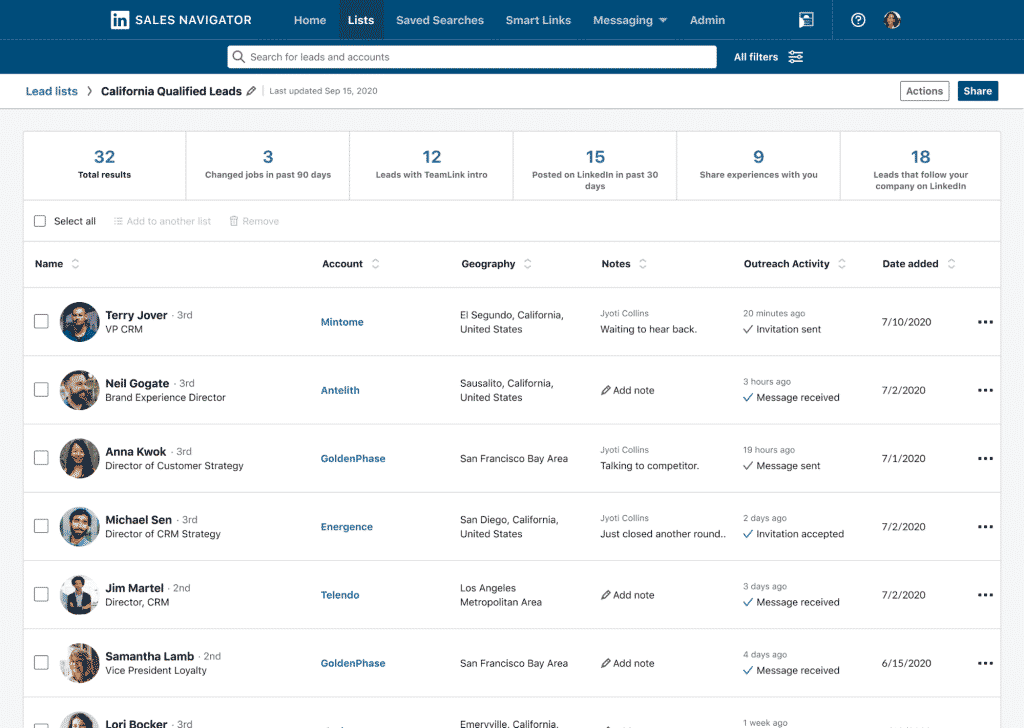
Each platform in the stack does what it does best. LinkedIn Sales Navigator provides the targeting intelligence — the professional filtering capabilities that ensure only relevant, qualified prospects enter the pipeline. Phantom Buster handles the extraction that would otherwise require manual profile-by-profile copying. Apollo provides the enrichment data that makes personalisation credible — company details, revenue signals, and verified contact information that a rep would otherwise need to research manually. ChatGPT writes the email that makes personalisation scale — referencing specific company context, role relevance, and tailored value propositions for each individual prospect. Mailerlite manages the campaign mechanics — scheduling, sequencing, deliverability, and engagement tracking. And Make.com connects all five platforms into a single automated flow with deduplication, quality validation, and error handling ensuring the pipeline runs reliably at scale.
From LinkedIn Search to Prospect Inbox: The Complete Six-Step Automated Outreach Pipeline
The system executes six automated steps — from Phantom Buster extraction through Mailerlite campaign launch — for every prospect batch the sales team triggers. Here's how each component operates within the complete pipeline:
- LinkedIn Sales Navigator ideal customer profile definition: The automation begins with the sales team's work — not the automation's. Sales teams define their ideal customer profile as saved searches in LinkedIn Sales Navigator: selecting target job titles (VP of Sales, Head of Operations, Founder), industries (SaaS, Professional Services, Manufacturing), company sizes (50–500 employees, 500–5,000 employees), seniority levels, geography, and any other filtering criteria available in Sales Navigator. These saved searches define the population of prospects the automation will extract from — ensuring only genuinely qualified prospects enter the pipeline rather than broad unfiltered lists. The quality of the targeting at this stage directly determines the quality of the pipeline downstream; the automation amplifies whatever targeting criteria the sales team sets, making precise ICP definition the highest-leverage input to the entire system.
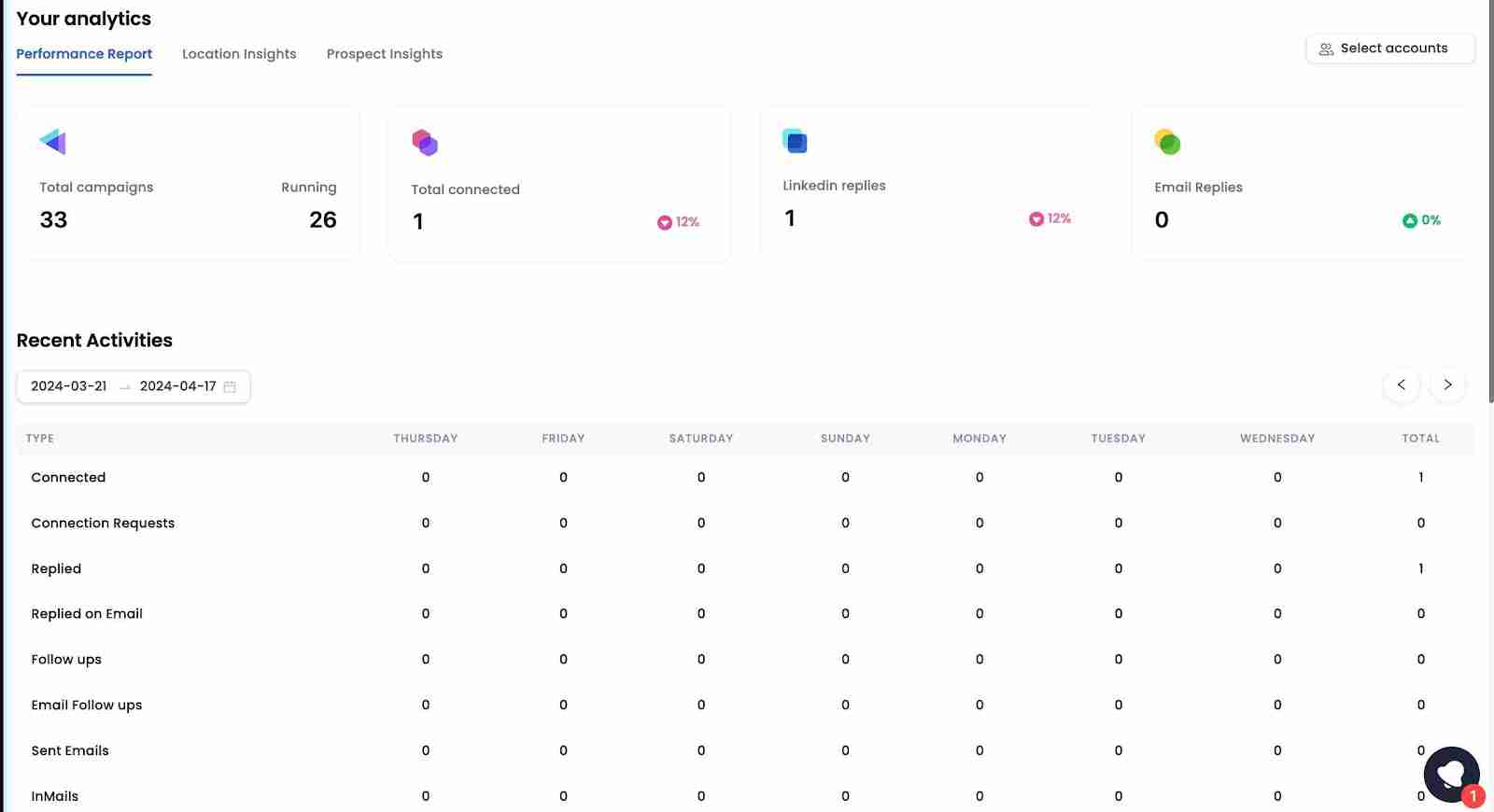
- Phantom Buster automated LinkedIn extraction: Phantom Buster's LinkedIn Sales Navigator scraper actor is configured to run against the saved Sales Navigator searches — extracting the complete prospect list with all available profile data: first name, last name, job title, company name, company LinkedIn URL, personal LinkedIn profile URL, location, and any other data available from the Sales Navigator search results. The extraction runs on a configured schedule (daily, weekly, or on-demand) and outputs a structured dataset that Make.com receives via the Phantom Buster API. The extraction respects LinkedIn's rate limits and operates within Phantom Buster's safety thresholds to maintain the LinkedIn account's good standing. The output is a raw prospect list — names and professional data — that feeds into the Apollo enrichment step.
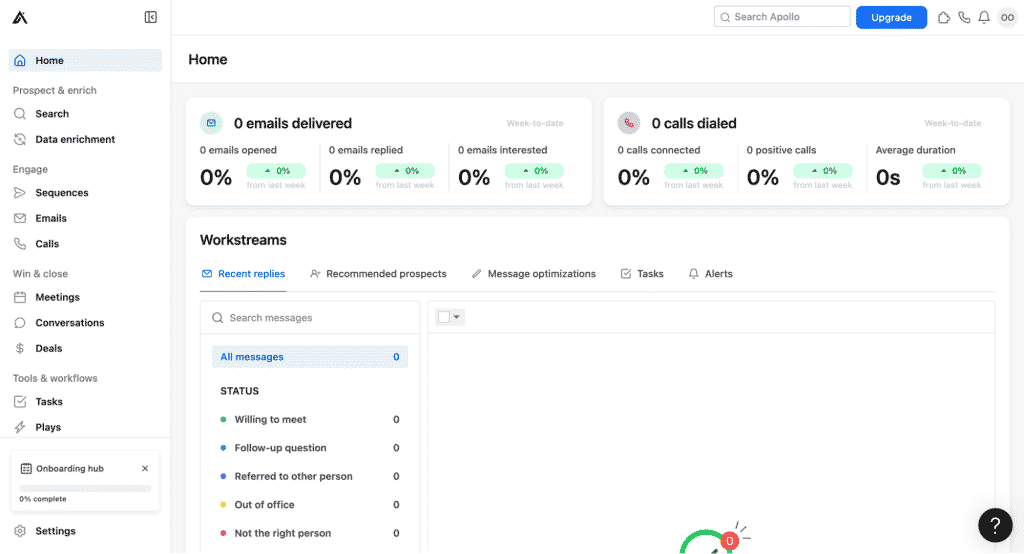
- Apollo business intelligence enrichment: For each prospect in the extracted list, Make.com calls the Apollo API to enrich the record with business intelligence that transforms a bare LinkedIn profile into a prospect dossier. Apollo's enrichment adds: verified email address (Apollo's database of 275M+ contacts with email verification — the most critical field for enabling outreach), company revenue range, employee count, company technology stack (revealing which tools the prospect's company uses — relevant for competitive positioning), industry classification, company funding stage (for startups), company description, and any other Apollo fields relevant to the sales team's personalisation approach. Prospects where Apollo cannot return a verified email address are routed to a flagged list for manual review rather than entering the campaign with unverified contact information — protecting sender reputation. The enriched dataset provides the business context that makes ChatGPT's personalisation genuinely specific rather than generically "personalised."
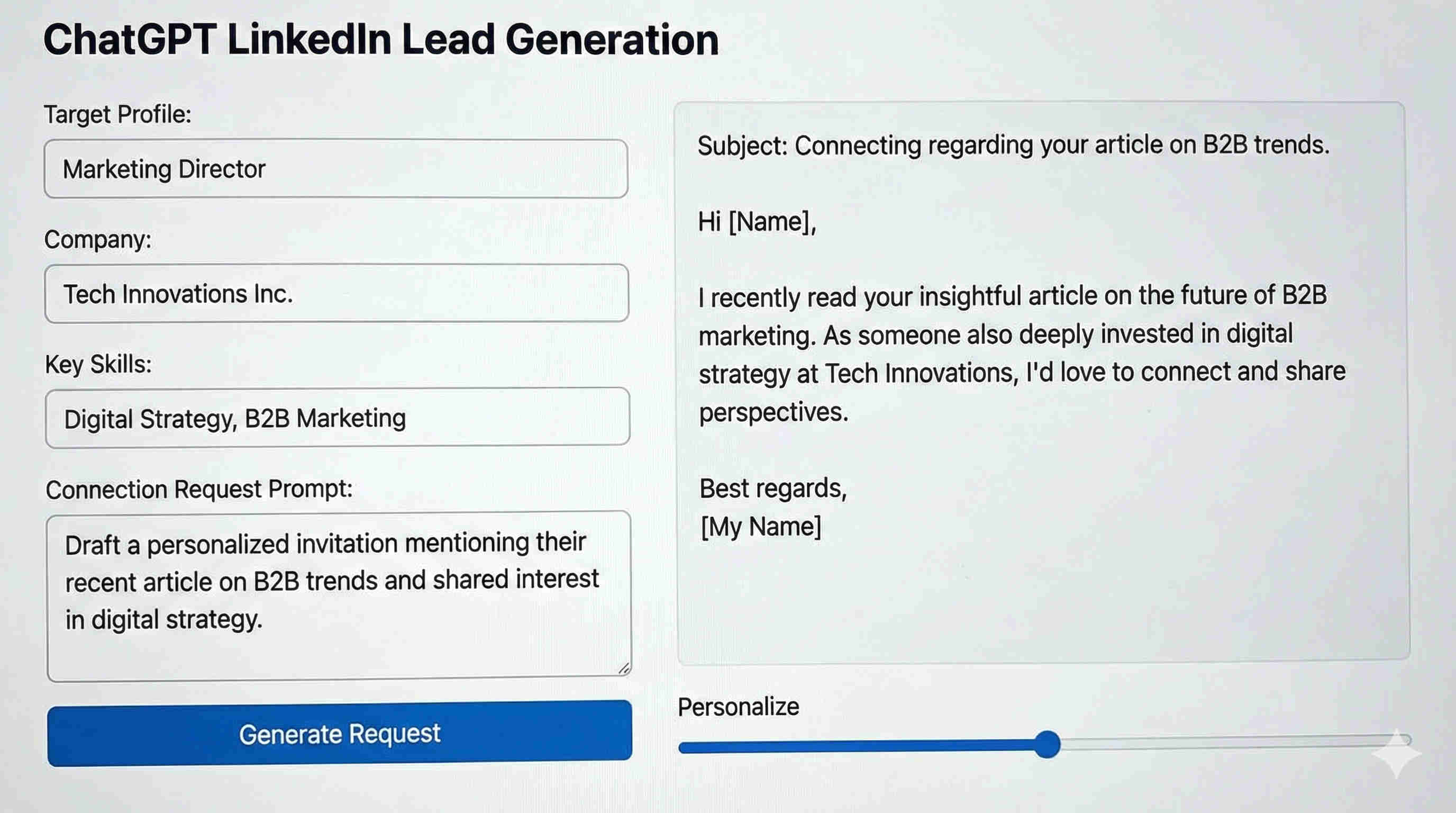
- ChatGPT AI email personalisation: For each enriched prospect, Make.com calls the ChatGPT API with a carefully engineered personalisation prompt. The prompt provides ChatGPT with the full prospect context — name, title, company, industry, employee count, company description, technology stack — alongside the sales team's value proposition, ideal customer profile context, and email structure guidelines. ChatGPT generates a unique email body for each individual prospect: referencing the prospect's specific industry context, acknowledging the company's scale or stage, connecting the product's value proposition to a pain point relevant to that prospect's role and company situation, and maintaining a tone calibrated to the sales team's brand voice. The output is a complete email body — not a template with blanks, but a fully written, contextually specific message that reads as if a thoughtful sales rep spent 10 minutes researching and writing it. Quality review logic checks each generated email for length, tone, and the presence of required elements before passing it to Mailerlite.
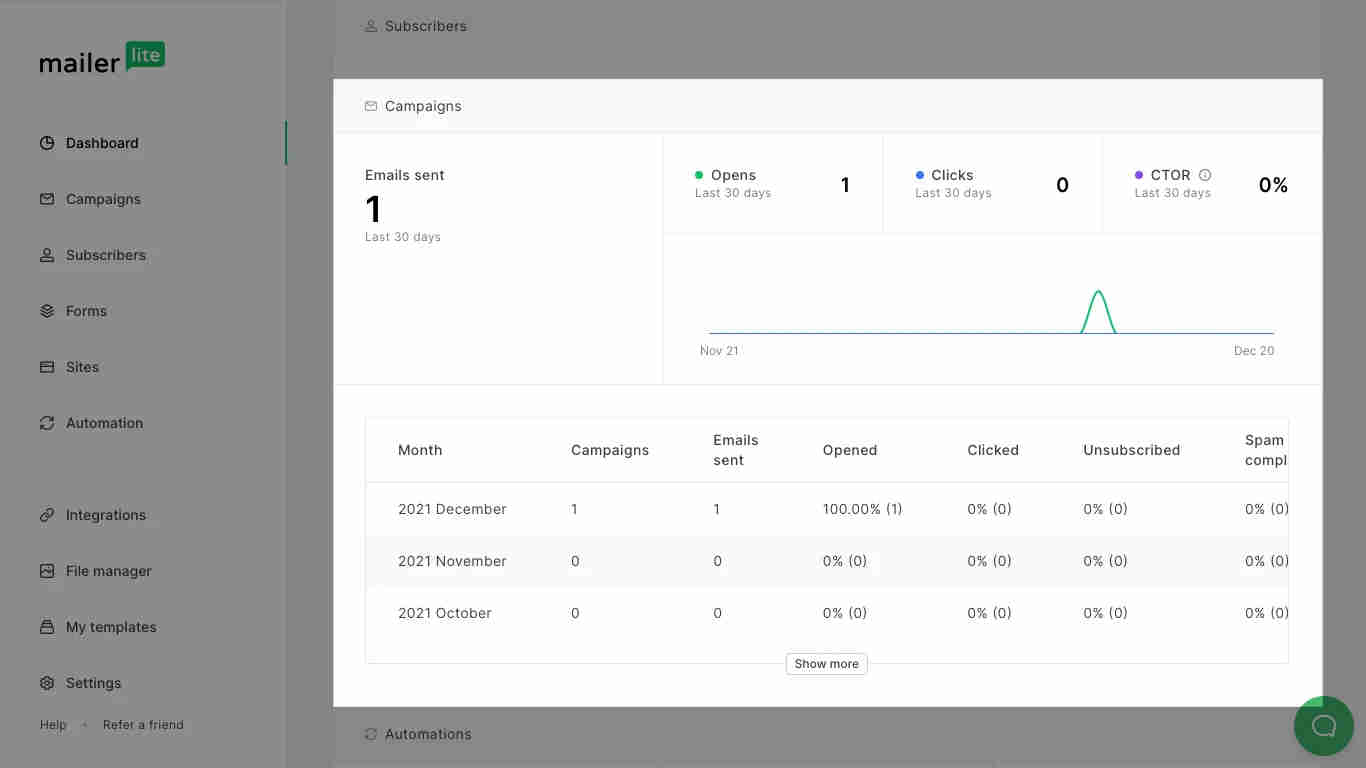
- Mailerlite campaign creation and launch: The enriched prospect data (with verified email address) and the ChatGPT-generated personalised email body are passed to Mailerlite via the Mailerlite API. Make.com creates or updates the Mailerlite subscriber record with the prospect's details, adds them to the appropriate campaign segment, and associates the ChatGPT-generated email content with their subscriber record for personalised delivery. The campaign is configured with: the personalised email as the initial outreach, a follow-up sequence (typically 2–3 follow-up emails scheduled at configurable intervals for prospects who open but don't reply), optimal send time scheduling based on the prospect's time zone (derived from their location field from Apollo), and engagement tracking (opens, clicks, replies). Mailerlite's campaign management handles all deliverability mechanics — SPF/DKIM authentication, send rate management, bounce handling, and unsubscribe compliance — maintaining the sender domain's reputation for sustained outreach at scale.
- Duplicate prevention, quality assurance, and status logging: Throughout the pipeline, Make.com applies quality control logic at multiple points. Before extraction results enter the enrichment step, a duplicate check queries whether any extracted prospect's LinkedIn URL already exists in the campaign database — preventing prospects who have already been contacted from entering a new campaign sequence. Before the Mailerlite campaign step, a final validation confirms the prospect record has a verified email address, that the ChatGPT-generated email meets minimum length and quality thresholds, and that the prospect is not on a suppression list (previous unsubscribes, existing customers, or manually excluded contacts). Every prospect processed — whether successfully added to a campaign, flagged for missing data, or excluded as a duplicate — is logged in a tracking spreadsheet or CRM integration, providing the sales team with a complete record of pipeline activity, campaign composition, and prospecting volume for reporting and optimisation.
💡 Why ChatGPT personalisation at scale outperforms both manual writing and merge-field templates: Email personalisation exists on a spectrum. At the low end, merge-field templates insert a first name and company name into an otherwise identical message — which prospects recognise immediately as templated, producing lower engagement than even a generic cold email that doesn't pretend to be personal. At the high end, a genuinely researched and written email by a skilled rep — referencing a specific company initiative, recent news event, or role-relevant challenge — achieves the highest response rates but is only sustainable at 10–20 emails per day. ChatGPT with an appropriately engineered prompt and rich Apollo enrichment data sits at a position on this spectrum that was previously inaccessible: generating contextually specific emails at the volume of templated outreach. The key is the enrichment data quality: a prompt that can reference a company's specific employee count, technology stack, and industry produces an email that feels genuinely researched even though it was generated in seconds. The 75% improvement in email response rates versus generic templates reflects this — prospects respond to emails that demonstrate genuine understanding of their context, and ChatGPT can demonstrate that understanding at scale when given the right data to work from.
What This System Enables That Manual Prospecting Cannot Sustain
Automated LinkedIn Extraction
Phantom Buster scrapes complete prospect lists from LinkedIn Sales Navigator saved searches — extracting names, titles, companies, and profile data without manual profile-by-profile copying. Runs on schedule without requiring LinkedIn navigation time, enabling continuous prospecting that fills the pipeline consistently regardless of the sales team's daily capacity or availability.
Apollo Business Intelligence Enrichment
Supplements every extracted prospect with verified email addresses, company revenue estimates, employee counts, technology stack, industry classification, and funding data — providing the business intelligence that makes personalisation credible without manual company research. Filters out prospects with unverifiable contact information before campaign launch, protecting sender reputation and ensuring outreach reaches real decision-makers.
ChatGPT Email Personalisation
Generates a unique, contextually specific email for each individual prospect — referencing their company's specific situation, industry context, and role-relevant pain points rather than inserting names into a generic template. Scales genuine personalisation to 200+ weekly prospects per rep — a volume that produces the 75% response rate improvement of authentic outreach while being impossible to achieve through manual writing at any meaningful scale.
Automated Mailerlite Campaign Launch
Creates segmented campaigns with personalised email content, schedules send times optimised by prospect time zone, and configures multi-step follow-up sequences automatically — without manual campaign setup or list management. Manages all deliverability mechanics (SPF/DKIM, bounce handling, unsubscribe compliance) ensuring sustained high-volume outreach doesn't damage sender domain reputation.
LinkedIn Sales Navigator Precision Targeting
Leverages LinkedIn's professional targeting layer — the most precise B2B audience definition tool available — to ensure only genuinely qualified prospects matching the exact ICP enter the automation. The targeting quality at the Sales Navigator layer determines the pipeline quality at the outreach layer; precise filtering upstream means every automated touchpoint reaches someone who could plausibly convert.
10× Outreach Scaling
Enables 200+ weekly personalised outreach per rep versus 20 manual capacity — without additional headcount, extended working hours, or any reduction in email quality. Transforms prospecting from a time-intensive activity that competes with selling for the rep's attention into a background process that continuously fills the pipeline so the rep can focus entirely on conversations, qualification, and closing.
The System in Action
Before vs. After: What Changes When Prospecting Runs Without the Sales Team's Time
Before: Sales reps spent 3–4 hours daily on LinkedIn searching, copying prospect data into spreadsheets, opening new browser tabs to research each company, writing personalised (or semi-personalised) emails, and setting up or updating campaign lists in their email platform. At this pace, 20–30 prospects per week per rep was the practical ceiling — not because of a lack of willing leads on LinkedIn, but because every prospect required 30 minutes of mechanical preparation before a single email could be sent. Pipeline filled inconsistently, with prospecting activity dropping whenever the rep was busy closing deals or attending meetings. Response rates on the emails that were sent were modest because genuine personalisation at 30 prospects per week doesn't meaningfully differentiate from templates in a crowded inbox.
After: The sales team spends 2 hours weekly on prospecting — defining or refining the LinkedIn Sales Navigator saved searches that specify their current ICP. The automation handles extraction, enrichment, personalisation, and campaign launch for 200+ prospects every week without further rep involvement. Each of those 200 prospects receives an email that was written specifically for them — referencing their company's actual context, their role's specific challenges, and a value proposition relevant to their situation. The 2 hours the rep spends on ICP refinement and reviewing flagged records replaces 18 hours of mechanical work. Those 18 reclaimed hours are redirected to the activities that actually create revenue: responding to interested prospects, qualifying leads, running discovery calls, and advancing deals through the pipeline that the automation is continuously filling.
Implementation: Live in 8 Weeks
- LinkedIn Sales Navigator and Phantom Buster setup (Weeks 1–2): The LinkedIn Sales Navigator account is reviewed and saved searches are configured for the target ICP — working with the sales team to define precise filtering criteria that match genuinely qualified prospects. Phantom Buster is configured with LinkedIn authentication (using a dedicated LinkedIn account or the client's existing Sales Navigator account within Phantom Buster's authentication setup), and the LinkedIn Sales Navigator scraper phantom is set up with the saved search URLs and output field configuration. Test extraction runs are executed against the live saved searches, and the output data structure is reviewed to confirm all required fields (name, title, company, LinkedIn URL) are populated correctly across different prospect types and industries. The extraction schedule (daily, weekly, or on-demand) is configured based on the client's target outreach volume and Sales Navigator search refresh cadence.
- Apollo integration and enrichment configuration (Weeks 3–4): The Apollo API connection is established in Make.com using the client's Apollo API credentials. The enrichment configuration is set up — defining which Apollo fields to retrieve for each prospect (email, company size, revenue, technology stack, and any other fields relevant to the personalisation approach). Email verification settings are configured: Apollo's email verification tiers are assessed, and the minimum verification confidence level for including a prospect in the campaign is established. Test enrichment runs are conducted against the Phantom Buster test extraction output, reviewing enrichment hit rates (what percentage of extracted prospects Apollo can successfully enrich) and data completeness across different prospect segments. The unverified-email handling path is configured — routing unenriched or low-confidence prospects to a review list rather than the campaign.
- ChatGPT personalisation prompt engineering (Weeks 5–6): The email personalisation prompts are developed — the most important and nuanced implementation step, as prompt quality directly determines email quality and therefore response rates. The prompt is built in layers: the system context (who the sender is, what the product does, what the ICP looks like, what pain points the product addresses), the prospect context (the enriched prospect data fields passed as variables), the email structure guidelines (desired length, tone, opening approach, call-to-action), and the quality constraints (avoiding certain phrases, maintaining authenticity, referencing specific data points rather than generic praise). The prompts are tested extensively across diverse prospect profiles — different industries, company sizes, and job titles — with output emails reviewed by the sales team for quality, authenticity, and alignment with brand voice. The prompts are refined iteratively until the generated emails consistently meet the quality bar the sales team would apply to manually written outreach.
- Mailerlite campaign automation setup (Weeks 7–8): The Mailerlite account is connected to Make.com with API credentials and configured for the automated campaign workflow. Campaign templates are created for each prospect segment (different industries or company sizes may warrant different campaign structures or follow-up cadences). Follow-up sequence templates are built for the 2–3 follow-up touches following the initial outreach — each follow-up designed to add value rather than simply chase the prospect. The Make.com Mailerlite modules are configured to: create or update subscriber records with enriched prospect data, assign the ChatGPT-generated personalised email body to each subscriber's record, add the subscriber to the appropriate campaign segment, and set the scheduled send time based on the prospect's time zone. Sender domain authentication (SPF, DKIM, DMARC) is verified for the sending domain. A test campaign run with 10–20 real prospects validates end-to-end delivery, personalisation, and campaign setup before the full production pipeline is activated.
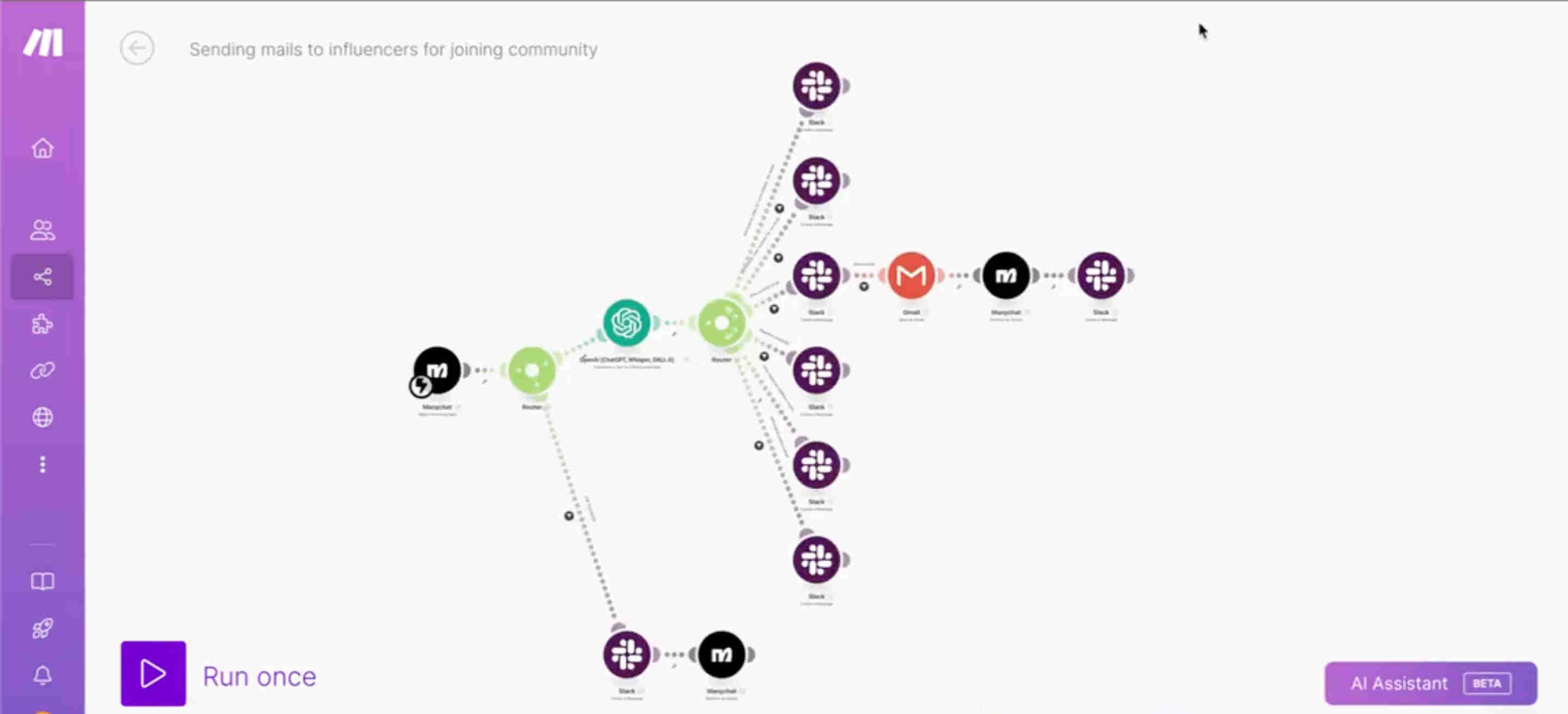
- End-to-end assembly, duplicate logic, and production deployment: The complete Make.com scenario connecting all five platforms is assembled — chaining Phantom Buster, Apollo, ChatGPT, and Mailerlite modules with the duplicate detection logic, quality validation checkpoints, and error handling routing. The duplicate check queries the campaign history log (a Google Sheet or CRM integration) for each prospect's LinkedIn URL before they enter the enrichment step — excluding previously contacted or actively sequenced prospects from new campaign runs. Error handling routes are built for API failures at each step — Phantom Buster extraction errors, Apollo enrichment misses, ChatGPT API timeouts, and Mailerlite campaign failures each have dedicated fallback paths and logging. The complete scenario is tested with a full prospect batch, monitoring each step's execution in Make.com's scenario history. The production scenario is deployed with scheduled execution and a performance monitoring dashboard tracking weekly outreach volume, campaign open rates, reply rates, and pipeline attribution.
The Right Fit — and When It Isn't
This solution delivers maximum value for B2B sales teams with an established ICP and a LinkedIn Sales Navigator subscription, business development representatives at companies selling to businesses with identifiable LinkedIn profiles, outbound marketing teams running high-volume email outreach programmes, agencies managing prospecting and outreach for multiple clients, and any organisation where a sales rep currently spends more than 5 hours weekly on manual LinkedIn prospecting and email preparation. The ROI is strongest for organisations where the product or service has a well-defined target buyer persona — the more precisely the ICP can be articulated in Sales Navigator filters, the higher the proportion of extracted prospects who are genuinely qualified, and the higher the conversion rate from outreach to pipeline.
Two calibration points for realistic expectations: first, this system automates the prospecting and initial outreach workflow — it does not automate the conversation, qualification, and closing that follows. Prospects who respond to the automated outreach require a human sales rep to engage, qualify, and advance them through the funnel. The system's value is in creating a consistently filled top-of-funnel conversation queue for the rep's active selling time, not in replacing the selling itself. Second, Phantom Buster's LinkedIn extraction operates within LinkedIn's terms of service considerations and rate limits — the extraction is configured conservatively to protect the LinkedIn account's standing, which means very high extraction volumes (thousands of prospects daily) require careful configuration and potentially a dedicated LinkedIn account. We assess the appropriate extraction rate during the discovery call based on the target prospecting volume and account risk tolerance.