The Problem
Many marketing teams and content creators struggle with the time-consuming process of creating engaging LinkedIn content. Manually generating posts, seeking approvals, and scheduling them can be a significant drain on resources. This often leads to inconsistent posting schedules and a lack of fresh, innovative content, hindering their ability to effectively engage with their audience and grow their professional network.
Additionally, maintaining brand consistency and ensuring content quality across all LinkedIn posts can be challenging. Without a streamlined review process, there's a risk of publishing inaccurate or off-brand content, which can damage the company's reputation. The need for a more efficient and reliable system is evident, one that automates content creation while maintaining quality and brand alignment.
The Solution
The solution is an automated workflow that leverages the power of AI to generate LinkedIn posts, coupled with an email approval system for quality control. This system uses n8n as the primary automation platform, integrating it with OpenAI for content generation, Google Sheets for data input, and Gmail for the approval process. LinkedIn is then used to publish the approved posts.
This tech stack was chosen for its ability to seamlessly integrate and automate each step of the content creation process. n8n's flexibility allows for complex workflows, OpenAI provides high-quality content generation, Google Sheets offers a user-friendly data source, and Gmail ensures a smooth approval process. This combination creates a robust and efficient system for automating LinkedIn content creation.
How It Works — AI-Powered Content Creation and Approval
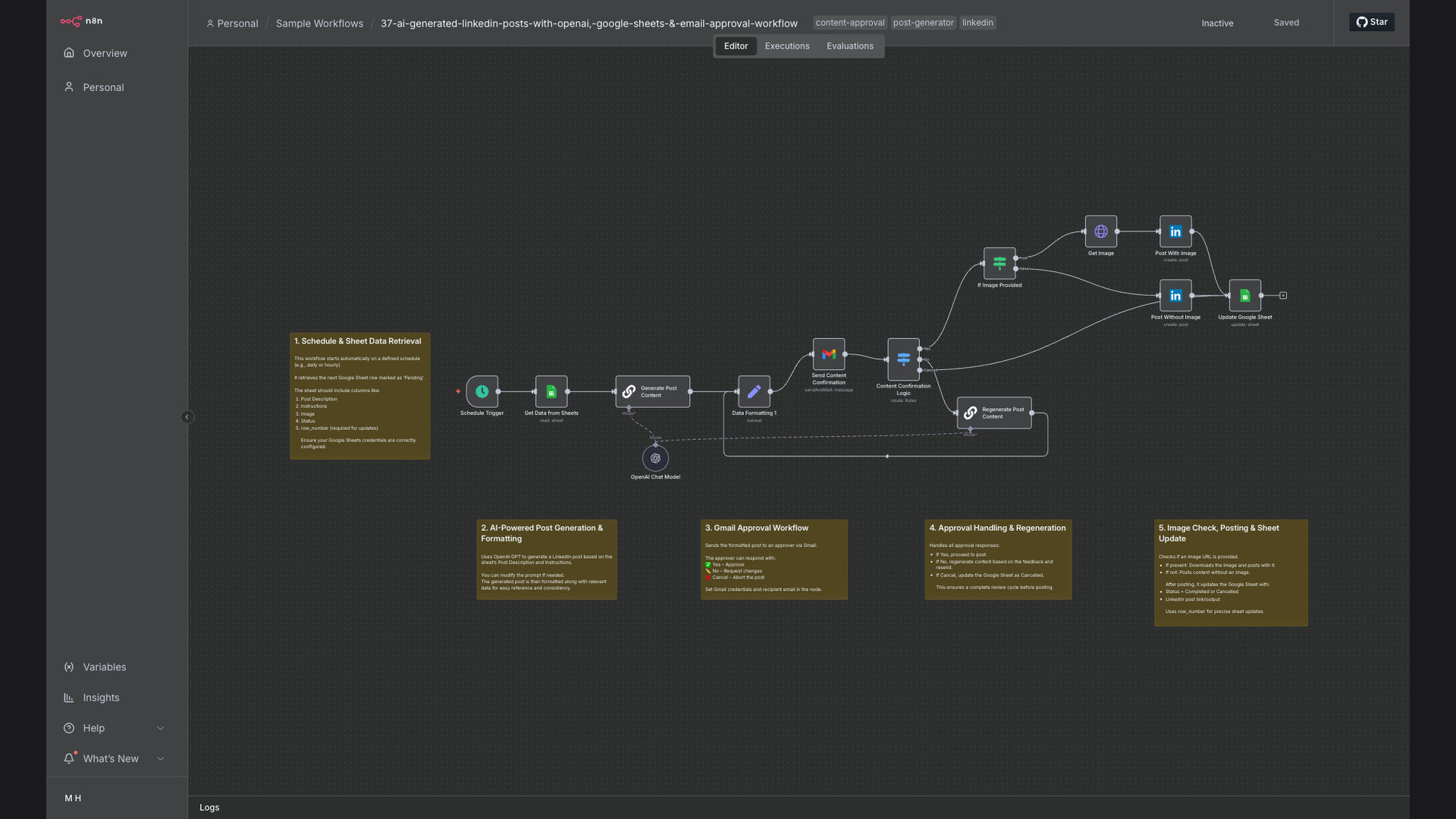
This workflow automates the creation and approval of LinkedIn posts, ensuring consistent and high-quality content. Here's a breakdown of how it works:
- Data Input: The workflow starts by reading data from a Google Sheets spreadsheet, which contains the topics, keywords, and any specific instructions for the LinkedIn posts.
- AI Content Generation: The data is then sent to OpenAI, which uses its advanced language models to generate engaging and relevant LinkedIn posts based on the provided input.
- Email Approval Request: The generated post is sent via Gmail to a designated approver, who reviews the content for accuracy, brand consistency, and overall quality.
- Feedback and Revisions: If the approver requests revisions, the feedback is sent back to OpenAI to refine the content. This iterative process ensures the final post meets the required standards.
- Approval Confirmation: Once the approver is satisfied, they confirm their approval via email, triggering the next step in the workflow.
- LinkedIn Post Scheduling: The approved post is then automatically scheduled for publication on LinkedIn, using the platform's native scheduling features or a third-party tool.
- Image Integration (Optional): The workflow can also integrate images with the posts, either by selecting from a pre-approved library or generating them using AI image generation tools.
- Performance Tracking: The system tracks the performance of each post, providing valuable insights into audience engagement and content effectiveness.
💡 Content Quality and Consistency: By using AI for content generation and incorporating a human review process, this workflow ensures that all LinkedIn posts are of high quality and consistent with the brand's voice and messaging.
What This System Does That [Manual Process] Can't
Speed and Efficiency
AI generates posts in seconds, significantly reducing the time spent on content creation compared to manual writing.
Consistent Quality
AI ensures a consistent tone and style across all posts, maintaining brand identity and messaging effectively.
Data-Driven Insights
The system tracks post performance, providing valuable data to optimize future content strategies and improve engagement.
Automated Scheduling
Posts are automatically scheduled for publication, ensuring a consistent posting schedule without manual intervention.
Streamlined Approval
The email approval process ensures that all content is reviewed and approved before publication, maintaining quality control.
Content Variety
AI can generate a wide range of content formats, from text-based posts to image captions, keeping the LinkedIn feed fresh and engaging.
Before vs. After: AI-Powered LinkedIn Content
Before: Marketing teams spent an average of 10 hours per week creating and scheduling LinkedIn posts, often resulting in inconsistent posting and missed opportunities.
After: With the automated workflow, teams now spend only 2 hours per week, freeing up time for strategic planning and audience engagement, while maintaining a consistent and high-quality LinkedIn presence.
Implementation: Live in 3 Weeks
- Planning and Setup: Define content goals, target audience, and brand guidelines. Set up Google Sheets with relevant data and configure OpenAI for content generation.
- Workflow Configuration: Configure the n8n workflow to connect Google Sheets, OpenAI, Gmail, and LinkedIn. Customize the workflow to match specific approval processes and scheduling preferences.
- Testing and Refinement: Test the workflow with sample data and refine the AI-generated content. Adjust the email approval process to ensure smooth communication and feedback.
- Training and Documentation: Train the marketing team on how to use the automated system and provide clear documentation for ongoing maintenance and troubleshooting.
- Deployment and Monitoring: Deploy the workflow and monitor its performance. Track key metrics, such as engagement rates and time savings, to optimize the system over time.
The Right Fit — and When It Isn't
This automated LinkedIn content creation workflow is ideal for marketing teams, content creators, and social media managers who want to streamline their content creation process and improve their LinkedIn presence. It's particularly well-suited for businesses that need to maintain a consistent posting schedule and ensure high-quality content.
However, this system may not be the right fit for businesses that require highly customized or niche content that AI cannot accurately generate. In such cases, a more manual approach may be necessary to ensure the content meets the specific requirements and resonates with the target audience.