
1. Bring Customers Back With Email Reminders
Cart abandonment emails remain one of the most effective tools for recovering lost sales. These automated sequences work by reminding customers about items they left in their cart, often with incentives to complete their purchase.
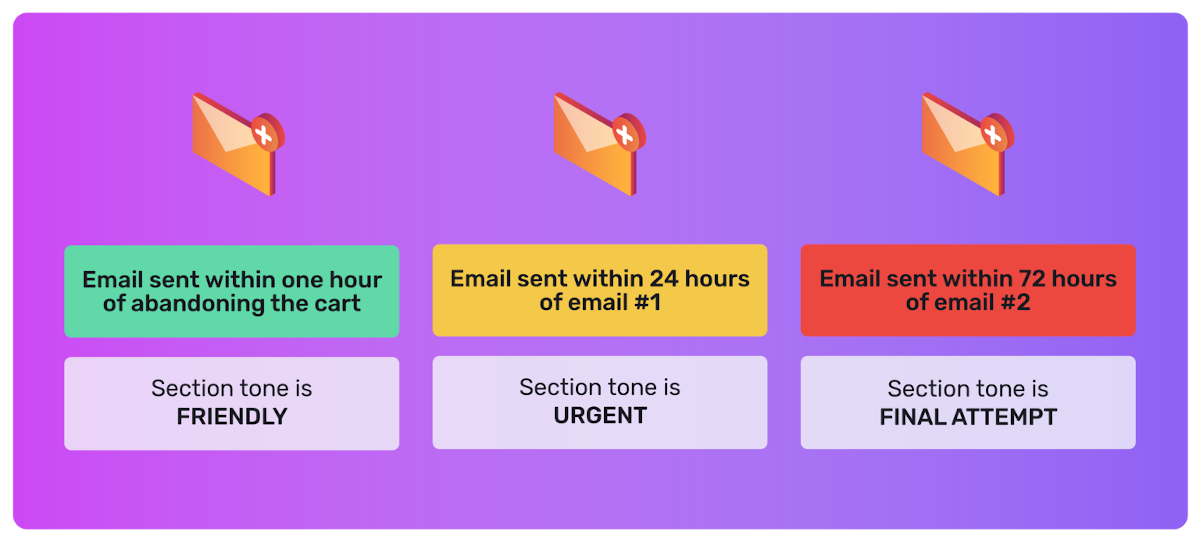
The mechanics involve tracking customer activity through your ecommerce platform's native tools or plugins. When a user reaches checkout but doesn't complete the purchase, the system triggers a timed email sequence. Typical sequences include:
- First email: Sent 1 hour after abandonment as a gentle reminder
- Second email: Delivered 24 hours later with social proof or urgency
- Third email: Sent 3-7 days later with an incentive like free shipping
Pro tip: Test different subject lines and send times. Early morning sends often outperform afternoon emails for open rates in most time zones.
2. Facebook Messenger Cart Recovery
While email remains effective, Facebook Messenger offers higher engagement rates for cart recovery. Messenger messages average 70% open rates compared to email's 40%, with click-through rates around 20% versus email's 5-10%.
The key advantage of Messenger is its conversational nature. Customers perceive these messages as more personal and immediate than email. Effective Messenger sequences should:
- Use friendly, conversational language
- Include product images and direct checkout links
- Offer assistance with any checkout questions
Platforms like Shopify offer plugins to automate Messenger sequences, while tools like ManyChat or MobileMonkey provide more advanced flow building. The critical requirement is ensuring you can respond quickly to any replies, as customers expect near-real-time responses in Messenger.
3. Re-engagement Surveys and Quizzes
Interactive content like surveys and quizzes provides a less sales-focused way to re-engage customers who abandoned carts. These tools serve multiple purposes:
First, they gather valuable feedback about why customers didn't complete purchases. Second, they keep your brand top-of-mind in a non-intrusive way. Third, they can include strategic calls-to-action that lead back to the cart.

Effective survey strategies include asking about specific concerns (shipping costs, product questions) and then providing answers or solutions that remove those barriers. The most successful implementations automatically route responses to appropriate teams for follow-up.
4. Facebook Retargeting Ads
Retargeting ads serve as powerful reminders for abandoned carts by showing customers the exact products they considered. This approach works because it meets shoppers where they already spend time - in their social media feeds.
The process requires four key steps:
- Install Facebook Pixel on your store
- Capture email addresses at checkout initiation
- Create a Custom Audience from abandoned carts
- Launch targeted ads with product images
Best practices include using dynamic product ads that automatically show abandoned items, testing different ad creatives, and setting frequency caps to avoid ad fatigue. The most effective campaigns combine retargeting ads with email and Messenger sequences for maximum impact.
5. Checkout Page Live Chat
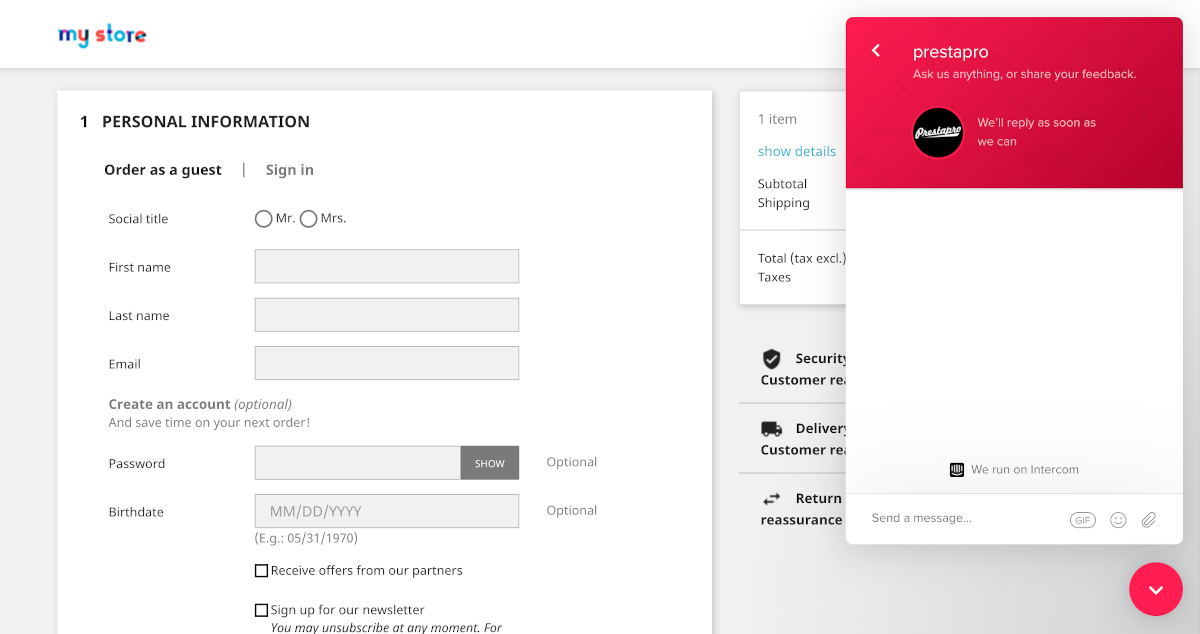
Live chat directly addresses one of the primary causes of cart abandonment - unanswered questions during checkout. Implementing chat on your checkout page provides immediate assistance when customers hesitate.
Effective live chat implementations:
- Use proactive triggers when users linger on checkout pages
- Offer multiple contact methods (chat, phone, email)
- Provide instant answers to common payment/shipping questions
Pro tip: Monitor chat response times closely. Research shows lead qualification odds drop 10x after just 5 minutes without a reply.
6. Monitor UX Analytics
Beyond these tactics, regularly analyzing user experience metrics helps identify and fix systemic checkout issues. Key areas to monitor include:
- Page load speed: Aim for under 2-second load times
- Form abandonment: Identify where in checkout users drop off
- Mobile performance: Ensure smooth experience on all devices
Tools like Google Analytics, Hotjar, and specialized ecommerce analytics platforms provide the data needed to optimize these elements. Regular testing and iteration based on data will compound the impact of your other cart recovery efforts.