
Why Typeform? Features, pricing, integrations
Online forms have been instrumental in helping businesses organize data since the early days of the internet. Like email, they're often underestimated despite their powerful capabilities for ecommerce operations including lead generation, client support, and customer onboarding.
Typeform stands out among form builders for three key reasons: it's a market leader with a novel approach to form design, offers robust customization options, and integrates easily with other apps through Make. The platform's conversational interface makes form completion feel more engaging than traditional form builders.
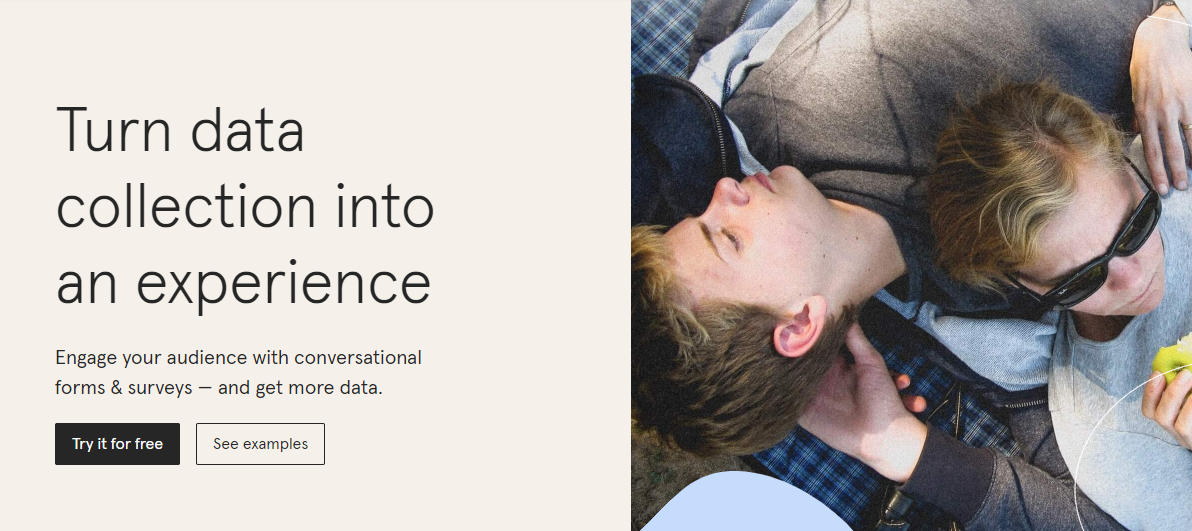
Among Typeform's most valuable features are Logic Jumps for conditional questions, extensive customization options, and native Stripe payment integration. Pricing starts at $35/month for basic plans up to $70/month for premium features - competitive with other enterprise form builders.
Pro tip: While Typeform doesn't offer as many native integrations as some competitors, its API and Make integration make it easy to connect with hundreds of other business apps.
7 ways to use Typeform for ecommerce optimization
Now let's explore seven practical ways Typeform can help optimize your ecommerce operations and customer experience.
1. Get creative with email marketing campaigns
Typeform transforms traditional email marketing by adding interactive, transactional elements. Unlike one-way promotional emails, Typeform-enabled campaigns create two-way conversations where customers can provide feedback or preferences in exchange for incentives.

For example, a clothing brand could offer discounts in exchange for style preferences. This approach combines three powerful elements: interactive exchange ("Tell us your thoughts"), transactional value ("Get 50% off"), and smooth user experience through Typeform's intuitive interface.
2. Make it easy for customers to provide feedback
Effective feedback collection is crucial for ecommerce improvement but often drains resources. Typeform helps streamline this through both passive (website-embedded) and active (triggered) feedback forms.
Pro tip: Automate feedback requests by triggering Typeform emails after purchases. This ensures every customer gets the opportunity to share their experience.
Active feedback loops through Typeform can be triggered by specific actions like purchases or account creation. The forms can be embedded in thank-you pages, confirmation emails, or as popups - all while maintaining a consistent, professional look that matches your brand.

3. Build buyer personas in record time
Accurate buyer personas require real customer data, not guesswork. Typeform's survey templates help gather this information efficiently through website embeds or email campaigns.
Offer incentives to encourage participation, but be mindful of asking overly personal questions that might deter responses. The transactional approach ("Complete this short survey and get 10% off") significantly boosts completion rates.

4. Bridge the gap between digital and physical sales
Typeform order forms provide a simple solution for brick-and-mortar stores to begin selling online. The forms can be integrated with payment processors and connected to fulfillment systems.
Key elements include clear calls-to-action, minimal required fields, and seamless payment integration. Orders can be automatically funneled to spreadsheets or inventory systems to streamline fulfillment.
5. Let users customize their orders
Modern consumers expect personalized shopping experiences. Typeform order forms enable extensive customization options including:
- Quantity selection
- Color/size preferences
- Packaging options
- Shipping methods
- Warranty selections
The conditional logic (Logic Jumps) ensures customers only see relevant options based on their previous answers, creating a streamlined experience.

6. Funnel data to where it belongs
Typeform responses can automatically feed into your preferred systems - whether that's Google Sheets, Airtable, your CRM, or task management tools like Trello.
Automated notifications ensure the right team members are alerted to new submissions. For order forms, this might trigger:
- Inventory updates
- Accounting entries
- Warehouse picking
- Shipping scheduling

7. Integrate payments into your Typeform forms
Typeform's verified Stripe integration allows you to embed payment processing directly into order forms. This creates a seamless checkout experience without redirecting customers to external payment pages.
The payment block appears as part of your form flow, typically at the end after product selection and customization options. Transactions are processed through Stripe with standard 2.9% + $0.30 fees per transaction.
Frequently Asked Questions
Common questions about optimizing ecommerce with Typeform
Typeform transforms email marketing by adding interactive, transactional elements that engage customers more effectively than traditional emails. The forms allow for two-way communication where customers can provide feedback or preferences in exchange for incentives like discounts.
This approach converts static promotional emails into dynamic conversations. Completion rates are significantly higher than traditional email links because the experience feels more personal and rewarding for the customer.
Typeform stands out with its Logic Jumps feature for conditional questions, seamless Stripe payment integration, and excellent customization options. The conversational interface leads to higher completion rates compared to traditional forms.
For ecommerce specifically, Typeform's ability to integrate with Make allows connection to virtually any ecommerce platform, CRM, or inventory system. This flexibility makes it ideal for businesses with complex workflows.
Typeform enables both passive feedback through website forms and active feedback via triggered popups or emails. The platform makes it easy to embed feedback requests at key touchpoints like post-purchase or account creation.
The forms can be configured to ask progressively deeper questions based on initial responses (using Logic Jumps), ensuring you gather meaningful insights without overwhelming customers with irrelevant questions.
Yes, Typeform offers survey templates specifically designed for gathering buyer persona data. These forms can be deployed via email or website embeds, with incentives to encourage participation and ensure accurate persona development.
The conditional logic allows you to tailor follow-up questions based on initial responses, creating a more natural conversation flow that yields deeper insights than traditional surveys.
Typeform order forms provide a simple solution for physical stores to start selling online. The forms integrate payment processing and can funnel orders directly to spreadsheets or inventory systems for fulfillment.
This approach eliminates the need for complex ecommerce platforms when starting out. Stores can begin taking online orders almost immediately while maintaining their existing inventory and fulfillment processes.
Typeform allows extensive product customization including quantity selection, packaging preferences, shipping options, and warranty choices. The forms adapt to show only relevant options based on previous answers.
For example, a furniture store could show fabric options only after a customer selects an upholstered item. This guided customization improves conversion rates by simplifying complex product configurations.
Our team specializes in creating tailored automation solutions that connect Typeform with your ecommerce platform, CRM, and other business systems. We can design workflows specific to your products, customers, and operational needs.
Whether you need automated order processing, customer feedback analysis, or personalized marketing triggers, we can build a system that saves you time while improving customer experience.