What Are AI Agents in Make?
AI Agents represent a paradigm shift in how automation is built within Make (formerly Integromat). Unlike traditional scenarios that require manual configuration of every step and decision point, AI Agents introduce reasoning capabilities that allow them to interpret goals described in natural language and dynamically determine how to achieve them.
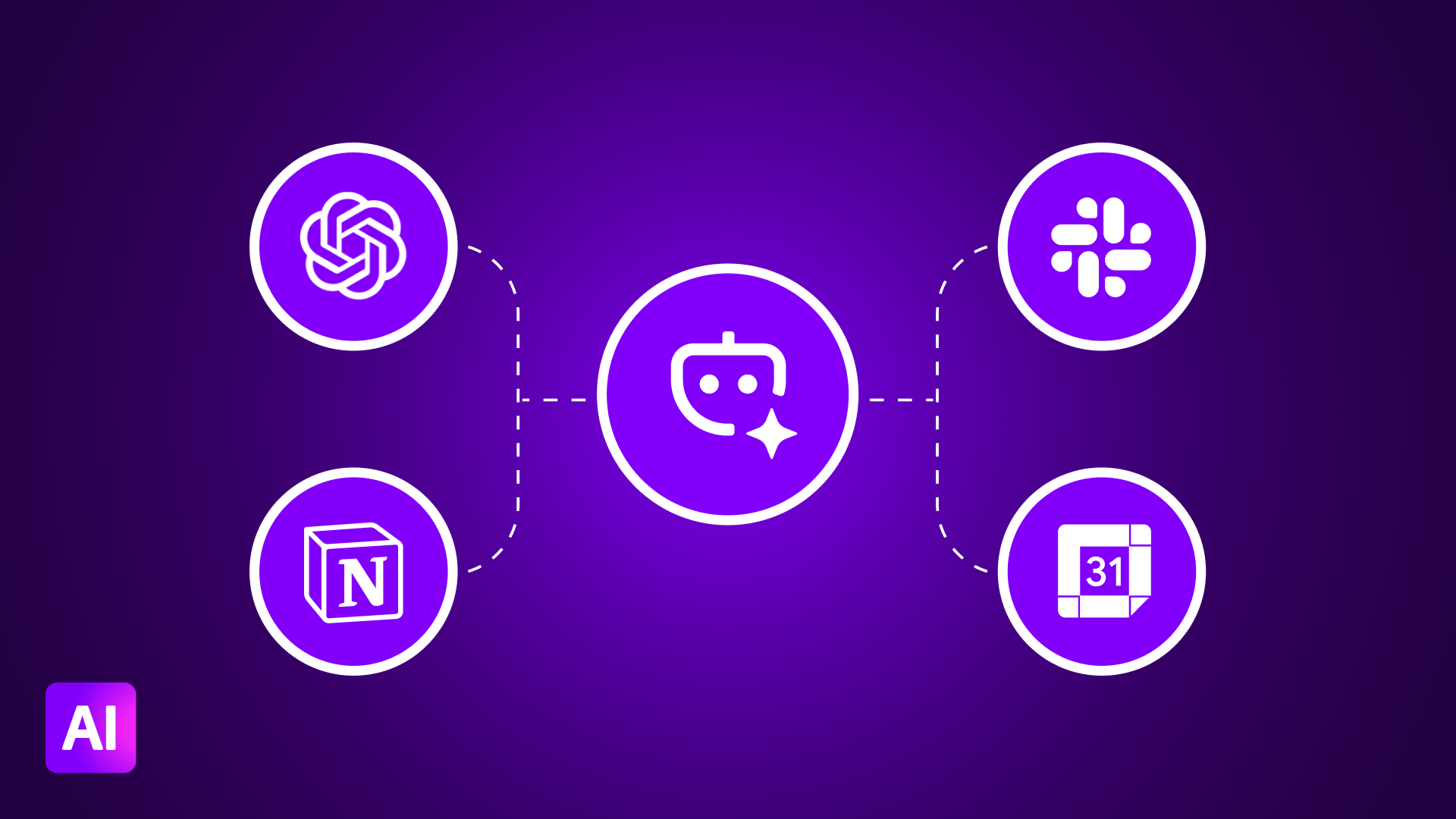
These intelligent operators sit within Make scenarios and can leverage the platform's 2,500+ app integrations as tools. They excel at handling unpredictable inputs (including those with spelling errors or ambiguous phrasing), determining which sub-scenarios or apps to utilize, and managing multi-step interactions that would require complex routing logic in traditional automation.
Pro tip: Think of AI Agents as skilled employees who understand your business processes - you give them objectives and the tools to accomplish them, and they figure out the specifics of how to get the job done.
Traditional vs Agentic Automation
Traditional automation in Make is deterministic - you define every possible path and decision point in advance. This approach works exceptionally well for structured, repetitive tasks with predictable inputs and outputs. However, as scenarios grow to handle more complex logic, they can become difficult to maintain and may struggle with edge cases not explicitly programmed.
Agentic automation flips this model by being goal-oriented rather than rule-based. Instead of programming every possible path, you describe what needs to be accomplished and provide the agent with available tools (sub-scenarios and apps). The agent then assesses the request, determines which tools to use, and handles the execution - including follow-up questions if information is incomplete.

Side-by-Side Comparison Demo
To illustrate the differences, let's examine a contact management use case implemented both ways. The task involves receiving Telegram messages to add, update, delete, or search contacts, with additional functionality like filtering results or exporting to CSV.
In the traditional approach, this requires building separate sub-scenarios for each operation, manual routing logic with AI intent detection, and explicit programming of follow-up questions. While effective for basic commands, this implementation struggles with complex requests like "list contacts in China and send a CSV" unless every possible variation is explicitly coded.

The Agentic Implementation
The agentic version uses the same core sub-scenarios but replaces the manual routing with an AI Agent module. Each sub-scenario is given a simple description of its purpose, and the agent handles all interpretation, routing, and follow-up automatically. This approach successfully handles complex, unanticipated requests by understanding the intent and combining available tools appropriately.
Key advantages include reduced scenario complexity (no need to anticipate every possible input variation), natural language understanding, and the ability to combine operations flexibly. The agent can even handle requests that weren't explicitly programmed, like filtering contacts by location before exporting.
Implementation Guide
Implementing AI Agents in your Make workflows follows a straightforward process:
- Enable AI Agents: Ensure you're on a paid Make plan with AI Agents enabled
- Create Tools: Build sub-scenarios for core operations with clear descriptive names
- Add Agent Module: Insert an AI Agent module in your main scenario
- Configure Tools: Assign sub-scenarios as tools with brief descriptions of their functions
- Test and Refine: Trigger with sample inputs and refine tool descriptions as needed
Pro tip: Start with simple, well-defined tools and gradually expand complexity. Clear, concise tool descriptions significantly improve agent performance.
Best Practices
To maximize the effectiveness of your AI Agents:
- Keep tool descriptions concise but comprehensive - include key parameters and limitations
- Start with a narrow scope and expand functionality gradually
- Monitor performance and refine based on actual usage patterns
- Combine agentic and traditional approaches where appropriate
- Implement clear error handling and fallback procedures
Remember that AI Agents are still in active development. While already powerful, they work best when given clear boundaries and well-defined tools. The technology continues to improve rapidly, with Make regularly adding new capabilities and refinements based on user feedback.