
What This Workflow Does
This powerful automation solution allows businesses to effortlessly localize and distribute their content across multiple global markets. It tackles the complex challenge of managing multilingual websites and blogs by integrating AI-powered translation, SEO optimization, and social media distribution into a seamless workflow. Instead of costly manual processes or unreliable dynamic translation plugins, this system ensures high-quality, culturally relevant content reaches your target audiences efficiently.
For fast-growing brands aiming to expand their reach, this workflow is a game-changer. It eliminates the headaches associated with maintaining multiple localized sites, ensuring that each version is not only translated accurately but also optimized for local search engines and promoted effectively on relevant social media channels. The result is a significant reduction in operational costs and complexity, allowing businesses to focus on growth rather than logistical hurdles.
How It Works
The localization system is built using three interconnected Make.com scenarios, each handling a specific part of the content lifecycle. Together, they create an end-to-end automated process from content creation to global distribution.
Step 1: Automated Translation and CMS Integration
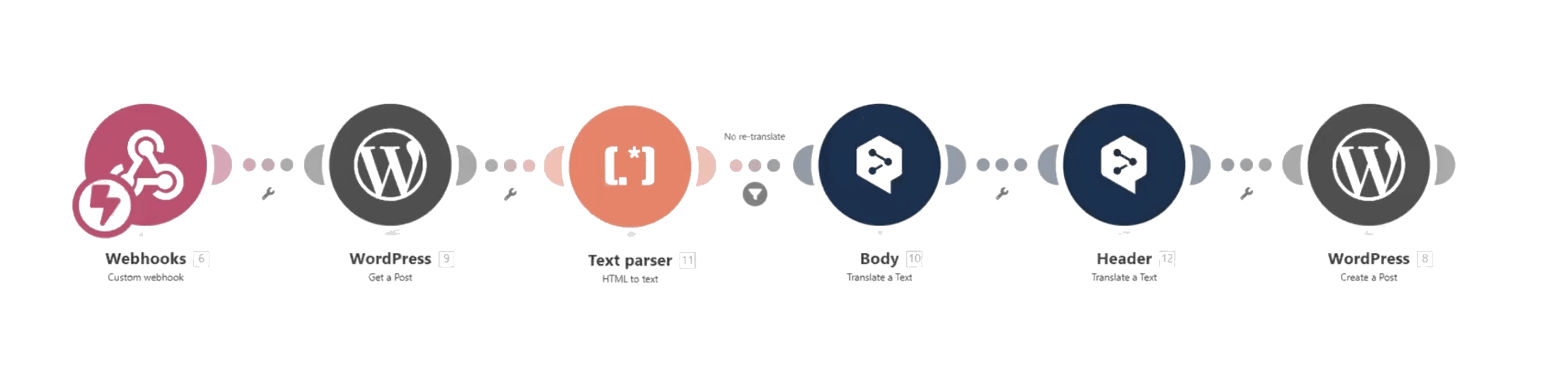
The core of this workflow begins when new content is published on your primary website. A custom webhook triggers a Make.com scenario, which then extracts the content and its metadata. The HTML is stripped to prepare the text for translation, and then an AI translation service like DeepL translates the title and body into all target languages. Finally, Make.com publishes this translated content to each respective localized CMS instance, ensuring proper tagging and publication status. Email notifications can also be configured to alert relevant teams.
Step 2: SEO Optimization and Indexing
To ensure your localized content ranks well in different markets, this scenario focuses on comprehensive SEO. It automatically generates and translates all vital metadata, including page titles, URL slugs, and alt tags for each translated post. Unique XML sitemaps are created for every language, and dynamic hreflang tags are generated to guide search engines to the correct language version. The new URLs are then automatically submitted to search engines like Google and Bing for rapid indexing, maximizing visibility.
Step 3: Social Media Distribution
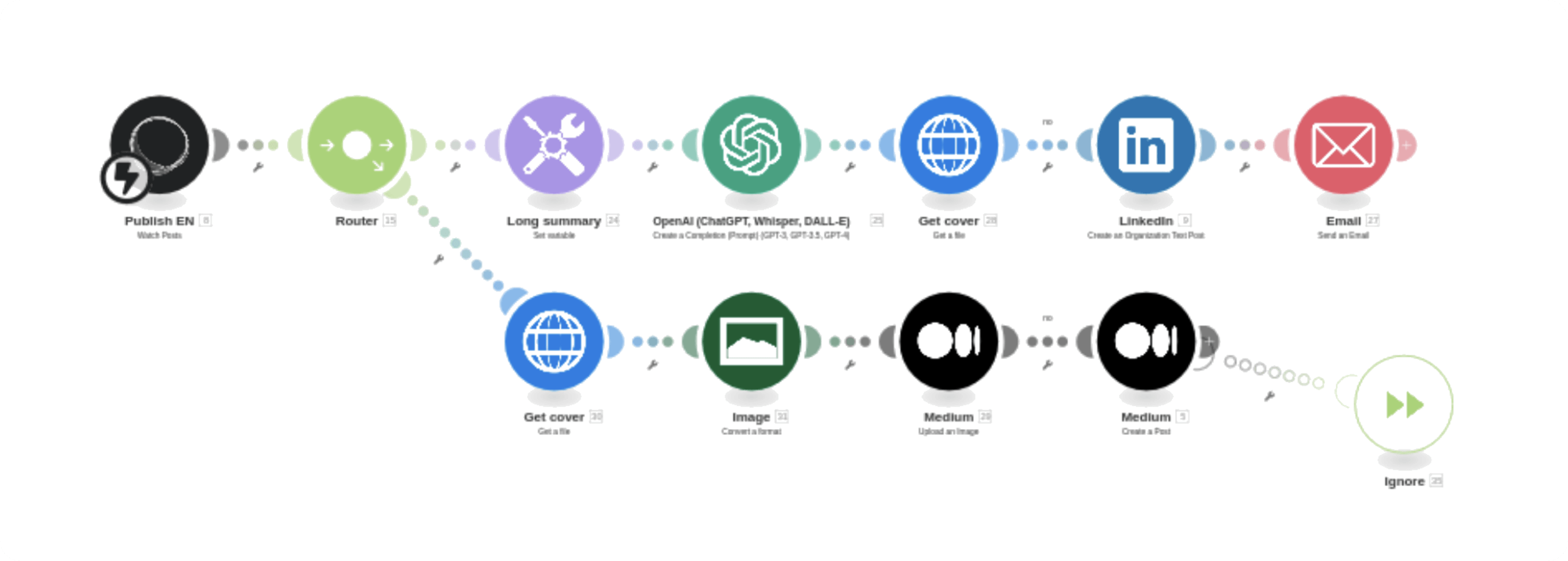
Once localized content is live and optimized, the final scenario handles its promotion across social media. An AI model, such as Claude AI, is used to rewrite post summaries, tailoring the tone and style for different social media platforms and audiences. This ensures that each social media post is engaging and relevant to its specific channel. The language-appropriate content is then automatically posted to your various social media accounts, expanding your content's reach and driving traffic back to your localized sites.
Who This Is For
This workflow is ideal for any business looking to expand its global footprint and engage with international audiences more effectively. It's particularly beneficial for:
- E-commerce businesses: To present product descriptions and marketing content in local languages, increasing conversion rates in new markets.
- SaaS companies: To localize product documentation, blog posts, and support articles, providing a better user experience for global customers.
- Media and publishing houses: To rapidly translate and distribute news articles, blog content, and other publications to diverse linguistic groups.
- Marketing agencies: To offer advanced localization services to their clients, ensuring campaigns resonate globally without manual overhead.
- Any organization with a global audience: That needs to maintain multiple language versions of their website or blog efficiently and cost-effectively.
If you're struggling with slow page speeds, poor translation quality, or SEO issues on your localized sites, or if you want to enter new markets without significantly increasing your operational budget, this automation is designed for you.
What You'll Need
To implement this content localization and distribution workflow, you will need the following:
- Make.com Account: The central platform for building and managing your automation scenarios.
- Content Management System (CMS) with an API: Such as WordPress, Ghost CMS, or any other CMS that allows programmatic access for publishing and retrieving content.
- AI Translation Service: An API-enabled translation tool like DeepL, Google Translate, or similar, for high-quality machine translation.
- Large Language Model (LLM) Service: An AI model like Claude AI or OpenAI's ChatGPT for rewriting content summaries and adapting tone for social media.
- Search Engine Accounts: Access to Google Search Console and Bing Webmaster Tools (or IndexNow API) for submitting new content for indexing.
- Social Media Accounts: Active accounts on platforms like X (formerly Twitter), Facebook, LinkedIn, etc., where you plan to distribute content.
- Custom Webhooks (Optional but Recommended): For triggering scenarios based on specific events in your CMS.
Quick Setup Guide
Setting up this powerful content localization and distribution workflow involves a few key steps:
- Connect Your CMS: In Make.com, establish a connection to your CMS using its API. Configure a webhook or a scheduled module to detect new content publications.
- Integrate AI Translation: Add modules for your chosen AI translation service (e.g., DeepL). Map the content fields from your CMS to the translation service to translate titles and body text.
- Configure CMS Publishing: Set up modules to publish the translated content back to your localized CMS instances. Ensure proper language tagging and metadata mapping for each version.
- Set Up SEO Modules: Integrate modules for generating and updating SEO elements like URL slugs, alt tags, and sitemaps. Connect to Google Search Console and Bing IndexNow to automatically submit new pages for indexing.
- Add AI for Social Media: Incorporate an LLM (e.g., Claude AI) to rewrite content summaries for various social media platforms. Create prompts to guide the AI in generating platform-specific copy.
- Automate Social Posting: Connect your social media accounts (X, Facebook, LinkedIn, etc.) and configure modules to automatically post the AI-generated summaries along with links to the localized content.
- Test and Refine: Run test scenarios with new content to ensure all steps, from translation to distribution, function correctly. Monitor for any errors and refine mappings or AI prompts as needed.
Pro tip: Start with one target language to perfect the workflow before scaling to multiple languages. This allows for easier troubleshooting and optimization of AI prompts and data mappings.
Key Benefits
Implementing this automated content localization and distribution workflow brings numerous advantages to your business:
80% Cost Reduction: Significantly cut down on expenses associated with manual translation, external agencies, and traditional localization tools, reallocating resources to other growth areas.
Faster Time-to-Market: Accelerate the process of making your content available in new languages, allowing you to enter and capture new markets much more quickly than competitors.
Improved SEO Performance: Ensure your localized content is fully optimized for regional search engines, leading to higher rankings, increased organic traffic, and better visibility in target markets.
Enhanced Content Quality: Leverage advanced AI for context-aware translations and culturally relevant content adaptations, ensuring your message resonates authentically with diverse audiences.
Scalable Global Expansion: Easily scale your localization efforts to any number of languages and regions without increasing manual workload, supporting rapid and efficient international growth.
Consistent Brand Messaging: Maintain brand voice and messaging consistency across all localized platforms through controlled AI prompts and automated publishing, strengthening your global brand identity.