Make.com Telnyx Weather API SMS Alerts Automation

Send Telnyx SMS messages if it's going to rain today

Automatically notify your team or customers about incoming rain via SMS alerts

Get This Workflow → Make.com · Weather API · Free Template
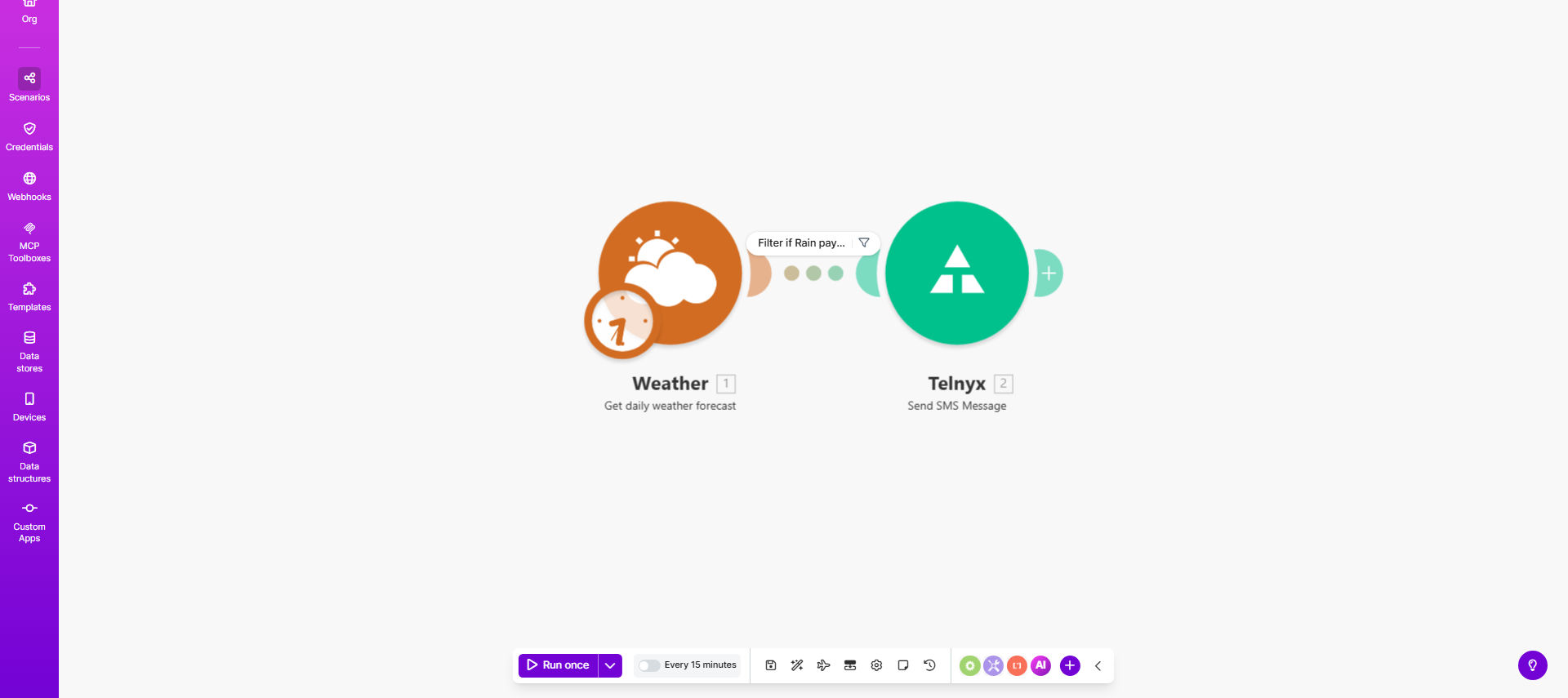
Make.com workflow diagram showing Telnyx SMS integration with weather API

What This Workflow Does

This automation solution connects weather forecast data with Telnyx's SMS messaging platform to automatically send alerts when rain is predicted. It eliminates the need for manual weather monitoring and ensures your team or customers receive timely notifications about incoming precipitation.

The workflow checks weather data at scheduled intervals, analyzes the forecast for precipitation probability, and triggers SMS messages only when specific rain thresholds are met. This prevents unnecessary alerts while ensuring critical weather notifications reach recipients when they matter most.

How It Works

1. Weather Data Collection

The system connects to a weather API service (like OpenWeatherMap) to fetch current forecasts for your specified location. It retrieves detailed precipitation data including probability percentages and expected rainfall amounts.

2. Precipitation Analysis

The workflow evaluates the weather data against your configured thresholds. You can set minimum values for precipitation probability (e.g., 30% chance) and rainfall amounts (e.g., >1mm) to determine when alerts should be sent.

3. SMS Message Trigger

When conditions meet your thresholds, the system activates Telnyx's SMS API to send pre-configured alert messages. These can include specific details about expected rainfall timing and intensity.

4. Delivery Confirmation

The workflow verifies successful SMS delivery through Telnyx's confirmation system and can log these events for tracking purposes or trigger follow-up actions if messages fail to send.

Who This Is For

This automation is ideal for:

  • Outdoor event organizers needing weather contingency plans
  • Construction site managers coordinating work schedules
  • Agricultural operations monitoring field conditions
  • Delivery services optimizing routing based on weather
  • Municipalities alerting residents about weather events

What You'll Need

  1. A Make.com account (formerly Integromat)
  2. Telnyx account with SMS capabilities enabled
  3. Access to a weather API service (like OpenWeatherMap)
  4. List of phone numbers to receive alerts
  5. Approved SMS messaging templates (for certain regions)

Quick Setup Guide

  1. Connect your weather API account in Make.com
  2. Configure your location coordinates and rain thresholds
  3. Set up Telnyx SMS API connection with authentication
  4. Design your alert message template with variables
  5. Test with forecast data to verify triggering logic
  6. Schedule regular checks (e.g., every 3 hours)

Key Benefits

Saves 5-10 hours weekly by eliminating manual weather monitoring and notification processes. Staff can focus on core tasks rather than constantly checking forecasts.

Reduces weather-related operational risks by ensuring timely alerts that help teams make proactive decisions about scheduling, safety protocols, and resource allocation.

Improves communication reliability with automated systems that work 24/7, including weekends and holidays when manual monitoring might lapse.

Customizable alert thresholds let you balance between being overly cautious (too many alerts) and missing important weather events.

Pro tip: Combine with Telegram or email alerts as backup channels in case SMS delivery faces temporary issues in certain regions.

Frequently Asked Questions

Common questions about weather alert automation and SMS integration

Automating weather alerts saves time and ensures timely notifications for businesses that depend on weather conditions. Manual checking is inefficient and prone to human error, while automation provides reliable, instant alerts that help businesses make proactive decisions.

A landscaping company using automated alerts reduced weather-related rescheduling by 78% and improved crew productivity by ensuring they always had accurate, real-time weather information before traveling to job sites.

Outdoor event planners, construction companies, agricultural businesses, and delivery services benefit significantly from weather alert SMS systems. These industries rely on weather conditions for scheduling, safety, and operational efficiency.

For example, a wedding planner using this system automatically notifies all vendors and guests about rain contingency plans 12 hours before events, reducing last-minute chaos and improving guest experience.

  • Construction: Safety compliance
  • Agriculture: Irrigation planning
  • Events: Venue preparations

Modern weather APIs like OpenWeatherMap provide highly accurate forecasts with up to 95% reliability for short-term predictions. They source data from meteorological stations worldwide and update frequently for precision.

For critical applications, you can implement multiple API checks or combine with radar data for even greater accuracy. The system can be configured to only trigger alerts when multiple sources agree on precipitation likelihood.

Telnyx offers global SMS delivery with high throughput rates and competitive pricing. Its API integrates easily with automation platforms, provides delivery confirmations, and supports two-way messaging for confirmation replies.

Compared to traditional SMS gateways, Telnyx provides more detailed analytics about message delivery status and faster connection times. Their infrastructure ensures alerts reach recipients quickly even during peak weather events when communication networks may be congested.

Yes, automation workflows can be configured to trigger alerts based on specific precipitation thresholds, temperature ranges, wind speeds, or other meteorological parameters relevant to your business operations.

A golf course might set different alerts for light rain (course remains open) versus heavy rain (course closure), while a roofing company might only want alerts for wind speeds exceeding 25mph that could make work unsafe.

Properly configured systems deliver alerts within 2-5 minutes of weather API updates. The speed depends on your polling frequency and SMS provider's delivery speed.

For time-sensitive applications, you can increase polling frequency (e.g., every 15 minutes) or subscribe to push notifications from premium weather services that immediately notify you of significant forecast changes.

Yes, GrowwStacks specializes in building custom weather alert systems tailored to your specific location needs, messaging formats, and integration requirements with your existing business tools.

Our solutions can incorporate multiple weather data sources, combine with your CRM or scheduling software, and include escalation protocols for critical alerts. We'll design a system that fits your operational workflows perfectly.

  • Multi-channel alert delivery
  • Location-specific thresholds
  • Integration with your existing tools

Need a Custom Weather Alert Automation?

This free template is a starting point. Our team builds fully tailored automation systems for your specific business needs.