Webhooks Airtable Data Automation Make.com

Send Data from Webhook to Airtable

Automate real-time data transfer between platforms without coding

Get This Workflow Make.com · Webhooks · Free Template
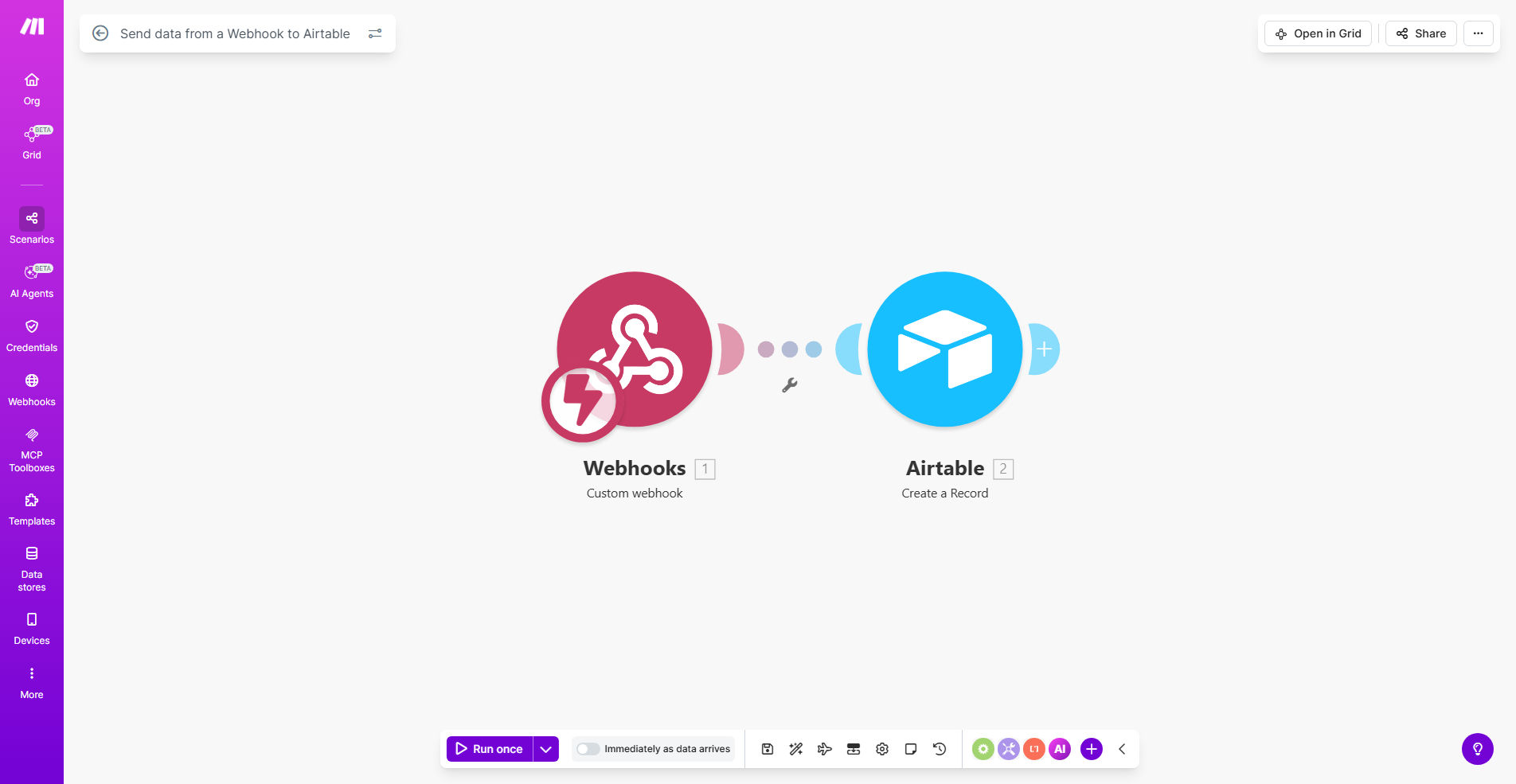
Webhook to Airtable workflow diagram showing data flow

What This Workflow Does

This automation eliminates manual data entry by instantly transferring information from any webhook-enabled system directly into your Airtable base. Whether you're receiving form submissions, payment notifications, CRM updates, or IoT device data, this workflow ensures your records stay current without any manual intervention.

The solution solves the common problem of data silos between platforms. Instead of wasting time copying and pasting information between systems, your team gets automatic updates in Airtable the moment new data becomes available from connected services.

How It Works

1. Webhook Trigger

The workflow starts when an external system sends data to your unique webhook URL. This could be triggered by events like new form submissions, completed purchases, or updated CRM records.

2. Data Parsing

Make.com receives the webhook payload and extracts the relevant data fields. The workflow can handle JSON, XML, or form-encoded data formats automatically.

3. Field Mapping

The system matches incoming data fields with your Airtable column structure, ensuring information lands in the correct tables and fields without manual mapping.

4. Airtable Update

The workflow creates new records or updates existing ones in your specified Airtable base, maintaining data integrity with automatic type conversion and validation.

Pro tip: Add a filter step before the Airtable update to prevent duplicate records by checking for existing entries with matching unique identifiers.

Who This Is For

This workflow benefits any business using Airtable as their central database that needs to:

  • Capture form submissions from tools like Typeform or Jotform
  • Sync customer data from CRMs like HubSpot or Salesforce
  • Track e-commerce orders from Shopify or WooCommerce
  • Monitor IoT device data or application logs
  • Centralize data from multiple sources for reporting

What You'll Need

  1. An active Make.com account (free plan available)
  2. An Airtable base with appropriate table structure
  3. A webhook-enabled system to send data (most modern SaaS platforms support this)
  4. Basic understanding of your data structure

Quick Setup Guide

  1. Clone the template in your Make.com account
  2. Connect your Airtable account and select the target base
  3. Copy your unique webhook URL from the scenario
  4. Configure the sending system to post data to your webhook
  5. Map incoming data fields to your Airtable columns
  6. Test with sample data and activate the workflow

Key Benefits

Eliminate manual data entry - Save 5-15 hours per week by automating information transfer between systems instead of copying/pasting data.

Real-time updates - Get information in Airtable within seconds of the triggering event, rather than waiting for batch imports or manual refreshes.

Reduce errors - Automated data transfer eliminates human mistakes that occur during manual data entry.

Scalable solution - Handle thousands of records per day without additional staff time or resources.

Centralized data - Bring information from multiple sources into one organized Airtable base for better visibility and reporting.

Frequently Asked Questions

Common questions about webhook automation and Airtable integration

Webhooks eliminate manual data entry by automatically sending information from any connected system directly to your Airtable base. This saves hours of administrative work while ensuring your records are always up-to-date with real-time information from other platforms.

For example, an e-commerce business can automatically add new orders to their Airtable inventory system the moment a purchase is made, triggering fulfillment workflows without delay.

You can send virtually any structured data including customer information, order details, survey responses, form submissions, payment notifications, and IoT device data. The workflow maps incoming data to your Airtable fields automatically.

Common use cases include syncing contact information from CRMs, tracking support tickets from help desks, and logging sensor readings from connected devices.

Webhook integrations are highly secure when properly configured. Make.com supports HTTPS encryption, signature verification, and IP whitelisting. You can also implement additional validation steps in your workflow to ensure only authorized data enters your Airtable.

For sensitive data, we recommend adding steps to anonymize or redact information before it reaches your base, maintaining compliance with privacy regulations.

Yes, Make.com's visual workflow builder lets you add data transformation steps like formatting dates, splitting text, calculating values, or filtering records before they reach Airtable. This ensures clean, standardized data in your base.

For instance, you could convert timestamps to your local timezone, extract keywords from text fields, or calculate derived values like profit margins before the data enters Airtable.

Make.com automatically retries failed operations with exponential backoff. If Airtable is temporarily unavailable, your workflow will queue the data and process it once connectivity is restored, ensuring no data loss.

The system maintains a buffer of pending operations and can handle service interruptions of several hours without missing updates.

Webhooks are event-driven (push data when something happens) while APIs are request-driven (pull data when needed). Webhooks provide faster real-time updates with less overhead than polling APIs, making them ideal for time-sensitive workflows.

APIs are better for retrieving historical data or complex queries, while webhooks excel at immediate notification of changes. Many systems use both approaches complementarily.

Yes, GrowwStacks specializes in building tailored webhook integrations that connect Airtable with your specific business systems. Our solutions include custom data mapping, error handling, and workflow optimization for your unique requirements.

We've helped clients automate complex processes like syncing inventory across multiple warehouses, processing customer feedback at scale, and integrating proprietary IoT devices with their operations dashboards.

  • Custom field mapping for your data structure
  • Advanced error handling and alerts
  • Performance optimization for high-volume workflows

Need a Custom Webhook Automation?

This free template is a starting point. Our team builds fully tailored automation systems for your specific business needs.