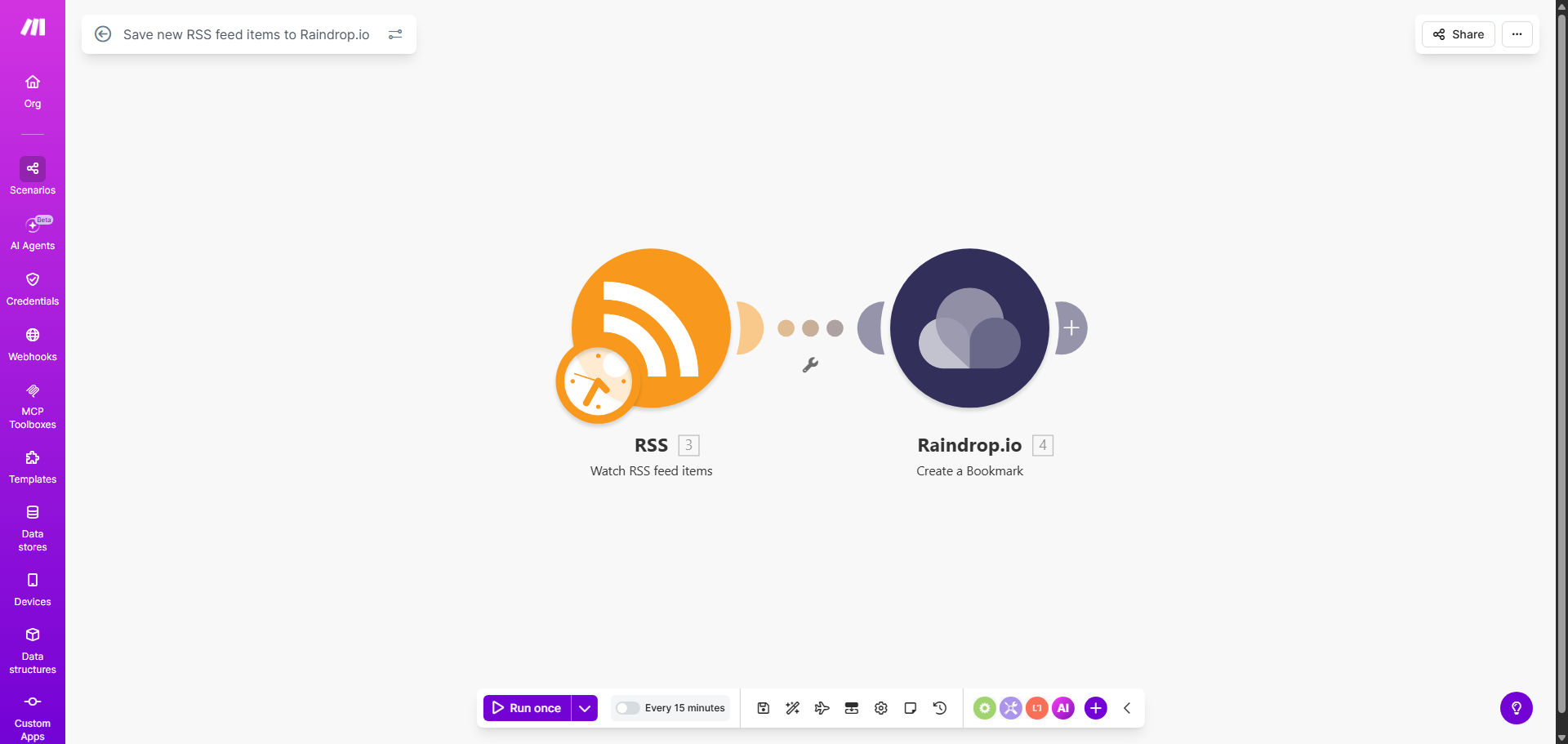
What This Workflow Does
For content curators, researchers, and avid readers, manually checking RSS feeds and saving interesting articles is a repetitive, time-consuming task. It's easy to miss important updates or let valuable content slip through the cracks, leading to fragmented knowledge and lost opportunities.
This automated workflow solves that by acting as your personal research assistant. It continuously monitors your specified RSS feeds and, the moment a new item is published, it captures the title, link, description, and publication date, then seamlessly adds it as a bookmark to your chosen Raindrop.io collection. This creates a centralized, organized, and searchable archive of everything you want to read or reference later, without you lifting a finger.
How It Works
The automation runs on a schedule or trigger, connecting two powerful tools to handle the entire process.
Step 1: Monitoring the RSS Feed
The workflow begins by polling your chosen RSS feed URL at regular intervals you define (e.g., every hour). Make.com's RSS module checks for new items since the last run. It identifies new posts based on their unique GUID or publication date.
Step 2: Processing the Feed Data
Each new item's data is extracted, including the article title, direct URL, a snippet or full description, the author's name, and the publish date. This data is formatted and prepared to be sent to Raindrop.io.
Pro tip: Use this step to add filters. For example, you can set a rule to only save items that contain specific keywords relevant to your project, ensuring your Raindrop.io collection stays focused.
Step 3: Creating the Raindrop.io Bookmark
The workflow then uses the Raindrop.io API to create a new bookmark in your specified collection. It passes the article title as the bookmark name, the URL as the link, and the description as notes. You can pre-configure tags and other metadata, making your saved content instantly organized.
Who This Is For
This automation is a game-changer for professionals and enthusiasts who rely on curated information. It's perfect for market researchers tracking competitor blogs, content marketers gathering inspiration, academics following journal publications, developers watching tech news, and anyone who wants to build a personal knowledge base without manual effort. If you regularly find yourself copying links to read later, this workflow is for you.
What You'll Need
- A Make.com account (free tier available).
- A Raindrop.io account (free or paid).
- Your Raindrop.io API token, available in your account settings.
- The RSS feed URL(s) of the websites, blogs, or publications you want to monitor.
- The ID of the Raindrop.io collection where you want bookmarks saved.
Quick Setup Guide
You can have this automation running in under 10 minutes.
- Clone the template: Click "Get This Workflow" to open the template in your Make.com account and create a copy.
- Connect Raindrop.io: In the Raindrop.io module, add a new connection using your API token.
- Configure the RSS trigger: Paste your RSS feed URL into the "Watch RSS Feed Items" module and set your preferred polling schedule.
- Set the destination: In the "Create a Bookmark" module, select your target Raindrop.io collection. You can also set default tags here.
- Test and activate: Run the scenario once to test. Check Raindrop.io to confirm a bookmark was created correctly, then turn the scenario on.
Key Benefits
Save 2–5 hours per week by eliminating the manual process of checking feeds and saving bookmarks. The automation works 24/7, even when you're offline.
Never miss an important update from your critical sources. The instant an item is published, it's captured and archived, creating a reliable historical record.
Build a searchable, organized knowledge base in Raindrop.io. With automatic tagging and collection sorting, finding any saved article later takes seconds, not minutes.
Scale your curation effortlessly. Easily add more RSS feeds to the same workflow. Monitor dozens of sources and have them all funnel into neatly organized collections.
Improve focus and reduce digital clutter. By automating the capture, you can schedule dedicated time to review your curated collection, leading to more focused reading and analysis.