What This Workflow Does
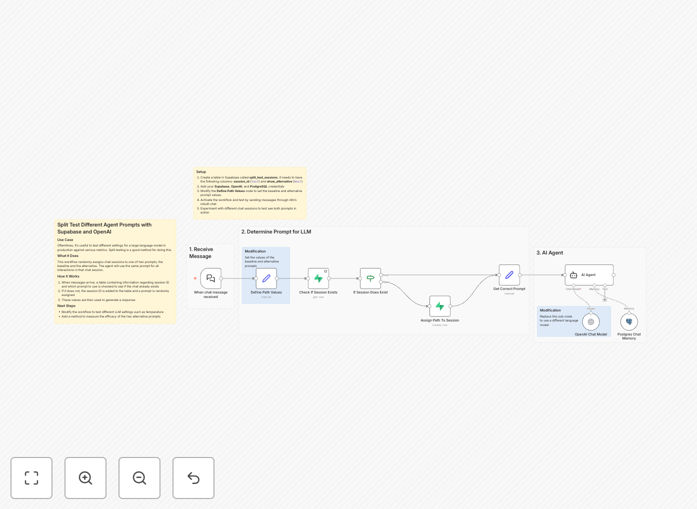
This workflow solves the challenge of optimizing AI chatbot responses through systematic prompt testing. Many businesses deploy AI assistants with generic prompts, missing opportunities to improve engagement, conversions, or customer satisfaction. Without proper testing, you might never know if small changes to your prompts could yield significant improvements.
The template creates a framework for comparing different prompt variations with your OpenAI GPT-4o model. It routes user queries to alternate prompt versions, collects response data in Supabase, and helps you analyze which versions perform best against your key metrics. This removes the guesswork from prompt engineering and provides data-driven insights.
How It Works
1. Prompt Variation Setup
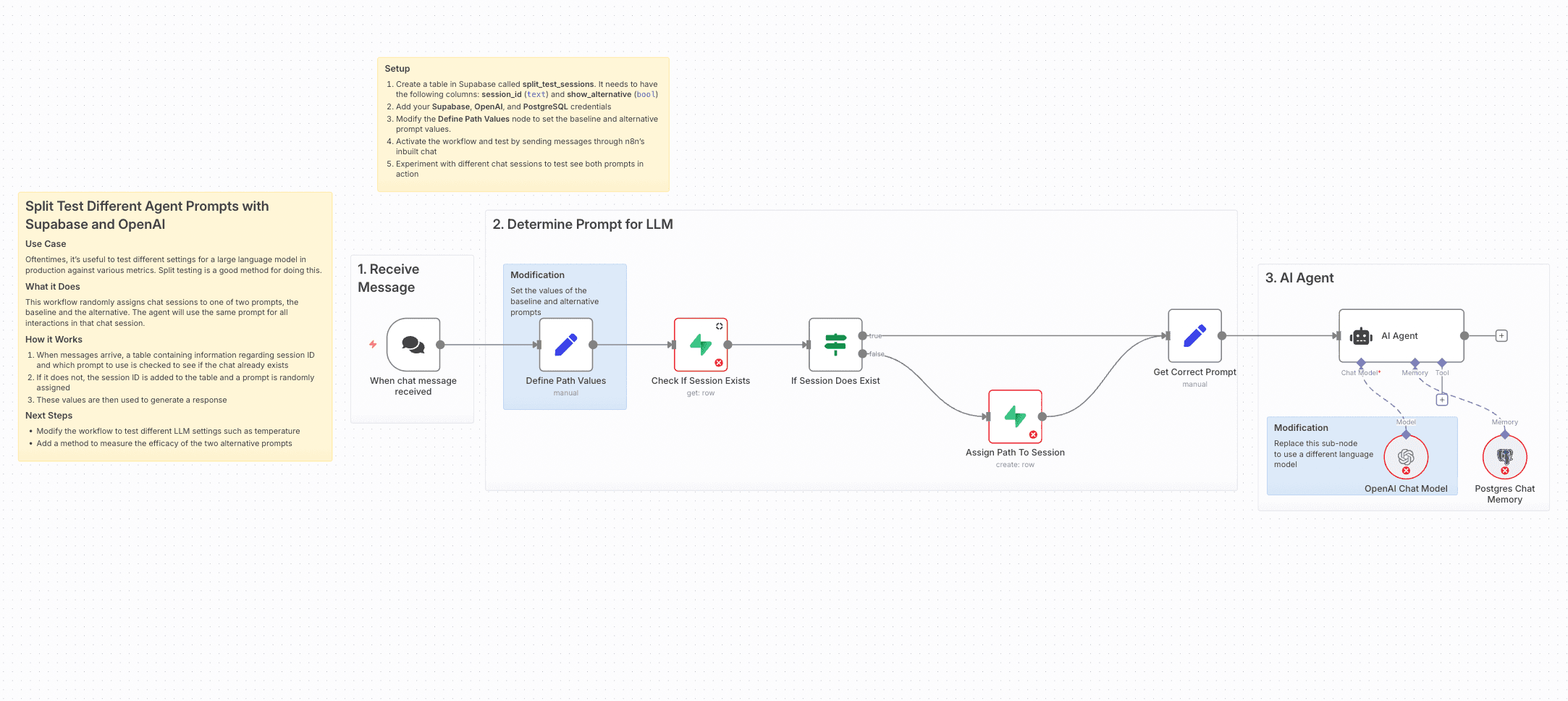
The workflow begins by loading your different prompt variations from Supabase. These could include different phrasings, tone adjustments, or structural changes you want to test. Each variation is tagged and version-controlled for accurate tracking.
2. User Query Routing
When a user submits a query, the Langchain Agent routes it to different prompt versions according to your testing configuration. This ensures fair distribution and prevents bias in your test results.
3. Response Generation & Collection
The selected prompt variation is sent to OpenAI GPT-4o along with the user query. The AI's response is captured along with metadata about which prompt version generated it, then stored in Supabase for analysis.
4. Performance Analysis
The workflow includes components to help analyze response quality, user engagement metrics, and other KPIs you define. This data helps determine which prompt versions deliver the best results for your specific use case.
Pro tip: Start with testing fundamental prompt structures before optimizing minor wording changes. The biggest improvements often come from structural adjustments rather than synonyms.
Who This Is For
This workflow is ideal for product teams, growth marketers, and customer support leaders using AI chatbots. E-commerce businesses can test product recommendation prompts. SaaS companies can optimize onboarding assistant responses. Support teams can improve resolution rates through better prompt engineering.
Technical teams will appreciate the modular design that allows for customization, while non-technical users benefit from the template's ready-to-use structure. Anyone serious about maximizing their AI chatbot's effectiveness needs this systematic testing approach.
What You'll Need
- An n8n instance (cloud or self-hosted)
- Supabase account with database setup
- OpenAI API key with GPT-4o access
- Langchain Agent configured for your use case
- Basic understanding of prompt engineering principles
Quick Setup Guide
- Download the JSON template file
- Import into your n8n instance
- Configure your Supabase connection details
- Set up your OpenAI API credentials
- Add your Langchain Agent configuration
- Define your prompt variations in Supabase
- Activate the workflow and start testing
Key Benefits
Data-driven prompt optimization: Move beyond guesswork to make informed decisions about which prompts work best for your audience and use case.
Faster iteration cycles: Test and implement improvements rapidly with automated routing and analysis replacing manual processes.
Higher quality AI interactions: Continuously improve response quality, relevance, and effectiveness through systematic testing.
Centralized performance tracking: All your test data lives in Supabase for easy access and analysis across your team.
Scalable testing framework: Easily expand from simple A/B tests to multivariate testing as your needs grow.