Competitor Research AI Automation Slack Integration n8n Workflow

Automate competitor research & intelligence with Browser Use Cloud AI and Slack

AI-powered workflow to automatically track competitors and deliver insights to your team

Download Template JSON · n8n compatible · Free
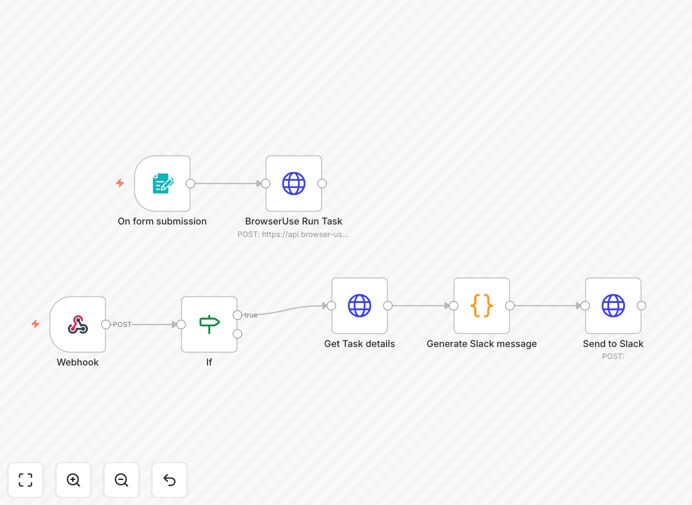
Competitor research automation workflow diagram

What This Workflow Does

This automation solves the time-consuming challenge of manually tracking competitors by combining Browser Use Cloud AI with Slack notifications. The workflow automatically monitors competitor websites, analyzes changes using AI, and delivers strategic insights directly to your team's Slack channel.

Traditional competitor research requires hours of manual checking and subjective analysis. This workflow provides objective, data-driven intelligence on pricing changes, new product launches, content updates, and marketing strategies - all delivered automatically with AI-powered analysis.

How It Works

1. Automated competitor website monitoring

The workflow uses Browser Use Cloud API to automatically visit competitor websites at scheduled intervals. It captures key pages, extracts structured data, and detects changes from previous scans.

2. AI-powered analysis

The captured data is processed through AI models that identify significant changes, analyze content strategies, and detect patterns in pricing or positioning. Natural language processing evaluates messaging tone and emphasis.

3. Strategic insights delivery

Key findings are formatted into actionable intelligence reports and sent to designated Slack channels. The workflow can be configured to alert specific team members based on the type of competitive change detected.

Pro tip: Configure different Slack channels for different competitor categories (direct competitors, aspirational brands, disruptors) to help your team prioritize responses.

Who This Is For

This workflow is ideal for marketing teams, product managers, and business strategists who need to stay ahead of competitors. Ecommerce businesses benefit particularly from automated price tracking, while SaaS companies gain insights into feature updates and positioning changes.

Startups and growing businesses will find this automation especially valuable as it provides enterprise-grade competitive intelligence without requiring dedicated analysts or expensive software.

What You'll Need

  1. An n8n instance (cloud or self-hosted)
  2. Browser Use Cloud API credentials
  3. Slack workspace with webhook permissions
  4. List of competitor websites to monitor
  5. Key pages to track on each competitor site

Quick Setup Guide

  1. Download and import the JSON template into your n8n instance
  2. Configure Browser Use Cloud API credentials in the HTTP Request node
  3. Add your competitor URLs to the list in the workflow
  4. Set up your Slack webhook URL in the Slack node
  5. Adjust the scheduling frequency based on your needs
  6. Test with one competitor before scaling to your full list

Key Benefits

Save 10+ hours per month by eliminating manual competitor checks while getting more comprehensive data than human researchers can gather.

Respond faster to market changes with real-time alerts about competitor moves instead of waiting for quarterly competitive analysis reports.

Make data-driven decisions with objective AI analysis rather than subjective impressions of competitor activity.

Scale your competitive intelligence as your business grows without proportionally increasing research costs.

Frequently Asked Questions

Common questions about competitor research integration and automation

Automating competitor research saves significant time while providing more consistent insights. Manual research is time-consuming and prone to human error, while automation ensures you never miss important updates. AI-powered tools like Browser Use Cloud can analyze competitor websites, pricing changes, and content strategies automatically.

For example, an ecommerce business can automatically track price changes across dozens of competitors daily, something impractical to do manually. The automation also provides structured data analysis rather than subjective notes from different team members.

  • Saves 5-15 hours per week per analyst
  • Provides consistent data collection methodology
  • Enables tracking more competitors than manually possible

Most businesses should conduct competitor research at least monthly, with key metrics monitored weekly. Critical industries like ecommerce may need daily tracking of pricing and promotions. Automated workflows make frequent monitoring practical by eliminating manual work while ensuring your team gets timely alerts about important changes.

A SaaS company might configure weekly scans of competitor blogs and documentation, with daily checks on pricing pages during promotional periods. The automation handles the repetitive work while your team focuses on strategic responses.

  • Base frequency depends on industry volatility
  • Critical metrics may need daily monitoring
  • Automation enables more frequent checks without extra work

Key competitor data points that can be automated include pricing changes, new product launches, content updates, hiring trends, and marketing campaigns. Browser Use Cloud AI can extract structured data from competitor websites, while integrations with Slack ensure your team gets actionable intelligence without manual checking.

For instance, the workflow can track when competitors post new case studies or job listings indicating product direction changes. It can monitor blog frequency and topics to identify content strategy shifts before they impact your market position.

  • Pricing and promotional changes
  • Content publication patterns
  • Job postings indicating strategic hires

AI transforms raw competitor data into actionable insights by identifying patterns humans might miss. Natural language processing can analyze tone and messaging strategies, while machine learning spots trends in pricing or product changes. Automated AI analysis provides objective, data-driven competitive intelligence rather than subjective impressions.

An AI system might detect that three competitors simultaneously shifted messaging toward "ease of use" before your team noticed the industry trend. It could quantify how often competitors mention specific features compared to your positioning.

  • Identifies subtle messaging pattern changes
  • Quantifies competitive positioning shifts
  • Provides objective rather than subjective analysis

The main risks include data overload without proper filtering and potential legal concerns around data collection. Best practice is to focus on publicly available information and configure alerts only for strategically important changes. Proper workflow design ensures your team gets relevant insights without information overload.

For example, rather than alerting on every competitor blog post, the workflow might only flag posts containing certain keywords or exceeding a length threshold indicating major announcements. This prevents notification fatigue while surfacing truly important changes.

  • Configure smart filters to avoid alert fatigue
  • Focus only on publicly available information
  • Document your monitoring practices for compliance

Measure ROI by tracking time saved versus manual research and business impact of competitive insights. Key metrics include hours saved per month, speed of response to competitor moves, and revenue impact of strategic adjustments. Most businesses see ROI within 3-6 months through better decisions and operational efficiency.

A retail brand might track how automated price monitoring helped them match promotions faster, directly impacting sales. A SaaS company could measure how feature development prioritization based on automated competitor tracking accelerated market share growth.

  • Calculate time savings from manual research
  • Track revenue impact of faster competitive responses
  • Measure improved strategic decision velocity

Yes, GrowwStacks specializes in building tailored competitor intelligence systems. Our team designs custom workflows that monitor your specific competitors and deliver insights through your preferred channels like Slack, email, or dashboards. We configure AI analysis to focus on your unique competitive differentiators and business goals.

We'll work with you to identify the most valuable competitor signals for your industry and build automation that surfaces actionable insights without overwhelming your team. The system integrates with your existing tools and adapts as your competitive landscape evolves.

  • Tailored to your specific competitors and KPIs
  • Integrated with your existing tech stack
  • Adaptable as your competitive needs change

Need a Custom Competitor Research Automation?

This free template is a starting point. Our team builds fully tailored automation systems for your specific needs.