Social Media AI Automation Multi-Platform Content Creation Approval Workflows

Automate Social Media Content with AI & Human Approval

Generate, approve, and publish content across LinkedIn, Twitter, and Instagram automatically—while keeping human oversight in the loop.

Download Template JSON · n8n compatible · Free
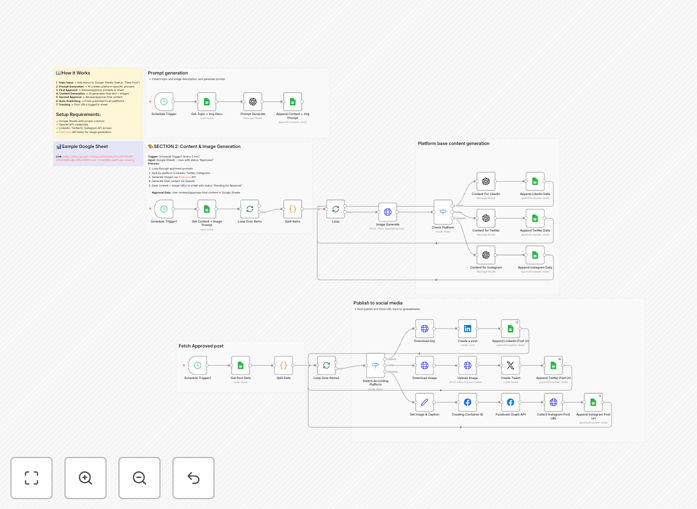
Visual representation of a social media automation workflow connecting AI content generation, human approval steps, and multiple platform publishing

What This Workflow Does

Managing social media across multiple platforms is a time-consuming juggling act. Between brainstorming content, creating images, writing captions, getting approvals, and hitting publish windows, marketing teams can spend 10+ hours weekly on repetitive tasks. This workflow automates the entire process—from AI-powered content generation to human-approved publishing—while maintaining brand safety and strategic oversight.

The system transforms a simple topic input into fully-formed, platform-optimized posts for LinkedIn, Twitter (X), and Instagram. It incorporates two-stage human approval (prompt review and final content review) to ensure quality control, then automatically publishes approved content through each platform's API. Everything is logged in Google Sheets for complete transparency and audit trails.

How It Works

1. Topic Input & Scheduling

A scheduled trigger checks your Google Sheet for new topics at your chosen frequency (daily, weekly, etc.). Each topic includes a brief description that guides the AI content generation.

2. AI-Prompt Generation & First Approval

AI generates tailored prompts for each target platform—professional tone for LinkedIn, concise hooks for Twitter, visual-focused concepts for Instagram. These prompts pause for human review before content creation begins.

3. Content & Image Creation

Once prompts are approved, AI writes full captions and generates platform-specific images using DALL·E or similar tools. Draft content is stored in Google Sheets with status indicators.

4. Final Content Approval

Complete posts pause for final human approval. Approvers can review text, images, and platform adaptations. Rejected posts are logged and skipped without publishing.

5. Multi-Platform Publishing

Approved content publishes automatically through LinkedIn, Twitter (X), and Instagram APIs simultaneously. Each platform receives optimized formatting—character limits, image dimensions, hashtag strategies.

6. Logging & Reporting

The workflow updates Google Sheets with publication timestamps, post URLs, approval history, and performance tracking fields for future analysis.

Who This Is For

This automation is ideal for marketing teams at small-to-medium businesses, solo founders managing their own brand presence, digital agencies serving multiple clients, and operations teams building internal efficiency tools. If you're posting regularly across 2+ social platforms and want to maintain quality while reducing manual effort by 70-80%, this workflow provides the structured automation you need.

What You'll Need

  1. n8n instance (cloud or self-hosted)
  2. Google Sheets with topic list and approval columns
  3. OpenAI API key for content generation (or alternative AI service)
  4. AI image generation API access (DALL·E, Stable Diffusion, etc.)
  5. Social media platform API credentials for LinkedIn, Twitter (X), and Instagram
  6. Approval team members with designated review responsibilities

Quick Setup Guide

  1. Download and import the template JSON file into your n8n instance.
  2. Configure credentials for all connected services in n8n's credentials management.
  3. Set up your Google Sheet with the required columns: Topic, Description, Platform Prompts, Draft Content, Approval Status, Published URL.
  4. Adjust scheduling to match your content calendar—daily, 3x weekly, or custom intervals.
  5. Test with a single topic through the entire approval and publishing cycle.
  6. Train your approval team on the Google Sheets interface and response expectations.
  7. Monitor initial runs and refine AI prompts based on your brand voice and performance.

Key Benefits

Save 5-10 hours weekly on content creation and publishing tasks. What used to take a morning of focused work now happens automatically with human oversight at critical checkpoints.

Maintain consistent posting across all platforms without last-minute scrambling. The automation ensures your social presence remains active even during busy periods or team absences.

Improve content quality through structured AI assistance and deliberate human review. The two-approval system catches issues before publication while leveraging AI's creative capacity.

Scale content production without proportional increases in team size. The same workflow that handles 3 posts weekly can manage 30 with minimal additional effort.

Gain valuable insights from centralized logging and reporting. Track which topics perform best, identify approval bottlenecks, and optimize your content strategy with data.

Frequently Asked Questions

Common questions about social media automation and AI content creation

AI transforms social media content creation by generating ideas, writing captions, and creating images in seconds. Instead of spending hours brainstorming and designing, AI tools can produce platform-specific content that aligns with your brand voice, freeing your team to focus on strategy and engagement.

For example, you can provide a simple topic like "Q3 product launch" and AI will generate LinkedIn articles, Twitter threads, and Instagram carousels with appropriate tone, hashtags, and calls-to-action for each platform's audience.

Automating social media publishing saves 5-10 hours per week, ensures consistent posting, eliminates human error in scheduling, and allows for multi-platform distribution simultaneously. It also enables better timing by scheduling content for optimal engagement periods across different time zones.

Beyond time savings, automation creates reliable systems that work during vacations, sick days, or busy periods. Your social presence maintains momentum while your team focuses on higher-value activities like community engagement and strategy development.

Human approval ensures brand safety, maintains quality control, and adds strategic oversight before content goes live. While AI generates content efficiently, human review catches tone inconsistencies, verifies factual accuracy, and aligns posts with current marketing campaigns or sensitive topics.

The approval process also serves as a training mechanism—reviewing AI outputs helps teams refine their prompt engineering and better understand what content resonates with their audience, creating a feedback loop that improves both human and AI performance over time.

Use automation platforms like n8n to connect APIs from LinkedIn, Twitter (X), and Instagram into a single workflow. Create content once, then transform it for each platform's specific requirements—character limits, image dimensions, hashtag preferences—before publishing through their respective APIs.

This approach maintains consistent messaging while respecting each platform's unique culture and technical specifications. You avoid the "copy-paste" approach that often fails because what works on LinkedIn rarely works unchanged on Twitter or Instagram.

Track engagement rates, click-throughs, conversion metrics, and audience growth. Automated workflows should log which AI prompts generated the best-performing content, which approval delays affected timing, and which platforms delivered the highest ROI to continuously optimize your strategy.

Beyond standard metrics, monitor workflow-specific data like approval cycle times, AI content acceptance rates, and platform API success rates. This operational data helps you refine the automation itself, not just the content it produces.

Yes, but check the AI image generator's licensing terms. Most commercial AI tools grant commercial usage rights for generated images. Always verify that generated images don't inadvertently include copyrighted elements or recognizable trademarks, and consider adding human review for brand alignment.

Best practices include using specific style prompts that match your brand guidelines, avoiding photorealistic representations of people without proper releases, and maintaining a library of approved images that can be reused or remixed for consistency across campaigns.

Create template workflows with configurable variables for brand voice, posting schedules, and approval chains. Use separate Google Sheets or databases for each client, implement role-based access controls for approvers, and establish clear naming conventions to manage multiple automations efficiently.

For agencies, consider creating a master workflow that routes content through different approval paths based on client tags, with automated reporting that delivers performance metrics in each client's preferred format—all while maintaining complete separation between client data and processes.

Yes, GrowwStacks specializes in building custom social media automation systems tailored to your specific platforms, approval processes, and content strategy. We can integrate your existing tools, create bespoke AI prompt libraries, and design workflows that match your team's operational rhythm.

Our approach starts with understanding your current content workflow, identifying bottlenecks, and designing automation that enhances—rather than replaces—your team's creative process. We handle API integrations, approval logic, reporting dashboards, and team training for seamless adoption.

  • Integration with your existing CMS and design tools
  • Custom approval chains matching your organizational structure
  • Performance dashboards with your key metrics
  • Ongoing optimization based on content performance data

Need a Custom Social Media Automation?

This free template is a starting point. Our team builds fully tailored automation systems for your specific business needs.