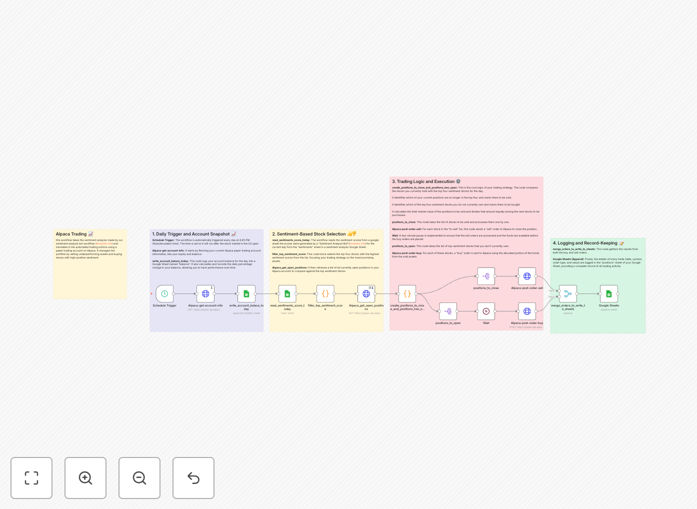
What This Workflow Does
Manual stock trading is emotional, time-consuming, and reactive. Even disciplined investors struggle with consistency, missing opportunities while sleeping or working. This automation solves that by creating a systematic, AI-enhanced trading assistant that operates 24/7.
The workflow connects AI-powered sentiment analysis with real trading execution. It analyzes daily market sentiment to identify top-performing stocks, automatically rebalances your portfolio through Alpaca's paper trading API, and maintains comprehensive audit trails in Google Sheets. Think of it as your personal quant fund that never sleeps, never panics, and follows your rules exactly.
By bridging the gap between data analysis and action, this system transforms speculative trading into systematic investing. It's designed for investors who want to leverage data science without becoming full-time day traders.
How It Works
The automation follows a sophisticated decision-making pipeline that mimics professional trading desks.
1. Daily Market Snapshot & Account Check
Each morning, the workflow triggers automatically. It first fetches your current Alpaca account balance and equity, logging this baseline to a Google Sheets performance tracker. This creates your daily P&L starting point.
2. AI Sentiment Analysis Integration
The system reads processed sentiment scores from a companion AI analysis workflow (or your custom data source). A Code node filters thousands of data points to identify the top four stocks with strongest positive sentiment—your potential buy candidates.
3. Portfolio Decision Engine
This is the trading brain. Custom JavaScript code retrieves your current positions from Alpaca, compares them against the sentiment leaders, and generates two lists: a "sell list" of holdings no longer in the top tier, and a "buy list" of high-sentiment stocks you don't own. It calculates exact allocation amounts based on available capital.
4. Order Execution & Settlement
The workflow executes sell orders first via HTTP requests to Alpaca's API. A strategic 2-minute wait ensures order settlement before reinvestment. Then buy orders are placed with calculated position sizing, completing the portfolio rebalancing.
5. Comprehensive Trade Logging
Every transaction—entry price, quantity, timestamp, and rationale—is recorded in a dedicated Google Sheets trade journal. This creates an auditable history for performance analysis and tax reporting.
Who This Is For
This automation serves data-driven investors, fintech enthusiasts, and systematic traders. Algorithmic trading hobbyists can test strategies risk-free with paper trading. Financial analysts can prototype quantitative models without coding entire platforms. Business owners can automate corporate investment accounts. Even educators can demonstrate automated finance concepts to students.
If you believe in data over gut feelings, want to remove emotion from investing, or need to execute strategies while focusing on your primary business, this system provides the infrastructure. It's particularly valuable for those with consistent investment theses but inconsistent execution.
What You'll Need
- Alpaca Trading Account: Free paper trading credentials (API key and secret) for safe testing.
- Google Sheets Setup: A spreadsheet with predefined tabs for performance tracking and trade logging.
- n8n Instance: Self-hosted n8n or n8n.cloud account with workflow execution capabilities.
- Sentiment Data Source: Either the companion sentiment analysis workflow or your own market data feed.
- Basic Financial Understanding: Knowledge of position sizing, risk management, and trading terminology.
Pro tip: Always test extensively with paper trading (simulated money) for at least 2-3 months before considering live deployment. Monitor the system's decisions daily initially to build trust in its logic.
Quick Setup Guide
- Download & Import: Click the download button above to get the JSON file. In your n8n instance, create a new workflow and import this template.
- Configure Alpaca Credentials: In the HTTP Request nodes, replace placeholder API keys with your actual Alpaca paper trading credentials from their dashboard.
- Connect Google Sheets: Authenticate n8n with Google Sheets and update the spreadsheet IDs in the Sheet nodes to point to your own documents.
- Adjust Trading Parameters: Modify the Code node to change the number of top stocks (default: 4), position sizing logic, or trading schedule to match your strategy.
- Test with Paper Trading: Run the workflow manually first, then set the Schedule Trigger to your preferred frequency (daily before market open is typical).
- Monitor & Refine: Review the Google Sheets logs daily for the first week, adjusting parameters as needed based on the system's decision quality.
Key Benefits
Eliminates Emotional Trading: The system follows predefined rules exactly, removing fear, greed, and hesitation from investment decisions. This consistency alone often improves returns for discretionary traders.
24/7 Market Participation: While you sleep or work, your automation monitors sentiment, executes trades, and manages positions. It never misses an opportunity due to time zone differences or daily responsibilities.
Complete Audit Trail: Every decision is timestamped and logged with rationale in Google Sheets. This transparency aids performance review, tax preparation, and regulatory compliance while building trust in the system.
Risk-Free Strategy Testing: Paper trading allows unlimited experimentation with different parameters, sentiment sources, and position sizing rules without financial risk. Validate strategies thoroughly before committing real capital.
Scalable Infrastructure: Once proven with one account, the same automation can manage multiple portfolios, asset classes, or brokerage accounts with minimal additional configuration.