AI Content Creation Google Sheets GPT-4 Automation n8n

AI Blog Writer with Google Sheets Memory

Automate blog writing and editing with GPT-4, store results in Google Sheets, and track session history for consistent content creation.

Download Template JSON · n8n compatible · Free
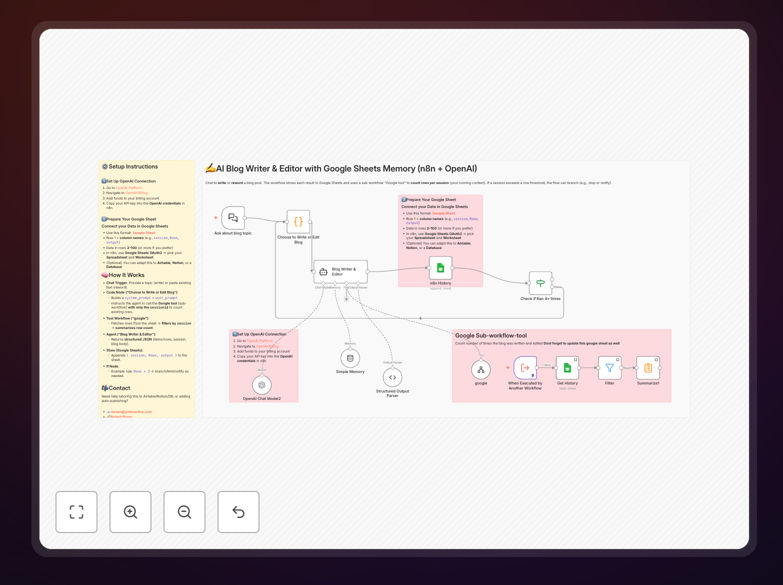
AI Blog Writer workflow diagram showing GPT-4 integration with Google Sheets for content storage

What This Workflow Does

This automation solves the challenge of inconsistent, time-consuming content creation by providing an intelligent AI assistant that writes and edits blog posts while maintaining memory across sessions. Instead of starting from scratch each time, the system tracks your content history, preferences, and previous outputs in Google Sheets, creating a growing knowledge base that improves with every use.

The workflow enables content teams, marketers, and business owners to produce high-quality written material at scale without sacrificing brand voice or consistency. Whether you need to generate new blog posts from scratch, rewrite existing content for different platforms, or maintain a coherent content series, this automation handles the heavy lifting while you focus on strategy and refinement.

How It Works

1. Content Request & Session Tracking

You provide a topic or paste existing text through a chat interface. The system assigns a unique session ID that tracks all related content requests, maintaining context across multiple interactions for coherent content series.

2. AI Processing with Context Awareness

The workflow checks Google Sheets for previous content in the same session, providing the AI with historical context. GPT-4 then generates or rewrites content based on this context, ensuring consistency with previous materials.

3. Structured Output & Storage

The AI returns structured content including the blog body, suggested headlines, and key takeaways. All outputs are automatically appended to Google Sheets with session metadata, creating a searchable content library.

4. Quality Control & Branching Logic

The system includes conditional logic that can trigger different actions based on content quality, session length, or specific requirements. This might include sending content for human review, adjusting AI parameters, or stopping generation when quality thresholds are met.

Who This Is For

This automation is ideal for marketing agencies managing multiple client content calendars, content teams at SaaS companies producing regular blog posts, e-commerce businesses needing product descriptions at scale, and solo entrepreneurs who want to maintain consistent content output without hiring a full-time writer.

It's particularly valuable for businesses that need to maintain brand voice across numerous pieces of content, teams with limited writing resources but substantial content needs, and organizations looking to repurpose existing content for different platforms and audiences.

What You'll Need

  1. n8n instance (cloud or self-hosted) with workflow execution capabilities
  2. OpenAI API key with GPT-4 access and sufficient billing credits
  3. Google Sheets account with a prepared spreadsheet following the template structure
  4. Basic understanding of your brand voice and content requirements
  5. Content approval workflow for human review before publication

Pro tip: Start with a small sample of your best existing content in Google Sheets to train the AI on your brand voice. Include examples of headlines, body copy, and calls-to-action that match your style.

Quick Setup Guide

  1. Import the template into your n8n instance using the downloaded JSON file
  2. Configure OpenAI credentials with your API key in the n8n credentials manager
  3. Set up Google Sheets connection using OAuth2 and select your target spreadsheet
  4. Prepare your Google Sheet with column headers: Session ID, Row Count, Output, Timestamp
  5. Test with simple prompts to verify the workflow connects properly to all services
  6. Adjust parameters like temperature and max tokens to match your content style
  7. Implement quality checks by adding conditional nodes for content review thresholds

Key Benefits

Save 10-15 hours weekly on content creation and editing tasks. What previously required extensive research, drafting, and rewriting now happens automatically with consistent quality.

Maintain brand voice consistency across all content through session tracking and historical context. The system learns from your previous outputs to match tone, style, and terminology preferences.

Create searchable content libraries in Google Sheets that grow more valuable over time. Every piece of content becomes part of an organized knowledge base that informs future creations.

Scale content production without proportional increases in human resources. Handle seasonal content spikes, product launches, or campaign requirements with the same small team.

Improve content ROI through systematic tracking of what works. The Google Sheets storage enables performance analysis and data-driven decisions about content strategy.

Frequently Asked Questions

Common questions about AI content automation and integration

AI automation transforms content creation by generating drafts, rewriting existing content, and maintaining consistent brand voice across all materials. It saves writers hours of research and drafting time, allowing them to focus on strategy and refinement rather than starting from scratch every time.

For businesses, this means faster content production cycles, reduced costs per piece, and the ability to maintain consistent quality even during peak demand periods. The automation handles repetitive tasks while human creativity focuses on unique insights and strategic direction.

Storing AI-generated content in Google Sheets creates a searchable, organized content library that tracks version history, session context, and performance metrics. This enables content teams to maintain consistency, avoid duplication, and analyze what types of content perform best over time.

The spreadsheet becomes a living document that improves with each use, providing historical context for future AI requests and creating a valuable institutional knowledge base that survives team changes and platform migrations.

Session tracking maintains context across multiple content requests, ensuring the AI remembers previous topics, tone preferences, and structural guidelines. This creates more coherent content series, maintains brand voice consistency, and prevents repetitive or conflicting information across different pieces.

Without session tracking, each AI request operates in isolation, potentially producing content that contradicts earlier pieces or fails to build on established narratives. With tracking, the system creates content that feels planned and coordinated.

AI-generated content complements rather than replaces human writers by handling research, initial drafts, and repetitive writing tasks. Human writers then focus on strategy, creativity, editing, and adding unique insights that AI cannot replicate, creating a more efficient content production pipeline.

The most effective approach combines AI efficiency with human judgment—using automation for volume and consistency while relying on human expertise for strategic direction, emotional nuance, and brand authenticity.

Marketing agencies, content teams, SaaS companies, e-commerce businesses, and any organization with regular content needs benefit most. These businesses save significant time on blog posts, product descriptions, social media content, email campaigns, and other repetitive writing tasks.

Businesses with established brand guidelines and content calendars see the fastest ROI, as the AI can be trained on existing materials to maintain consistency while increasing output volume without additional human resources.

Effective brand voice maintenance involves providing detailed style guides, sample content, and consistent feedback to the AI system. The workflow should include validation steps where human editors review and adjust content before publication, gradually training the AI to better match brand preferences.

Start with clear examples of your brand voice in the Google Sheets database, include specific instructions about tone and terminology, and implement a review process that provides feedback the system can learn from over time.

Common mistakes include expecting perfect results immediately, not providing enough context or examples, skipping human review steps, and not tracking performance metrics. Successful implementation requires gradual integration, continuous feedback, and maintaining quality control throughout the process.

Start with low-stakes content, establish clear review workflows, track what works and what doesn't in your Google Sheets database, and gradually expand the system's responsibilities as it demonstrates reliability and understanding of your brand voice.

Yes, GrowwStacks specializes in building custom AI content automation systems tailored to your specific brand voice, content types, and workflow requirements. We can integrate with your existing tools, create custom training datasets, and design approval workflows that match your team's processes.

Our team works with you to understand your content strategy, brand guidelines, and production bottlenecks, then builds a system that amplifies your team's capabilities while maintaining the quality and authenticity that defines your brand.

  • Custom integration with your CMS and publishing platforms
  • Brand voice training using your existing content library
  • Multi-stage approval workflows matching your editorial process
  • Performance tracking and optimization based on your KPIs

Need a Custom AI Content Automation?

This free template is a starting point. Our team builds fully tailored automation systems for your specific business needs.