n8n GPT-4o Slack Procurement Fraud Detection

Detect procurement fraud and monitor supplier compliance with GPT-4o and Slack

Automated AI-powered fraud detection and compliance monitoring workflow for procurement teams

Download Template JSON · n8n compatible · Free
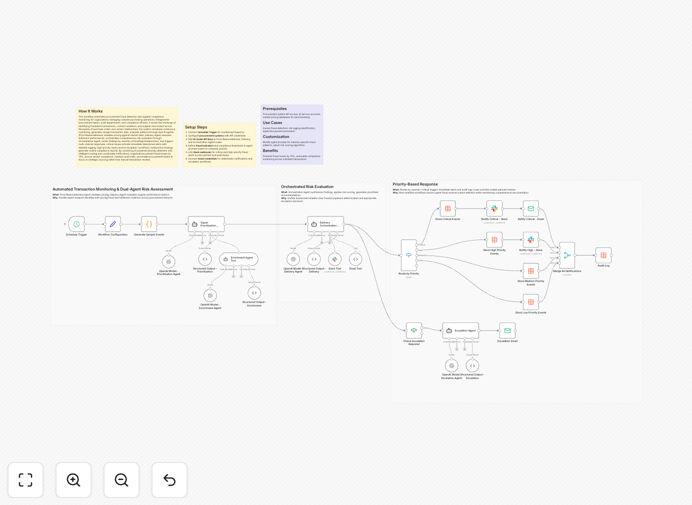
Procurement fraud detection workflow diagram showing GPT-4o analysis and Slack alerts

What This Workflow Does

This n8n workflow automates procurement fraud detection and supplier compliance monitoring for organizations managing complex purchasing operations. By combining GPT-4o's advanced AI analysis with real-time Slack alerts, it helps finance and procurement teams identify suspicious patterns, policy violations, and compliance risks before they escalate into major issues.

The system continuously monitors procurement data streams, applies AI-powered anomaly detection, and delivers actionable insights directly to stakeholders' Slack channels. This replaces manual spreadsheet reviews and periodic audits with continuous, automated oversight that scales with your purchasing volume.

How It Works

1. Data Collection

The workflow pulls procurement data from your ERP, accounting software, or procurement platforms. This includes purchase orders, invoices, vendor details, and approval records.

2. AI Analysis

GPT-4o processes both structured transaction data and unstructured documents (contracts, emails) to identify potential fraud indicators like unusual purchase patterns, split orders, or vendor conflicts of interest.

3. Compliance Checks

The system cross-references supplier activities against compliance requirements, SLAs, and regulatory standards, flagging deviations for review.

4. Alert Generation

When the AI detects high-risk patterns, it generates detailed Slack notifications with severity ratings, contextual analysis, and recommended actions.

5. Reporting

The workflow maintains audit trails of all findings and can generate periodic compliance reports for management review.

Who This Is For

This workflow is ideal for procurement managers, CFOs, and compliance officers in organizations with:

  • High-volume or complex procurement operations
  • Regulated industries with strict compliance requirements
  • Decentralized purchasing across multiple locations/departments
  • History of fraud concerns or audit findings
  • Need for real-time visibility into supplier performance

What You'll Need

  1. n8n instance (cloud or self-hosted)
  2. Slack workspace with appropriate channel access
  3. GPT-4o API access
  4. Procurement data source (ERP, accounting software API, or database)
  5. Basic understanding of your procurement policies and risk factors

Quick Setup Guide

  1. Download the JSON template file
  2. Import into your n8n instance
  3. Configure your data source connections
  4. Set up Slack webhook for alerts
  5. Connect GPT-4o API
  6. Adjust fraud detection parameters based on your policies
  7. Test with sample procurement data
  8. Deploy to production

Key Benefits

Reduce procurement losses by 30-50%: Early detection of fraudulent activities prevents larger losses before they accumulate.

Cut compliance audit costs by 40%: Continuous automated monitoring reduces the need for manual audits and spot checks.

Improve supplier performance visibility: Real-time dashboards and alerts replace retrospective quarterly reviews.

Scale oversight without adding staff: The AI handles volume that would require multiple full-time analysts.

Documented audit trail: Automated record-keeping simplifies compliance reporting and investigations.

Frequently Asked Questions

Common questions about procurement automation and fraud detection

AI analyzes procurement patterns to flag anomalies like unusual purchase amounts, frequency changes, or vendor relationships. GPT-4o examines unstructured data like emails and contracts for red flags human reviewers might miss. Machine learning improves detection accuracy over time by learning your specific procurement patterns.

For example, AI can detect when an employee consistently approves purchases from a vendor they have a personal connection with, even if individual transactions appear legitimate. The system learns what constitutes normal purchasing behavior for each department and flags deviations.

  • Identifies hidden patterns across multiple systems
  • Processes unstructured data at scale
  • Adapts to new fraud schemes automatically

Common red flags include late deliveries, quality inconsistencies, pricing irregularities, and contract deviations. Automated monitoring tracks performance metrics against SLAs, flags policy violations, and identifies suppliers with high risk profiles. The system can also monitor certifications and regulatory requirements that may lapse.

A manufacturing company might use this to automatically flag suppliers whose safety certifications are nearing expiration. The workflow checks certification databases daily and alerts procurement teams 60 days before expiration to ensure continuity.

  • Tracks both quantitative metrics and qualitative factors
  • Monitors temporal patterns (deteriorating performance)
  • Integrates external compliance databases

Slack integration enables real-time alerts to procurement teams and stakeholders. Critical notifications reach the right channels immediately, with AI-generated summaries of issues. Teams can discuss findings in threaded conversations and assign follow-up actions without switching platforms.

When the system detects a potential bid-rigging scheme, it posts a detailed alert to the #procurement-compliance channel with transaction details, risk scoring, and recommended next steps. Team members can immediately comment with additional context or assign investigation tasks.

  • Reduces alert fatigue with smart prioritization
  • Enables collaborative investigation
  • Maintains communication audit trail

Automated fraud detection can reduce procurement losses by 30-50% by catching issues early. Continuous compliance monitoring decreases supplier-related disruptions by 40-60%. AI analysis processes 100% of transactions versus manual sampling, increasing detection rates while reducing audit costs.

A healthcare network implemented similar automation and reduced fraudulent medical supply purchases by $2.7M annually. The system flagged unusual ordering patterns at rural clinics that manual oversight had missed.

  • Early detection limits financial impact
  • Continuous monitoring prevents compliance gaps
  • Automated documentation simplifies audits

Key sources include ERP purchase records, vendor databases, contract documents, invoice details, and employee purchase approvals. The system can also incorporate external data like supplier financial health reports, industry benchmarks, and regulatory watchlists for comprehensive risk assessment.

A construction company enhanced their detection by integrating subcontractor licensing databases. The system now flags when critical licenses expire or when subs work simultaneously for competing firms, potential indicators of quality risks.

  • Internal transactional systems provide core data
  • External sources add contextual intelligence
  • Unstructured documents reveal hidden relationships

GPT-4o understands context in unstructured documents that rules-based systems miss. It detects subtle patterns across communications and documents, explains findings in natural language, and adapts to new fraud schemes faster than static rule updates. The AI can also generate audit-ready documentation of its findings.

Where traditional systems might flag all purchases over $10k, GPT-4o recognizes when a $9,500 purchase combined with a $600 "consulting fee" to the same vendor constitutes potential threshold avoidance. It explains this reasoning in compliance reports.

  • Natural language understanding of documents
  • Explains reasoning in business terms
  • Self-documents findings for auditors

Yes, GrowwStacks specializes in tailored procurement automation solutions. We analyze your specific workflows, risk factors, and systems to build customized fraud detection and compliance monitoring. Our implementations typically deliver ROI within 3-6 months by reducing losses and improving efficiency.

For a global retailer, we built a custom solution that integrated with their 12 regional ERP systems while accounting for local procurement regulations. The system reduced duplicate payments by 37% in the first quarter and identified $1.2M in recoverable overpayments.

  • Industry-specific risk modeling
  • Multi-system integration capabilities
  • Regulatory compliance expertise

Need a Custom Procurement Automation Solution?

This free template is a starting point. Our team builds fully tailored fraud detection and compliance systems for your specific procurement needs.