Telegram AI Construction Cost Estimation n8n

AI Construction Cost Estimation Bot

Turn text, photos, or PDF floor plans into detailed cost estimates instantly using GPT‑4/Gemini AI and construction rate databases.

Download Template JSON · n8n compatible · Free
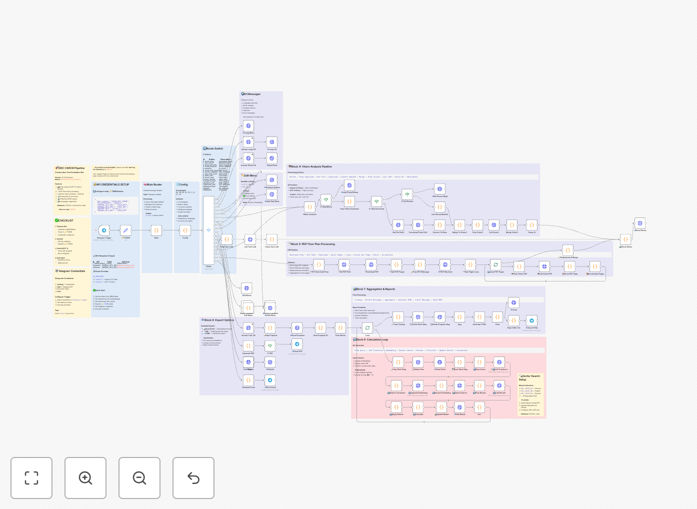
AI Construction Cost Estimation Bot workflow interface showing Telegram integration and AI analysis steps

What This Workflow Does

This automation solves a critical bottleneck in construction and renovation projects: getting fast, accurate cost estimates from various input formats. Traditionally, estimators manually review blueprints, visit sites, or parse lengthy descriptions—a process taking hours or days.

The workflow creates a Telegram bot that accepts three types of inputs: text descriptions of work needed, photos of construction sites or rooms, or PDF floor plans. It uses AI vision models (GPT‑4 or Gemini) to analyze these inputs, extract quantifiable work items, then searches a construction cost database (DDC CWICR with 55,000+ rates) to generate a professional cost breakdown with labor, materials, and equipment costs.

Beyond simple calculation, it supports 9 languages, allows inline quantity editing via Telegram buttons, and exports results as interactive HTML reports, Excel sheets, or PDF documents—transforming how contractors, architects, and project managers approach preliminary budgeting.

How It Works

1. Input Reception & Routing

The Telegram bot listens for messages. When a user sends text, photos, or documents, the workflow's main router detects the content type and directs it to the appropriate handler—17 different actions handle everything from language selection to PDF analysis.

2. AI Analysis & Extraction

For text: GPT‑4 parses natural language descriptions into structured work items with quantities. For photos: GPT‑4 Vision or Gemini analyzes construction site images, identifying materials, fixtures, and measurable elements. For PDFs: Gemini 2.0 Flash reads floor plans, extracting room dimensions and architectural elements.

3. Database Search & Cost Calculation

Each extracted work item triggers a sophisticated search loop. The query is optimized, converted to embeddings, then sent to a Qdrant vector database containing the DDC CWICR construction rates. AI reranking scores the results for accuracy before final cost calculation.

4. Report Generation & Delivery

The system compiles all calculated items into a professional HTML report with expandable details, cost breakdown percentages, and quality indicators. Users receive the estimate in Telegram with options to edit quantities, export to Excel/PDF, or restart with new inputs.

Who This Is For

Contractors & Estimators who need rapid quotes from client descriptions or site photos without manual takeoffs. Construction Managers evaluating renovation scope during site walks using just their phone camera. Architects & Designers seeking instant cost feedback on floor plan concepts during client meetings.

Real Estate Professionals assessing renovation costs for property flips or investment analysis. Project Owners wanting feasibility checks before engaging full design teams. Facility Managers budgeting for maintenance and improvement projects across multiple properties.

What You'll Need

  1. n8n instance (v1.30+) with Telegram Trigger node configured
  2. Telegram Bot Token from @BotFather
  3. OpenAI API key for GPT‑4 text processing and embeddings
  4. Gemini API key (or additional OpenAI credit for GPT‑4 Vision)
  5. Qdrant vector database instance with DDC CWICR collections loaded
  6. DDC CWICR database (open-source construction rates)

Pro tip: Start with Gemini 2.0 Flash for photo/PDF analysis—it's more cost-effective than GPT‑4 Vision and handles PDFs better. Use OpenAI primarily for text parsing and embeddings where it excels.

Quick Setup Guide

  1. Import the template into your n8n instance using the downloaded JSON file.
  2. Configure the TOKEN node with your API keys: Telegram bot token, AI provider choice (gemini/openai), Gemini API key, OpenAI API key, Qdrant URL and API key.
  3. Set up n8n credentials for Telegram API in Settings → Credentials, then select it in the Telegram Trigger node.
  4. Load DDC CWICR embeddings into your Qdrant instance for your target languages (e.g., Russian collection for RU estimates).
  5. Activate the workflow and test by sending "/start" to your Telegram bot, then a photo, PDF, or text description.

Key Benefits

Reduce estimation time from hours to minutes. What traditionally required site visits, manual measurements, and spreadsheet work now happens instantly via mobile messaging.

Eliminate inconsistent pricing. All estimates draw from the same standardized cost database, ensuring consistent pricing for identical work items across different projects and team members.

Capture opportunities you'd otherwise miss. When clients send casual photos or descriptions via Telegram, you can respond with professional estimates before competitors even schedule site visits.

Scale your estimation capacity without adding staff. One estimator can handle 5-10x more preliminary estimates, focusing their expertise on complex final bids rather than routine calculations.

Create digital audit trails automatically. Every estimate generates structured data perfect for CRM integration, historical analysis, and improving future accuracy through machine learning.

Frequently Asked Questions

Common questions about AI construction estimation and automation

AI-powered construction cost estimation uses machine learning and computer vision to analyze project inputs like text descriptions, photos, or PDF drawings and automatically generate detailed cost breakdowns. It connects to construction rate databases to provide accurate material, labor, and equipment costs without manual measurement.

This technology transforms how preliminary estimates are created—contractors can snap photos on site and get instant budgets, architects can test cost implications of design changes in real-time, and project owners can evaluate feasibility before committing to detailed plans.

AI estimates provide excellent preliminary accuracy (80-90%) for feasibility studies and early budgeting, especially when trained on regional cost databases. They excel at speed and consistency, while traditional estimators still handle complex site-specific variables best.

The ideal approach combines AI for initial rapid estimates with human review for final bids. For example, AI can process 50 renovation photos in minutes to give a contractor a solid budget range, which the estimator then refines based on site conditions, supplier relationships, and project complexities.

Yes, modern AI vision models (GPT‑4 Vision, Gemini) can identify construction elements, measure areas from photos with reference objects, and extract room dimensions from PDF floor plans. They recognize materials, fixtures, and finishes, converting visual data into quantifiable work items for costing.

These models have been trained on millions of construction-related images and can distinguish between tile types, identify plumbing fixtures, recognize structural elements, and even estimate quantities when provided with scale references like doors or standard tiles in the photo.

Automation reduces estimation time from hours/days to minutes, ensures consistency across projects, minimizes human calculation errors, allows rapid what-if scenario testing, and enables estimators to handle more projects simultaneously. It also creates standardized digital records for all estimates.

Beyond efficiency, automated estimation improves client experience—they receive professional quotes faster, can explore alternatives easily, and feel confident in transparent, data-driven pricing rather than rough guesses.

Companies start by piloting AI estimation on smaller, repetitive projects like interior renovations. They integrate the tool with their existing CRM and project management systems, train staff on interpreting AI outputs, and establish a review process where AI generates initial estimates that human experts validate and refine.

Successful implementation involves selecting the right projects (standardized work is best initially), setting clear expectations about AI's role as an assistant rather than replacement, and continuously feeding project outcome data back to improve the system's accuracy.

You need access to current regional cost databases (like DDC CWICR), historical project data for calibration, clear reference photos with scale indicators, and detailed project specifications. The AI improves with more localized cost data and feedback loops where estimators correct its outputs.

For best results, supplement generic databases with your company's actual project costs, supplier pricing, and labor rates. The system learns from corrections—when an estimator adjusts an AI-generated quantity or unit cost, that feedback makes future estimates more accurate for similar work.

Yes, GrowwStacks specializes in building tailored construction automation systems. We can create custom estimation workflows integrated with your specific software stack, train AI models on your historical project data, and develop multi-channel interfaces (web, mobile, messaging apps) for your team and clients.

Our approach starts with understanding your current estimation process, identifying the biggest time sinks and accuracy challenges, then designing an automation solution that amplifies your team's expertise rather than replacing it. We handle everything from AI model selection to integration with your existing Procore, Buildertrend, or custom systems.

  • Custom trained on your project history and cost data
  • Integrated with your CRM and project management tools
  • Multi-channel deployment (Telegram, WhatsApp, web portal)
  • Ongoing optimization based on real-world performance

Need a Custom Construction Estimation Automation?

This free template is a starting point. Our team builds fully tailored automation systems for your specific business needs.