Market Research AI Summarization Zapier

Automate Bing Copilot Search Extraction & Summarization

Extract structured data from Bing searches, process with AI, and deliver summarized insights automatically

Download Template JSON · n8n compatible · Free
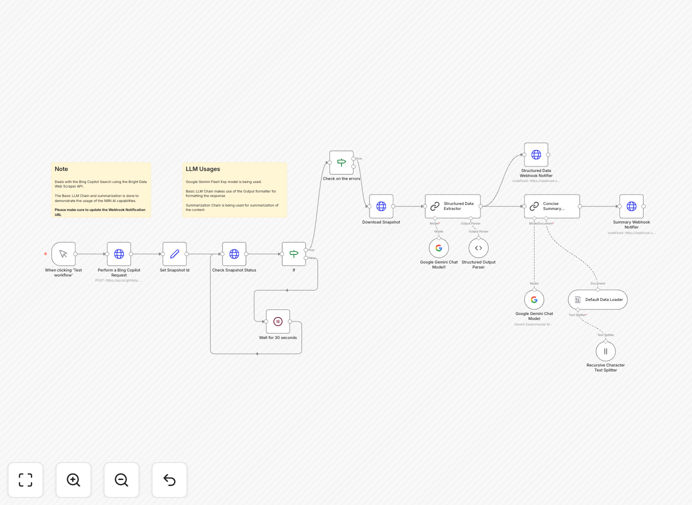
Bing search automation workflow interface showing data extraction and AI summarization steps

What This Workflow Does

This automation solves the time-consuming process of manually collecting and analyzing Bing search results. It performs comprehensive searches through Bing's Copilot, extracts the structured data from results, processes the information through AI summarization, and delivers clean, actionable insights.

By automating this workflow, research teams can scale their data collection while maintaining consistency in analysis. The system handles the repetitive tasks of querying, data extraction and initial summarization, freeing analysts to focus on higher-value interpretation and strategy.
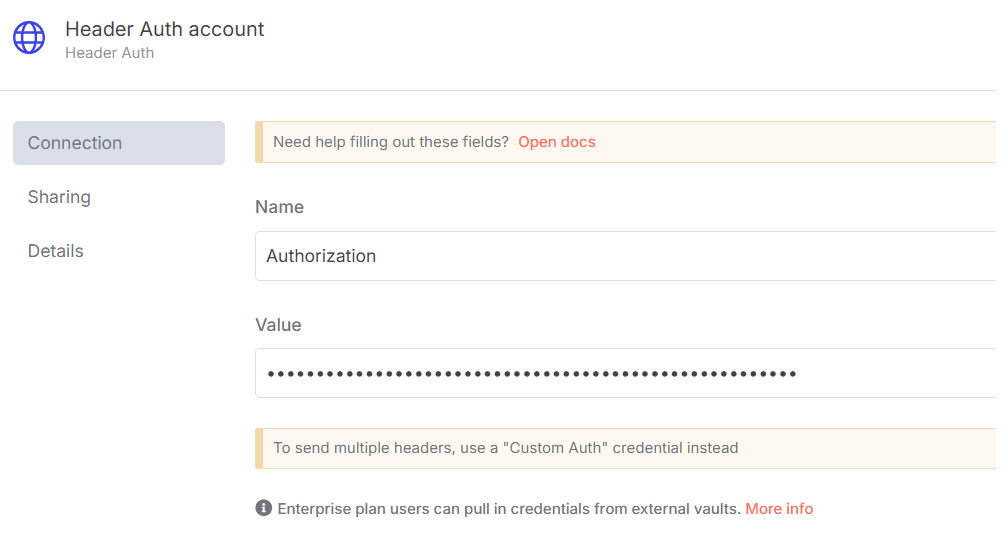
Configuration settings for Bing search API authentication in the workflow
Authentication setup for connecting to Bing's search API

How It Works

1. Search Query Execution

The workflow initiates searches through Bing's API using configured queries and parameters. It handles pagination to collect comprehensive results.

2. Data Extraction

Raw search results are processed to extract structured data - titles, URLs, snippets, and other metadata - transforming unstructured HTML into analyzable data.

3. AI Summarization

Extracted content is sent to Gemini AI for summarization, identifying key themes, trends, and insights across the collected results.

4. Results Delivery

Final summarized data is formatted and delivered via configured channels (email, Slack, databases etc.) with options for human review.

Who This Is For

This workflow delivers the most value for:

  • Market research teams tracking industry trends
  • SEO specialists analyzing search performance
  • Competitive intelligence professionals
  • Academic researchers collecting data for literature reviews
  • Marketing agencies monitoring brand mentions

Pro tip: Schedule this workflow to run weekly or monthly to build a longitudinal dataset of search trends over time.

What You'll Need

  1. Bright Data account for search API access
  2. Google Gemini API key for AI summarization
  3. n8n instance (cloud or self-hosted)
  4. Destination for results (Slack, email, database etc.)

Quick Setup Guide

  1. Import the JSON template into your n8n instance
  2. Configure Bright Data credentials for search access
  3. Set up Google Gemini API connection
  4. Customize search queries for your needs
  5. Configure output destinations
  6. Test with sample searches before full deployment

Key Benefits

80% time reduction in search data collection and initial analysis compared to manual methods.

Consistent data formatting ensures all results are structured the same way for reliable analysis.

Scalable research capacity - run more searches across more topics without proportional staffing increases.

AI-powered insights surface patterns and trends humans might miss in large datasets.

Customizable outputs deliver exactly the data you need in your preferred format.

Frequently Asked Questions

Common questions about search automation and AI summarization

Automation transforms market research by enabling continuous data collection from multiple sources, standardizing data formats for analysis, and reducing manual errors. It allows researchers to focus on insights rather than data gathering.

For example, automated search tracking can monitor competitor mentions daily, while manual methods might only allow weekly checks. The consistency of automated data collection also improves trend analysis reliability.

AI summarization extracts key insights from large volumes of search results, saving hours of manual reading. It identifies patterns and trends humans might miss while providing consistent, unbiased summaries of complex information.

This combination is particularly powerful for tracking emerging industry trends, where early signals might be scattered across many sources. The AI can surface weak signals that might be overlooked in manual review.

Automated extraction uses APIs to query search engines, then parses the HTML responses to identify and extract structured data like titles, URLs, and snippets. This structured data can then be processed and analyzed automatically.

Advanced extraction can also handle pagination, handle CAPTCHAs through proxy services, and adapt to search engine layout changes. The extracted data maintains source references for traceability.

Competitive intelligence teams, marketing agencies, academic researchers, and SEO specialists benefit most. Any business needing regular market insights without manual research overhead will see significant time savings.

Businesses in fast-moving industries like technology, finance, and healthcare particularly benefit from the ability to track rapid changes in their competitive landscapes.

Modern AI achieves 85-90% accuracy for factual summarization, though it may miss nuanced context. Best results come from combining AI first-pass analysis with human review of key findings.

For example, AI might accurately summarize product features from reviews but miss subtle sentiment differences. A hybrid approach leverages AI efficiency while maintaining human judgment.

Use reputable proxy services to avoid IP blocks, implement rate limiting, and ensure compliance with search engines' terms. Sensitive queries should be reviewed before automation to avoid exposing confidential information.

Data storage and transmission should follow your organization's security policies, especially when handling proprietary search strategies or competitive intelligence.

Yes, GrowwStacks specializes in building tailored search automation solutions that integrate with your existing tools and workflows. We can customize data extraction, analysis pipelines, and reporting to your specific research needs.

Our team can develop custom solutions for:

  • Industry-specific search parameters
  • Integration with internal data systems
  • Specialized reporting formats
  • Advanced analytics beyond basic summarization

Need a Custom Search Automation?

This free template is a starting point. Our team builds fully tailored automation systems for your specific business needs.