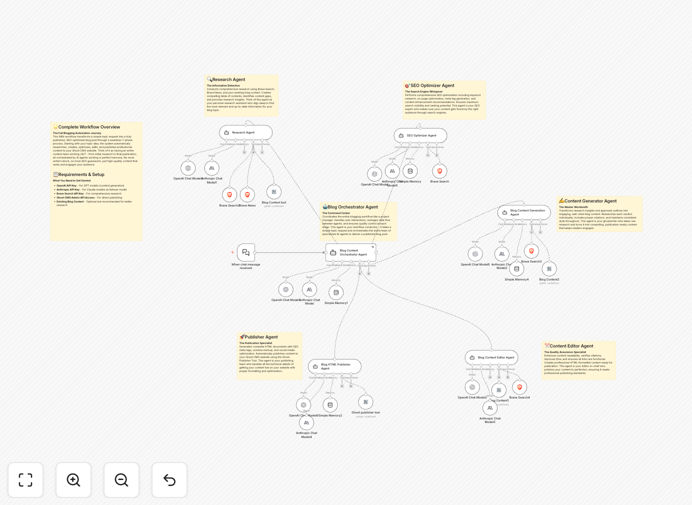
What This Workflow Does
This n8n workflow automates the entire blog content lifecycle—from initial topic idea to published article. It's designed for content teams, marketers, and businesses that want to maintain a consistent publishing schedule without the manual labor of research, writing, and formatting.
The system takes a simple topic request, conducts comprehensive research using Brave Search, generates content with GPT-4 or Claude, optimizes it for SEO, adds relevant images, and publishes directly to your Ghost CMS. Think of it as having a 24/7 content team that never gets writer's block.
Beyond basic automation, this workflow implements quality gates at each stage. It checks for originality, ensures proper keyword placement, validates readability scores, and maintains your brand voice throughout. The result is publication-ready content that matches human-written quality but arrives at machine speed.
How It Works
1. Topic Input & Research Phase
The workflow begins when you submit a blog topic. It uses Brave Search API to gather current information, trending data, and competitor analysis. This research phase ensures the content is relevant, timely, and addresses what readers are actually searching for.
2. Outline Generation
Based on the research, an AI agent creates a detailed content outline following proven blog structures. This includes headings, subheadings, key points to cover, and suggested call-to-action placement—all optimized for both readability and SEO.
3. Content Creation with Multiple AI Models
The system leverages both GPT-4 and Claude AI models to generate the actual content. Using multiple AI providers ensures diversity in writing style and acts as a failover mechanism if one service experiences issues. The workflow includes temperature controls and style prompts to match your brand voice.
4. SEO Optimization & Editing
Before publishing, the content undergoes automated SEO optimization. This includes keyword density analysis, meta description generation, title tag optimization, and internal linking suggestions. An editing phase refines the language and ensures consistency.
5. Ghost CMS Publishing
The final step automatically publishes the optimized content to your Ghost CMS instance. It sets the correct categories, tags, featured images, and publication schedule. The workflow can also handle draft creation for manual review if preferred.
Who This Is For
This automation is ideal for content marketing agencies, SaaS companies with regular blog schedules, solo entrepreneurs managing multiple content properties, and teams that want to scale their content production without scaling their headcount.
If you're currently spending 5-10 hours per blog post on research, writing, and formatting, this workflow can reduce that to 30 minutes of review time. It's particularly valuable for businesses publishing 4+ articles per month or managing multiple niche websites.
What You'll Need
- OpenAI API Key – For accessing GPT-4 models
- Anthropic API Key – For Claude AI as backup/alternative
- Brave Search API Key – For comprehensive web research
- Ghost CMS Admin API Access – With publishing permissions
- n8n Instance – Self-hosted or cloud version
- Existing Blog Content (Optional) – Helps train AI on your brand voice
Pro tip: Start with a small set of example articles from your existing blog. Feed these to the AI during setup to better capture your brand's tone and style preferences.
Quick Setup Guide
- Download the template using the button above and import it into your n8n instance.
- Configure API credentials for OpenAI, Anthropic, Brave Search, and Ghost CMS in the respective nodes.
- Set your content parameters – target word count, tone, target keywords, and publishing schedule.
- Test with a simple topic to see the full process from research to draft publication.
- Adjust prompts and parameters based on initial outputs to fine-tune for your specific needs.
- Schedule automation to run weekly or monthly for consistent content production.
Key Benefits
Reduce content creation time by 80-90%. What used to take days now happens automatically overnight, freeing your team for higher-value strategic work.
Maintain consistent publishing frequency without hiring additional writers. Never miss a publishing deadline due to resource constraints.
Improve SEO performance through systematic optimization that's applied consistently across all articles, not just when someone remembers to do it.
Scale content production effortlessly – produce 4x more content with the same team size by eliminating manual research and drafting bottlenecks.
Ensure brand voice consistency across all published material, as the AI follows the same style guidelines every single time.