n8n Legal Tech Bright Data Google Gemini AI Automation

Legal Case Research Extractor, Data Miner with Bright Data MCP & Google Gemini

Automate legal case research extraction and analysis with AI-powered data mining

Download Template JSON · n8n compatible · Free
Legal Case Research Extractor workflow interface

What This Workflow Does

This automation transforms hours of manual legal research into minutes by combining Bright Data's Managed Collector Platform (MCP) with Google Gemini's AI analysis capabilities. It systematically extracts case law data from court databases, analyzes judicial opinions, and summarizes key findings for legal teams.

The workflow addresses the growing challenge of information overload in legal practice, where attorneys spend 35-50% of their time on research tasks. By automating data collection and initial analysis, firms can reallocate this time to higher-value client work while maintaining rigorous case preparation standards.
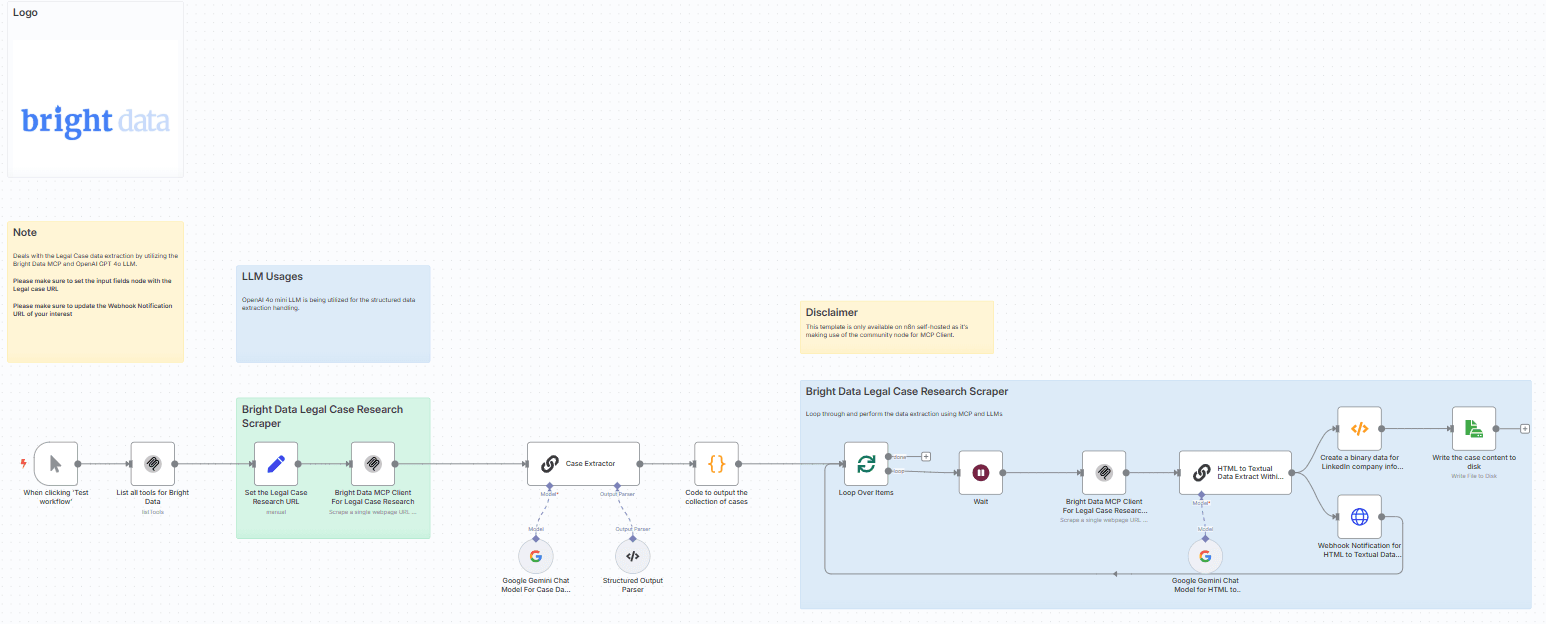
Legal Case Research Extractor workflow diagram
The workflow architecture showing data flow from collection through AI analysis

How It Works

1. Case Identification

The system queries legal databases using Bright Data MCP to identify relevant cases based on jurisdiction, date range, and keywords. This replaces manual search across multiple court websites.

2. Data Extraction

Bright Data extracts structured case metadata (parties, dates, judges) along with full text of opinions and orders. The collector handles CAPTCHAs and access restrictions automatically.
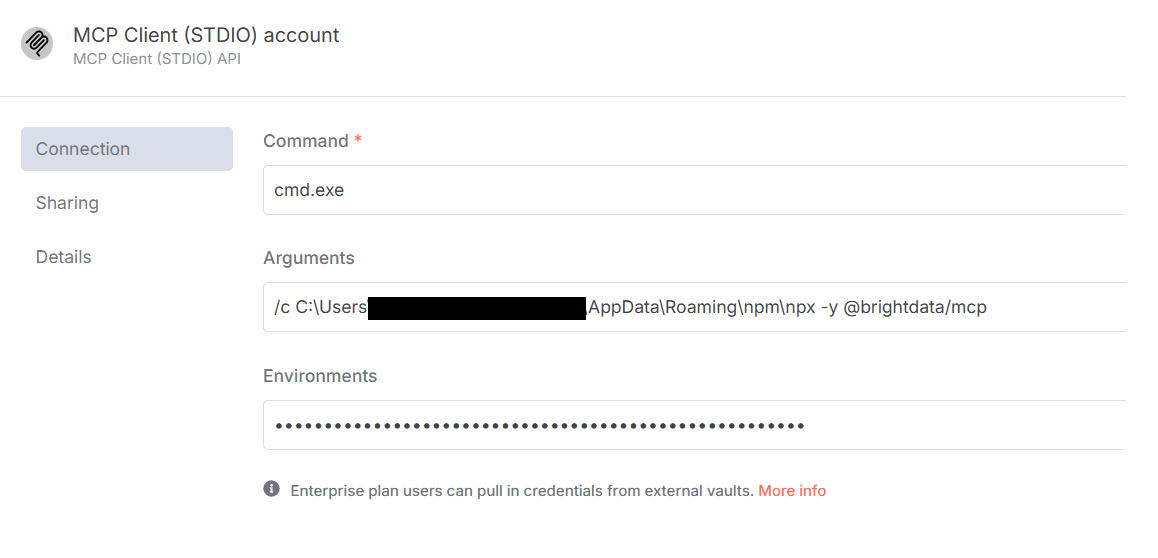
Bright Data MCP interface
Bright Data MCP configuration for legal data collection

3. AI Analysis

Google Gemini processes extracted documents to identify legal principles, categorize arguments, and flag noteworthy judicial language. The AI compares findings against your firm's past successful cases.

4. Report Generation

The system compiles executive summaries with probability assessments, similar case references, and recommended argument strategies - formatted for attorney review.

Pro tip: Train the AI model on your firm's past successful briefs to improve relevance scoring for new cases.

Who This Is For

This workflow benefits litigation attorneys, appellate practices, and legal research teams handling:

  • High-volume case screening
  • Multi-jurisdictional research
  • Emerging area analysis (e.g., crypto regulations)
  • Appellate brief preparation
  • Expert witness research

What You'll Need

  1. Self-hosted n8n instance (Community nodes required)
  2. Bright Data MCP account with legal research access
  3. Google Gemini API credentials
  4. Legal database credentials (PACER, state systems, etc.)
  5. Storage solution for collected case files

Quick Setup Guide

  1. Import the JSON template into your n8n instance
  2. Configure Bright Data MCP connection with your collector settings
  3. Add Google Gemini API keys in the AI analysis nodes
  4. Set your search parameters (jurisdictions, case types, date ranges)
  5. Test with sample queries before full deployment

Key Benefits

80% faster case screening - Process hundreds of cases in the time manual review takes for a handful. AI prioritizes the most relevant matters based on your criteria.

Consistent research quality - Eliminate variability between junior associates' research approaches. The system applies uniform analysis standards across all cases.

Strategic insights - Discover hidden patterns in judicial decision-making that manual review might miss, like favorable argument combinations or ineffective approaches.

Scalable capacity - Handle case volume spikes without adding staff. The system scales to process thousands of cases simultaneously when needed.

Audit trail - Maintain detailed records of research methodology for client billing and potential challenges to your legal strategy.

Frequently Asked Questions

Common questions about legal research automation and AI integration

Legal research automation dramatically reduces time spent on case law review by automatically extracting relevant data points from court documents. Using AI like Google Gemini, it can summarize findings, identify precedents, and highlight key legal arguments.

For example, a 50-page case file can be processed in minutes instead of hours. This allows law firms to handle more cases with the same staff while improving research quality through consistent methodology.

  • Reduces human error in citation checking
  • Enables parallel processing of multiple jurisdictions
  • Creates standardized research outputs

Bright Data MCP provides reliable access to court databases and legal repositories while maintaining compliance with terms of service. Its residential proxies prevent IP blocking during large-scale research projects.

Legal teams can gather case data from multiple jurisdictions simultaneously without manual scraping. The platform handles authentication, rate limiting, and CAPTCHAs automatically, freeing attorneys to focus on analysis rather than data collection logistics.

  • Maintains ethical data collection practices
  • Simplifies multi-source research
  • Provides structured data outputs

AI transforms raw legal documents into actionable insights by identifying patterns across case law. Google Gemini can compare arguments across jurisdictions, flag contradictory rulings, and suggest relevant citations.

For instance, when researching a contract dispute, AI can surface similar cases with their outcomes and key factors considered. This reduces oversight risks in manual review while uncovering strategic angles attorneys might otherwise miss.

  • Identifies judicial reasoning patterns
  • Highlights persuasive authority
  • Flags unfavorable precedents

Case outcomes, judicial reasoning patterns, and citation networks offer the highest automation ROI. Automated systems excel at tracking judge-specific tendencies, success rates for different arguments, and evolving legal interpretations.

Docket tracking, motion success rates, and settlement trends also benefit from automation. These datasets help attorneys develop data-driven litigation strategies rather than relying solely on experience and intuition.

  • Judge-specific ruling tendencies
  • Argument success rates
  • Case duration patterns

Modern AI legal tools achieve 90-95% accuracy on straightforward case analysis when properly configured. They complement (rather than replace) human review by handling initial screening and documentation.

The most effective implementations use AI for first-pass analysis with attorney verification. This hybrid approach catches both the AI's occasional misinterpretations and human oversight errors that occur in manual review.

  • Higher consistency than junior associates
  • Faster than manual Shepardizing
  • Requires attorney verification

Legal automation requires encrypted data storage, access controls for sensitive case information, and audit trails for research activities. Systems should mask client identifiers in test data and implement strict API rate limiting.

Many firms use private cloud instances for AI processing to prevent sensitive data exposure. Regular compliance reviews ensure adherence to attorney-client privilege requirements and jurisdictional data handling regulations.

  • End-to-end encryption
  • Role-based access controls
  • Activity logging

Yes, GrowwStacks specializes in tailored legal research automation solutions. We can design systems for your specific practice areas, integrate with existing case management software, and train AI models on your firm's successful case patterns.

Custom solutions address unique needs like state-specific rule variations or specialized document types. Our team works closely with legal professionals to ensure automations enhance rather than disrupt established workflows.

  • Practice-area specific training
  • Existing system integration
  • Ongoing optimization

Need a Custom Legal Research Automation?

This free template is a starting point. Our team builds fully tailored automation systems for your specific practice needs.