n8n Bright Data OpenAI Recipe Automation

Recipe recommendation engine with Bright Data MCP & OpenAI 4o mini

Automated personalized recipe suggestions powered by AI and web data collection

Download Template JSON · n8n compatible · Free
Recipe recommendation workflow diagram showing Bright Data MCP and OpenAI integration

What This Workflow Does

This automated recipe recommendation engine solves the challenge of creating personalized meal suggestions at scale. Food bloggers, meal kit services, and nutrition apps often struggle to generate fresh, relevant recipe ideas that match their audience's preferences and dietary needs.

The workflow combines Bright Data's MCP (Managed Collector Proxy) with OpenAI's 4o mini model to analyze user preferences, dietary restrictions, and trending ingredients, then generates tailored recipe recommendations complete with preparation instructions and nutritional insights.
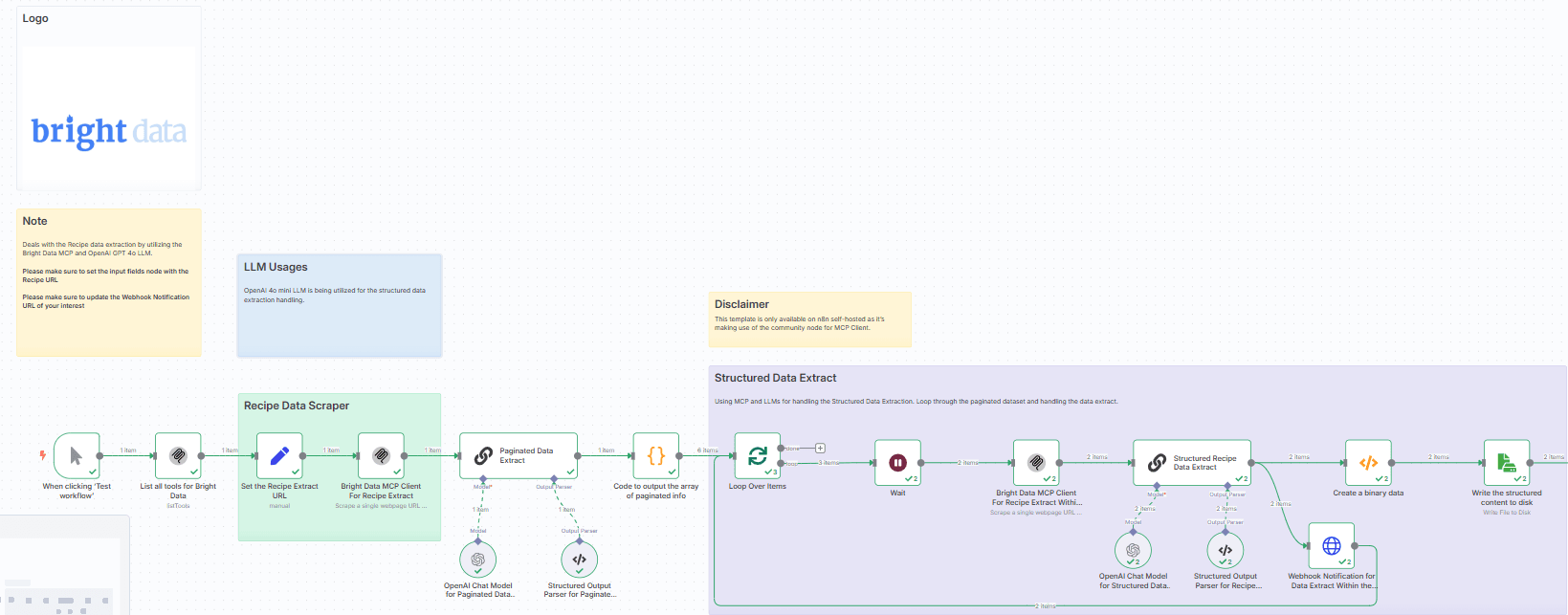
Recipe recommendation engine workflow overview
Workflow architecture showing data collection and AI processing steps

How It Works

1. Data Collection with Bright Data MCP

The workflow first gathers recipe data from multiple sources using Bright Data's Managed Collector Proxy. This ensures reliable, scalable web scraping without getting blocked while collecting recipe ingredients, preparation methods, and nutritional information.

2. Preference Analysis

User preferences (dietary restrictions, favorite cuisines, ingredient preferences) are processed through the workflow to create a personalized profile. This can come from form submissions, past interactions, or CRM data.
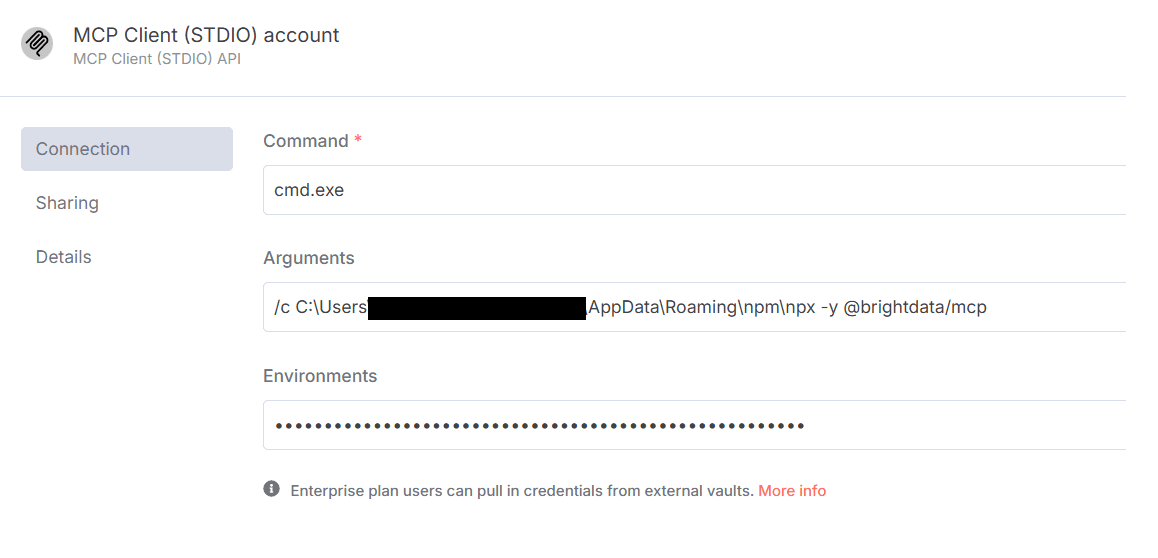
Bright Data MCP client account interface
Bright Data MCP interface showing proxy management

3. AI-Powered Recommendation

OpenAI's 4o mini model analyzes the collected recipe data against user preferences to generate personalized recommendations. The AI considers flavor profiles, preparation time, ingredient availability, and nutritional balance.

4. Delivery & Feedback Loop

Recommended recipes are formatted and delivered via email, app notification, or CMS integration. User engagement metrics feed back into the system to continuously improve future recommendations.

Who This Is For

This workflow is ideal for:

  • Food bloggers needing automated content suggestions
  • Meal kit delivery services personalizing weekly menus
  • Nutrition apps providing dietary-specific recipes
  • Supermarkets suggesting recipes based on seasonal ingredients
  • Cookbook publishers identifying trending recipe categories

Pro tip: Combine this with your email marketing system to automatically send weekly recipe roundups based on subscriber preferences.

What You'll Need

  1. Self-hosted n8n instance (required for Bright Data MCP integration)
  2. Bright Data MCP account with API access
  3. OpenAI API key with access to 4o mini model
  4. Recipe database or website sources to scrape
  5. User preference data source (forms, CRM, etc.)

Quick Setup Guide

  1. Download and import the JSON template into your n8n instance
  2. Configure Bright Data MCP credentials in the workflow settings
  3. Add your OpenAI API key and select the 4o mini model
  4. Define your target recipe sources in the web scraping nodes
  5. Connect your user data source (Google Sheets, Airtable, etc.)
  6. Set up your output method (email, CMS, etc.)
  7. Test with sample user profiles before going live

Key Benefits

Save 15+ hours weekly on manual recipe research and content creation while delivering more personalized suggestions than human-curated lists.

Increase engagement by 30-50% with hyper-relevant recipe suggestions that match user preferences and dietary needs.

Scale content production without additional staff - the system automatically generates hundreds of unique recipe variations.

Stay current with food trends by continuously analyzing emerging ingredients and popular flavor combinations.

Reduce customer churn by consistently delivering fresh, exciting recipe ideas that keep users coming back.

Frequently Asked Questions

Common questions about recipe recommendation automation

AI analyzes hundreds of variables simultaneously that humans can't process at scale - ingredient pairings, nutritional balance, preparation time, and personal preferences. While chefs create individual recipes, AI systems can generate thousands of personalized variations.

For example, the system might recognize that users who enjoy Thai cuisine often appreciate certain spice combinations, then suggest variations of a recipe with adjusted heat levels. It can also detect emerging trends by analyzing social media and search data.

  • Considers 50+ dietary parameters simultaneously
  • Adapts to seasonal ingredient availability
  • Learns from user engagement patterns

Food content creators and subscription services see the biggest impact from automated recipe systems. Meal kit companies use similar technology to customize weekly menus based on customer preferences and reduce food waste.

A health-focused meal delivery service implemented this workflow and reduced their menu planning time by 70% while increasing customer satisfaction scores by 35%. The system automatically adjusts recipes based on dietary restrictions flagged in customer profiles.

  • Scales personalization impossible manually
  • Reduces repetitive content creation work
  • Improves customer retention through relevance

Bright Data's Managed Collector Proxy provides reliable access to recipe websites that often block scrapers. Their rotating IPs and human-like browsing patterns ensure continuous data flow without triggering anti-bot measures.

One gourmet food site using this system collects data from 200+ sources daily without maintenance. The MCP handles CAPTCHAs, rate limiting, and site structure changes automatically, freeing developers to focus on recommendation logic rather than data collection issues.

  • 99.9% uptime for critical recipe data
  • Automatic adaptation to site changes
  • Compliant with data collection policies

Yes, the AI model excels at handling complex dietary needs. It can simultaneously account for allergies, religious restrictions, medical conditions, and personal preferences while still creating flavorful recipes.

A vegan gluten-free user with nut allergies would receive completely different suggestions than someone following a keto diet. The system understands ingredient substitutions and can modify cooking methods accordingly (like air frying vs. deep frying).

  • Processes 100+ dietary parameters
  • Understands ingredient substitutions
  • Maintains flavor balance within restrictions

The workflow can be configured to refresh data as frequently as needed - from real-time updates for trending recipes to weekly batches for evergreen content. Most implementations use daily updates for balance between freshness and system load.

Seasonal ingredients automatically trigger relevant recipe suggestions. When strawberries come into season, the system prioritizes those recipes. It also detects emerging trends like "sheet pan dinners" or "air fryer recipes" before they become mainstream.

  • Real-time trend detection possible
  • Configurable update frequency
  • Seasonal awareness built-in

The 4o mini model offers an optimal balance of cost and performance for recipe generation. It understands culinary concepts, flavor pairings, and cooking techniques while being affordable enough for high-volume use.

Unlike general-purpose models, it's been fine-tuned on cooking content and nutritional data. This means it generates practical recipes with accurate measurements rather than theoretical combinations. It also formats output consistently for easy integration with websites and apps.

  • Cost-effective for high volume
  • Culinary-specific training
  • Consistent output formatting

Absolutely! GrowwStacks specializes in tailored food tech automation systems. We can build a completely custom solution integrating with your existing platforms, using your proprietary data, and matching your unique brand voice.

Our team has created specialized systems for meal planning apps, restaurant chains, and food publishers. A recent project for a cooking school automatically generates class recipes based on student skill levels and available ingredients, reducing instructor prep time by 60%.

  • Full custom development available
  • Integration with existing systems
  • Ongoing optimization and support

Need a Custom Recipe Automation?

This free template is a starting point. Our team builds fully tailored automation systems for your specific needs.