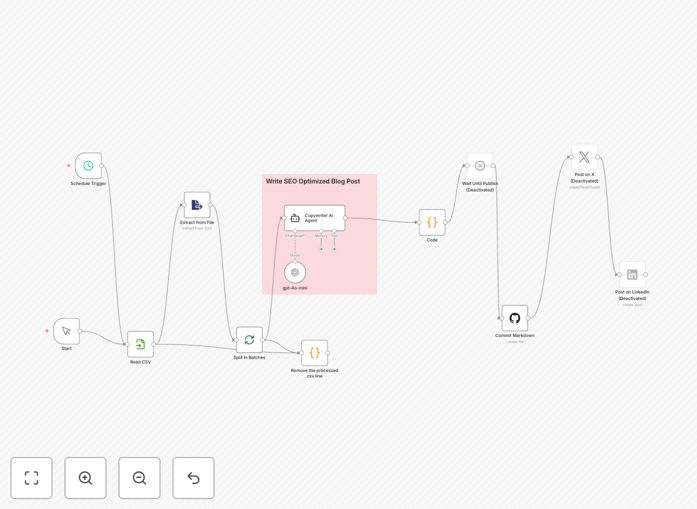
What This Workflow Does
This automation solves the time-consuming process of publishing SEO-optimized content to Jekyll blogs. Traditional publishing requires manual content creation, Markdown formatting, GitHub commits, and social sharing - often taking 5+ hours per post. The workflow combines GPT-4 for intelligent content generation with GitHub integration for seamless publishing and automated social media distribution.
By connecting these systems, marketers and developers can maintain consistent blog output without repetitive technical tasks. The AI ensures content meets SEO best practices while the automation handles all technical implementation, allowing teams to focus on strategy rather than execution.
How It Works
1. AI Content Generation
The workflow starts with GPT-4 analyzing your topic brief to generate SEO-optimized content. The AI structures the post with proper headings, meta descriptions, and semantic keyword placement while maintaining natural readability.
2. Markdown Formatting
The generated content is automatically converted to Jekyll-compatible Markdown with proper front matter. The system includes YAML metadata, image references, and proper code block formatting for technical posts.
3. GitHub Commit
The formatted Markdown file is committed to your Jekyll repository's _posts directory with proper naming conventions. The workflow can handle branch management and pull requests if needed.
4. Social Media Sharing
Once published, the workflow automatically shares the post across configured social platforms with optimized messaging. It handles platform-specific formatting requirements and can include tracking parameters.
Who This Is For
This workflow benefits technical marketers managing Jekyll blogs, developer advocates publishing tutorials, and content teams needing to scale output. It's ideal for:
- SaaS companies with developer documentation blogs
- Technical content creators publishing tutorials
- Marketing teams maintaining corporate blogs
- Indie hackers managing personal brand sites
What You'll Need
- An n8n instance (cloud or self-hosted)
- OpenAI API access for GPT-4
- GitHub repository for your Jekyll site
- Social media API credentials (Twitter, LinkedIn, etc.)
- Basic understanding of Jekyll's content structure
Quick Setup Guide
- Download and import the JSON workflow into your n8n instance
- Configure your OpenAI API credentials in the GPT-4 node
- Set up GitHub OAuth or personal access token
- Connect your social media accounts
- Test with a sample post before full automation
Key Benefits
Save 5-10 hours per blog post by eliminating manual content formatting, technical implementation, and distribution tasks.
Ensure SEO consistency with automatically generated meta tags, semantic HTML, and proper heading structures in every post.
Maintain publishing cadence even during busy periods with scheduled, automated content deployment.
Reduce human error in technical implementation like file naming, front matter formatting, and deployment processes.