n8n SEO Automation E-commerce Content Marketing

SEO Keyword Analysis and Filter

Automate keyword research and prioritization to scale content production without sacrificing quality

Download Template JSON · n8n compatible · Free
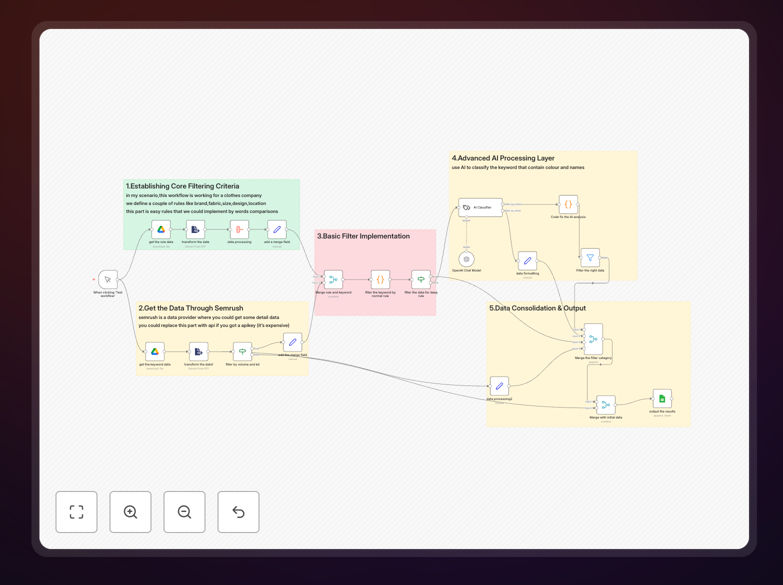
SEO keyword analysis workflow interface

What This Workflow Does

This n8n workflow automates the tedious process of SEO keyword research and filtering for e-commerce brands and content teams. It solves the challenge of scaling content production while maintaining strategic focus by systematically analyzing and prioritizing keywords based on your business objectives.

The workflow connects to popular SEO tools to gather keyword data, applies your custom filtering criteria (search volume, difficulty, commercial intent, etc.), and delivers prioritized keyword lists directly to your content team or CMS. This eliminates hours of manual spreadsheet work while ensuring consistency in your keyword selection process.

How It Works

1. Keyword Data Collection

The workflow pulls raw keyword suggestions from connected SEO tools like Ahrefs, SEMrush, or Google Keyword Planner. It gathers comprehensive metrics including search volume, competition level, and CPC data for each term.

2. Automated Scoring

Each keyword receives a custom score based on your configured weighting for different metrics. The system applies your business rules to identify high-potential terms while filtering out irrelevant or overly competitive keywords.

3. Priority Categorization

Keywords are grouped into priority tiers (High/Medium/Low) based on their scores. The workflow can also categorize them by product category, buyer journey stage, or content type for better organization.

4. Output Delivery

The final filtered keyword lists are delivered to your designated systems - whether that's your content calendar, CMS, or team collaboration tools like Slack or Notion. Some workflows include automatic brief generation for writers.

Who This Is For

This workflow is ideal for:

  • E-commerce brands scaling product content
  • Content marketing teams managing blogs/resources
  • SEO agencies servicing multiple clients
  • Marketplaces optimizing category pages
  • Publishers monetizing through affiliate content

Pro tip: Combine this with content performance tracking to continuously refine your keyword scoring criteria based on what actually converts.

What You'll Need

  1. An n8n instance (cloud or self-hosted)
  2. Access to SEO tools like Ahrefs, SEMrush, or Moz
  3. Clear keyword evaluation criteria for your business
  4. Destination system for final keyword lists (CMS, spreadsheet, etc.)

Quick Setup Guide

  1. Download the JSON template file
  2. Import into your n8n instance
  3. Configure connections to your SEO tools
  4. Set your keyword scoring thresholds
  5. Connect output to your content systems
  6. Test with sample keyword sets
  7. Schedule regular automated runs

Key Benefits

75% faster keyword research: Process thousands of keywords in minutes instead of days.

Consistent quality control: Apply the same strategic filters to every keyword, eliminating human inconsistency.

Actionable insights: Get ready-to-use keyword lists organized by priority and content type.

Scalable content planning: Feed your editorial calendar with validated keywords automatically.

Competitive advantage: Identify and act on emerging search trends faster than manual processes allow.

Frequently Asked Questions

Common questions about SEO keyword automation

Automated keyword analysis helps identify high-value search terms faster by processing large datasets efficiently. It eliminates manual spreadsheet work while applying consistent filtering criteria across all keywords. This ensures your content targets terms with the best balance of search volume and competition, improving ranking potential while saving dozens of hours per month.

The system can analyze historical performance data to refine scoring models over time. For example, it might learn that keywords with certain semantic patterns tend to convert better for your audience, automatically prioritizing similar terms in future research cycles.

Focus on search volume, keyword difficulty, and commercial intent when filtering keywords. High-volume, low-competition terms with transactional intent typically drive the most conversions. The workflow automatically scores and prioritizes keywords based on these metrics, helping you focus on opportunities that align with your business goals and content strategy.

Consider adding secondary filters like:

  • Click-through-rate potential
  • Brand relevance score
  • Seasonal search patterns

E-commerce sites should refresh keyword research quarterly to capture shifting search trends. Seasonal products require monthly updates. Automated workflows make this manageable by streamlining the research process and maintaining historical data for comparison. Regular updates help you capitalize on emerging trends before competitors while maintaining rankings for established terms.

For new product launches, run targeted keyword research 4-6 weeks before launch to inform your content strategy. The workflow can automatically monitor ranking progress post-launch and suggest optimization adjustments.

Yes, automated workflows can filter keywords by geographic modifiers and local intent. The system can prioritize location-based terms, analyze regional search volume differences, and even integrate with local directory platforms. This helps multi-location businesses optimize their content for specific markets while maintaining brand consistency across regions.

The workflow might automatically:

  • Tag keywords with location identifiers
  • Adjust scoring for local search volume
  • Sync with Google Business Profile updates

n8n provides flexible connections between SEO tools, content platforms, and analytics without coding. Unlike rigid SaaS platforms, you can customize exactly how data flows between Ahrefs, SEMrush, Google Search Console, and your CMS. This creates tailored workflows that match your unique content production process and reporting needs.

You maintain full control over:

  • Data transformation logic
  • Integration points
  • Error handling workflows

Build quality checks into your workflow by setting minimum thresholds for metrics like click-through-rate potential and relevance scoring. Include human review steps for final approval before keywords enter your content calendar. The best systems combine AI-powered filtering with editorial oversight to maintain brand voice and strategic alignment.

Regularly audit:

  • False positive/negative rates
  • Conversion performance by keyword tier
  • Editor feedback on keyword usefulness

Absolutely. GrowwStacks specializes in building tailored SEO automation systems that integrate with your existing tech stack. Our team will analyze your content strategy, competitive landscape, and conversion goals to design a workflow that delivers the right keywords to the right teams at the right time. Book a free consultation to discuss your specific needs.

Custom solutions might include:

  • Competitor gap analysis integration
  • Automated content brief generation
  • Performance-triggered keyword refresh

Need a Custom SEO Automation Built?

This free template is a starting point. Our team builds fully tailored automation systems for your specific needs.